The Genesis of Color Field Painting: Abstract Expressionism's Evolving Spirit
Abstract expressionism in the United States emerged as a distinct art movement in the aftermath of World War II and gained mainstream acceptance in the 1950s, a shift from the American social realism of the 1930s influenced by the Great Depression an...
Following the seismic shifts of World War II, a new artistic vocabulary began to emerge from the studios of New York City. Abstract Expressionism, born from a desire to break with representational traditions and tap into primal emotional states, initially manifested as dynamic, gestural works – action painting exemplified by Jackson Pollock’s energetic drips and Willem de Kooning’s raw figuration. However, within this broader movement, a quieter revolution was taking shape, one that prioritized color itself as the primary vehicle for expression. This nascent tendency, which would come to be known as Color Field Painting, wasn't a sudden rupture but rather an organic evolution, a turning inward from the chaotic energy of action towards a more contemplative and immersive experience. Artists began questioning whether the act of painting – the visible brushstroke, the narrative gesture – was obscuring something essential. They sought to strip away these layers, to arrive at a purity of form and color that could directly communicate with the viewer’s subconscious.
Mark Rothko, Barnett Newman, and Clyfford Still: Pioneering Voices of the Movement
While several artists contributed to this shift, three figures stand out as pivotal pioneers: Mark Rothko, Barnett Newman, and Clyfford Still. Rothko, initially working within a figurative surrealist framework, gradually reduced his compositions to stacked rectangles of luminous color, creating fields that seemed to vibrate with an inner light. His canvases weren’t intended as depictions *of* anything but rather as direct encounters with emotion – experiences of tragedy, ecstasy, and the sublime. Barnett Newman, equally concerned with evoking profound feeling, developed his signature “zips” – vertical bands of color that bisected vast monochromatic fields. These zips weren't merely formal elements; they acted as thresholds, portals to a deeper spiritual realm, inviting contemplation on the nature of existence itself. Clyfford Still, often considered the most radical of the three, created jagged, fractured compositions characterized by intense, earthy hues and heavy impasto. His paintings felt less about serene contemplation and more about raw, elemental forces – volcanic eruptions of color that spoke to the primordial origins of being.
Beyond Representation: The Pursuit of Pure Emotional Experience in Color
Color field painting (Colour field painting in Commonwealth English) is a style of abstract painting that emerged in New York City during the 1940s and 1950s. It was inspired by European modernism and closely related to abstract expressionism, while ...
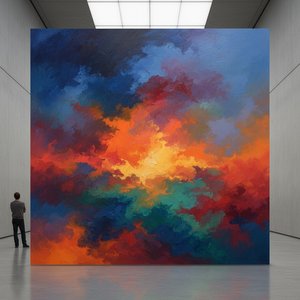
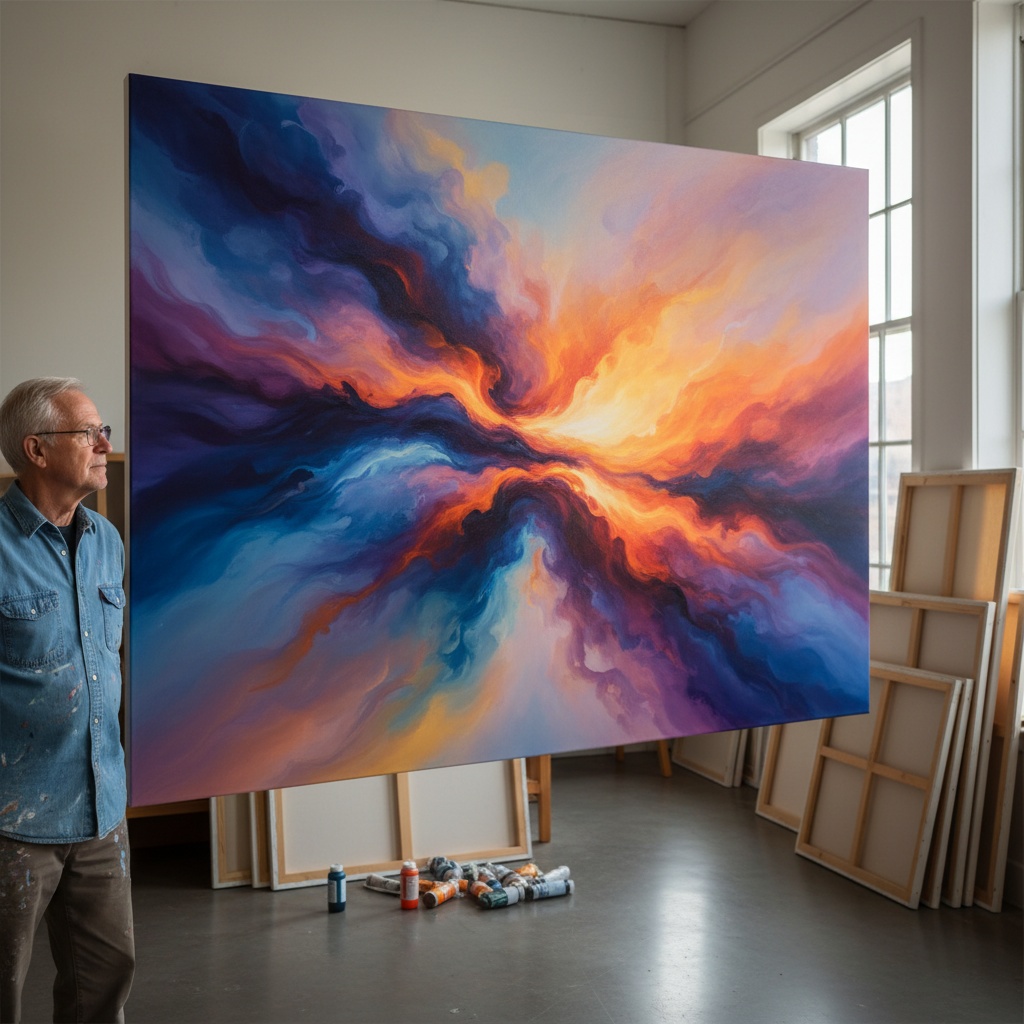
The rejection of representation was central to the aims of Color Field painters. They weren’t interested in depicting landscapes, figures, or objects; their focus lay entirely on the expressive power of color itself. This wasn't simply about aesthetic preference but a deliberate attempt to bypass the intellect and connect directly with the viewer’s emotional core. By eliminating recognizable imagery, they hoped to create works that were universally accessible, transcending cultural boundaries and personal narratives. The scale of these paintings was also crucial. Often monumental in size, they enveloped the viewer, creating an immersive environment that demanded a visceral response. Standing before a Rothko canvas, for example, is not like looking *at* a painting; it’s more akin to being absorbed into a field of color, losing oneself in its depths and allowing its emotional resonance to wash over you. The goal was to create an experience akin to religious awe – a sense of the infinite and the sublime.
Technique as Transcendence: Canvas, Paint, and the Elimination of Gesture
The techniques employed by Color Field painters were inextricably linked to their philosophical aims. Unlike the energetic brushwork of action painting, they favored methods that minimized visible gesture. Rothko famously stained his canvases with thinned paint, allowing the color to soak into the fabric, creating a luminous, ethereal effect. This technique eliminated the sense of surface and depth, further emphasizing the flatness of the picture plane and the purity of color. Newman’s zips were meticulously applied, often using masking tape to achieve crisp, precise lines. Still employed palette knives to build up layers of thick impasto, creating rugged textures that evoked geological formations. These weren't arbitrary choices; they were deliberate attempts to remove the artist’s hand from the work, to create paintings that felt less like personal expressions and more like direct manifestations of universal forces. The canvas itself became a sacred space, and the paint was treated as a medium for channeling something beyond the individual.
The Spiritual Dimension: Exploring Myth, Symbolism, and the Sublime
 Be I
Be IExplore Barnett Newman’s ‘Be I,’ a seminal Color Field painting renowned for its minimalist simplicity & profound emotional impact. Discover this 1970 masterpiece on OriginalUniqueArt.
Underlying the formal innovations of Color Field Painting was a deep-seated spiritual yearning. While these artists often resisted explicit interpretations of their work, it’s clear that they were grappling with fundamental questions about existence, mortality, and the nature of consciousness. Rothko drew inspiration from mythology and ancient religious traditions, seeking to create paintings that evoked a sense of primordial awe. Newman’s zips can be interpreted as symbols of human aspiration – vertical lines reaching towards the infinite. Still's jagged forms suggest geological forces, hinting at the raw power of creation and destruction. Be I, a seminal work by Barnett Newman, exemplifies this pursuit of transcendence through minimalist simplicity. The painting’s vast field of red, bisected by a single white zip, invites contemplation on the nature of space, time, and the human condition. This wasn't about illustrating religious narratives but rather about creating an experience that resonated with the deepest levels of human consciousness.
Color Field Painting's Legacy: Influence on Subsequent Art Movements
The impact of Color Field Painting extended far beyond its initial period of activity in the 1950s and 60s. It paved the way for subsequent movements such as Post-Painterly Abstraction, Minimalism, and even contemporary installation art. Artists like Helen Frankenthaler, Morris Louis, and Kenneth Noland built upon the foundations laid by Rothko, Newman, and Still, exploring new possibilities of color and form. The emphasis on flatness, purity of color, and immersive experience continues to resonate with artists today. Moreover, Color Field Painting challenged traditional notions of what a painting could be, expanding the boundaries of artistic expression and opening up new avenues for exploration. Its legacy is not simply about specific stylistic innovations but rather about a fundamental shift in perspective – a recognition that art can be a powerful tool for accessing the deepest levels of human emotion and spiritual understanding.