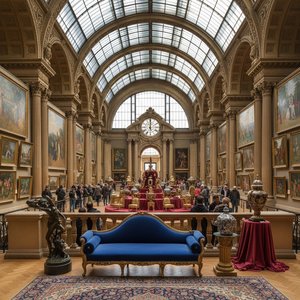
The Salon d’Automme Uprising: A Shock to the System
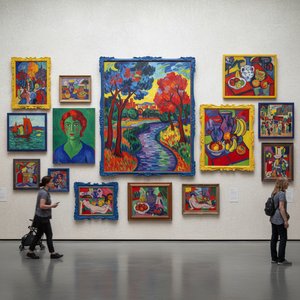
The year 1905 marked a turning point, not with grand pronouncements or carefully orchestrated manifestos, but with a visceral jolt of color that reverberated through the established art world. The exhibition at the Salon d’Automme in Paris wasn't intended as a revolution; it was simply a showcase for emerging talent alongside more conventional works. Yet, within those galleries, a group of artists – Henri Matisse, André Derain, Maurice de Vlaminck, Kees van Dongen, and others – presented paintings so radically different from anything seen before that they ignited a firestorm of controversy. The collective shock wasn’t born of meticulous planning, but rather a shared impulse to liberate color from its descriptive role and harness its raw emotional power. Critic Louis Vauxcelles, in a dismissive yet ultimately defining moment, dubbed them “les fauves” – the wild beasts – and the name stuck, forever branding this brief but intensely influential movement.
Beyond Impressionism: The Fauves' Rejection of Tradition
To understand the audacity of the Fauves, one must first appreciate the context from which they emerged. Impressionism, with its focus on capturing fleeting moments of light and atmosphere, had fundamentally altered painting in the late 19th century. However, by 1905, it felt to many artists like a path fully explored. The Fauves weren’t interested in optical realism; their ambition lay elsewhere. They sought to move beyond merely *representing* nature and instead express its underlying emotional essence. This meant abandoning the subtle gradations of tone favored by Impressionists in favor of bold, arbitrary color choices. They were not concerned with accurately depicting a landscape or portrait but rather with conveying the sensation, the feeling, evoked by it. The influence of Post-Impressionist masters like Van Gogh and Gauguin is palpable here – their expressive use of color and simplified forms paved the way for the Fauves’ even more radical experiments.
Color as Emotion: Matisse, Derain, and Vlaminck’s Palette
 Wikipedia: Henri Matisse
Henri Émile Benoît Matisse (French: [ɑ̃ʁi emil bənwa matis]; 31 December 1869 – 3 November 1954) was a French visual artist, known for both his use of colour and his fluid and original draughtsmanship. He was a draughtsman, printmaker, and sculptor, ...
Henri Matisse quickly became recognized as a leading figure, though not necessarily the instigator. His 1905 painting, *Woman with a Hat*, exemplifies this new approach. The jarring juxtaposition of vibrant oranges, greens, and purples – colors that bear little resemblance to the sitter’s actual complexion – initially scandalized viewers. But it wasn't simply about shock value; Matisse was exploring the expressive potential of color itself. André Derain, working alongside Matisse in Collioure on the Mediterranean coast, similarly embraced a heightened palette, as seen in his landscapes where fiery reds and intense blues dominate. Maurice de Vlaminck, perhaps the most untamed of the group, approached painting with an almost primal energy, applying thick impasto brushstrokes of pure color directly to the canvas. For these artists, color wasn’t merely a visual element; it was a language capable of conveying joy, anxiety, and a profound connection to nature.
Brushwork & Form: Defining Characteristics of Fauvism
Beyond color, distinctive brushwork became another hallmark of the movement. Unlike the delicate, blended strokes of Impressionism, Fauvist paintings are characterized by bold, visible marks that often follow the contours of forms rather than attempting to create a seamless illusion of reality. This emphasis on painterly qualities – the very act of painting itself – was a deliberate rejection of academic conventions. Furthermore, Fauves frequently simplified forms, reducing objects and figures to their essential shapes. Perspective was often flattened or distorted, creating a sense of immediacy and emotional intensity. The goal wasn’t to create a photographic likeness but rather to capture the underlying structure and energy of the subject matter. While some critics derided this as crude or unskilled, it was precisely this deliberate departure from traditional techniques that made Fauvism so groundbreaking.
The Brief but Brilliant Flame: Legacy and Influence of the Fauvist Movement
Fauvism’s reign was remarkably short-lived, lasting only a few years – roughly from 1905 to 1908. By 1910, many of the artists had diverged in their artistic pursuits, exploring Cubism and other emerging styles. However, its impact on modern art was profound. The Fauves liberated color from its descriptive function, paving the way for Expressionism and Abstract painting. Their emphasis on subjective experience and emotional expression continues to resonate with artists today. The movement’s boldness challenged established norms and opened up new possibilities for artistic experimentation.
Collecting Fauvism Today: Finding Your Place in a Vibrant History
For the collector, acquiring a work from this pivotal period represents more than simply owning a beautiful painting; it's possessing a piece of art history. While masterpieces by Matisse and Derain command significant prices, works by lesser-known Fauves offer compelling opportunities to build a collection. Look for paintings that showcase the movement’s defining characteristics – vibrant color palettes, expressive brushwork, and simplified forms. Consider exploring prints or reproductions as an accessible entry point into this captivating world. At OriginalUniqueArt, we specialize in handmade oil paintings and museum-quality reproductions, allowing you to experience the energy and brilliance of Fauvism firsthand. Our commitment to authenticity and craftsmanship ensures that each piece captures the spirit of the original artwork. Whether you’re a seasoned collector or just beginning your art journey, exploring the legacy of the Fauves is an invitation to embrace color, emotion, and the transformative power of artistic expression.