Introduction
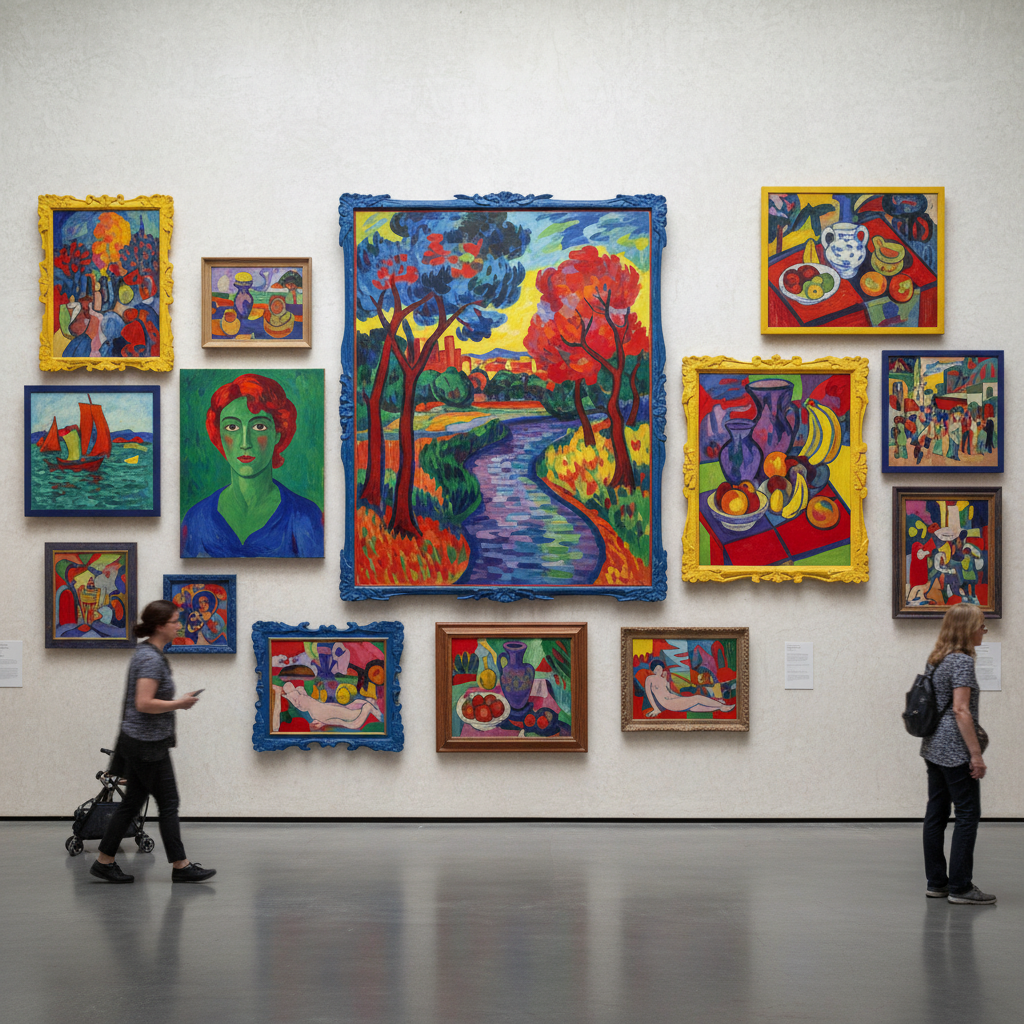
Imagine a world saturated with color—not the subtle hues of Impressionism, but bold, unrestrained shades applied with an almost primal energy. This is the realm of Fauvism, a short-lived yet profoundly influential art movement that exploded onto the Parisian scene in the early 20th century. These weren’t paintings attempting to *replicate* reality; they were expressions of pure emotion, distilled through vibrant color and simplified forms.
Born around 1905, Fauvism arose as a reaction against the established artistic norms of the time. Artists like Henri Matisse, André Derain, and Maurice de Vlaminck sought to break free from academic constraints and explore the expressive potential of color itself. Influenced by Post-Impressionists like Van Gogh and Gauguin—artists who dared to prioritize subjective experience over literal representation—the Fauves (meaning “wild beasts” in French) embraced a radical new approach. They weren’t interested in depicting landscapes or portraits with photographic accuracy; instead, they used color as a tool for conveying feeling, creating works that were often shocking and deliberately non-naturalistic.
The cultural context was one of rapid change and increasing anxiety. The world was on the cusp of modernity, grappling with new technologies, shifting social structures, and a growing sense of alienation. Fauvism’s bold aesthetic can be seen as a response to this upheaval—a defiant assertion of individual expression in a rapidly changing world.
Though its core period lasted only a few years (roughly 1905-1908), Fauvism left an indelible mark on the history of art. It paved the way for subsequent movements like Expressionism and Cubism, and continues to inspire artists today. The artworks created during this brief but intense period remain powerfully resonant because they speak to something fundamental about the human experience—the power of color to evoke emotion, challenge convention, and transform our perception of the world.
Over the next section, we’ll journey through ten masterpieces that define the Fauvist movement. Each painting represents a pivotal moment in this artistic revolution, offering a glimpse into the minds of these groundbreaking artists and the vibrant world they created. Prepare to be captivated by a symphony of color and emotion—a testament to the enduring power of “wild beasts” who dared to paint with abandon.
The Dance - Henri Matisse
 The Dance - Henri Matisse
Before us hangs a vision of pure joy—a primal celebration rendered in hues that seem to vibrate with life itself. This is Henri Matisse’s The Dance (1909-1910), arguably the most iconic embodiment of Fauvism and a cornerstone of early Modern art.
Created during a period of radical artistic experimentation, The Dance boldly rejects traditional representation in favor of expressive color. Matisse liberated color from its descriptive function, using intense orange-red figures against a vibrant cobalt blue ground to evoke emotion and create a dynamic visual experience. Five nude figures are linked in an unbroken chain, their simplified forms suggesting movement and unity—a powerful symbol of the cyclical nature of life itself.
The artwork’s flattened perspective and visible brushstrokes further emphasize its non-naturalistic aesthetic, prioritizing feeling over precise detail. Commissioned by Sergei Shchukin, The Dance reflects a burgeoning interest in Primitivism and non-Western art that profoundly influenced Matisse and his contemporaries.
Its inclusion among the Top 10 masterpieces of Fauvism is undeniable; it’s not merely a painting but an experience—a testament to the power of color, form, and movement. Even today, The Dance continues to captivate viewers with its raw energy and enduring message of communal celebration, reminding us that art has the ability to transform spaces and uplift the human spirit.
Le bonheur de vivre (The Joy of Life) - - Henri Matisse
 Le bonheur de vivre (The Joy of Life) - - Henri Matisse
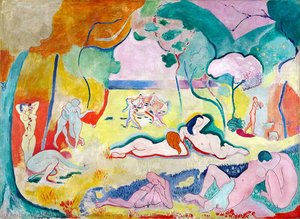
Step into a sun-drenched meadow where figures recline and dance with unrestrained joy—a vision of pure, unadulterated bliss captured on canvas. This is Henri Matisse’s Le bonheur de vivre (The Joy of Life), painted in 1906, and a pivotal work that launched the Fauvist movement into the artistic consciousness.
Rejecting traditional perspective and naturalistic color, Matisse employed intensely vivid hues—pinks, greens, and blues—to create a dreamlike landscape brimming with sensual pleasure. The painting caused a sensation at the 1906 Salon des Indépendants, challenging conventional norms and paving the way for abstraction in modern art.
Often interpreted as a modern bacchanal or inspired by classical mythology, the scene isn’t narrative-driven but evokes a sense of ritualistic play. Figures intertwine within a lush landscape, their simplified forms suggesting both earthly delight and spiritual connection. The ambiguity invites viewers to project their own interpretations onto this vibrant tableau.
Le bonheur de vivre embodies a profound yearning for freedom and the restorative power of nature. Its inclusion among the Top 10 masterpieces of Fauvism is well-deserved; it’s not merely a painting but an invitation to experience joy itself—a testament to art's ability to transform spaces, uplift spirits, and remind us of the beauty inherent in life.
Charing Cross Bridge, London - André Derain
 Charing Cross Bridge, London - André Derain
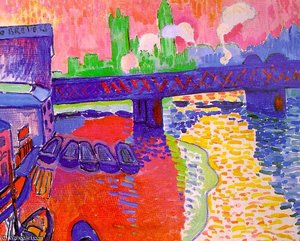
Imagine London not as a city of gray skies and historic stone, but as an explosion of color—a vibrant spectacle pulsating with energy. This is the vision André Derain presents in Charing Cross Bridge, London , a landmark work that exemplifies the Fauvist revolution.
Painted during his brief but transformative time in England in 1906, this artwork rejects traditional depictions of the city in favor of bold, expressive hues. Purples, pinks, yellows, and greens collide in a dynamic composition, capturing not the *reality* of London, but its very essence—a sense of modernity and restless movement.
Unlike his predecessors like Whistler or Monet, Derain didn’t seek to replicate the atmosphere; he sought to evoke it. The thick impasto brushwork adds a tactile quality, while abstracted reflections in the water symbolize the fluidity of urban life. This painting is a testament to Fauvism's liberation of color from its descriptive function—a deliberate distortion used to express emotion and create a purely visual experience.
Charing Cross Bridge, London rightfully earns its place among the Top 10 masterpieces of the movement. It’s not merely a painting of a bridge; it's an invitation to see the world anew—a reminder that art has the power to transform our perception and infuse even the most familiar spaces with vibrancy and life.
Luxe, Calme, et Volupté (compositional study) - Henri Matisse
 Luxe, Calme, et Volupté (compositional study) - Henri Matisse
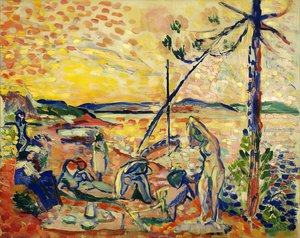
Imagine a moment suspended in time—a coastal symphony of color and light where leisure and tranquility reign supreme. This is Henri Matisse’s Luxe, Calme, et Volupté (compositional study) , painted in 1904, and a pivotal work that foreshadowed the Fauvist explosion.
This artwork isn't simply a depiction of figures relaxing by the sea; it’s an exploration of pure sensation. Matisse liberated color from its descriptive function, employing bold hues and dynamic brushstrokes to evoke emotion rather than replicate reality. The thick, visible paint creates a textured surface that adds depth and vitality.
As a transitional piece in Matisse's career, Luxe, Calme, et Volupté marks his departure from traditional styles and embraces the expressive power of color—a hallmark of Fauvism. The relaxed postures of the figures suggest a carefree atmosphere, while the expansive landscape symbolizes freedom and openness.
Its inclusion among the Top 10 masterpieces is well-deserved; it’s not merely a painting but an invitation to experience joy itself—a testament to art's ability to transform spaces and uplift the human spirit. This artwork continues to resonate today, reminding us of the beauty inherent in simple pleasures and the power of color to evoke profound emotion.
Woman with a Hat - Henri Matisse
 Woman with a Hat - Henri Matisse
Before us hangs a portrait that ignited a revolution—a bold declaration of artistic freedom and a cornerstone of Fauvism. This is Henri Matisse’s Woman with a Hat (1905), a painting that shocked the Parisian art world and forever changed our perception of color.
Painted in vibrant, non-naturalistic hues, this artwork depicts Matisse's wife, Amélie, adorned in an elaborate hat. The thick impasto brushwork and loose application of paint create a textured surface that adds depth and vitality. This wasn’t about replicating reality; it was about expressing emotion through pure color.
Exhibited at the 1905 Salon d'Automne, Woman with a Hat sparked controversy—critic Louis Vauxcelles famously dubbed Matisse and his associates “wild beasts,” giving birth to the Fauvist movement. The painting’s unconventional style challenged traditional norms and paved the way for further abstraction in modern art.
Its inclusion among the Top 10 masterpieces is undeniable; it's not merely a portrait but an experience—a testament to art's ability to transform spaces, challenge convention, and uplift the human spirit. Even today, Woman with a Hat continues to captivate viewers with its raw energy and enduring message of artistic liberation.
Dance (II), Eremitaget - Henri Matisse
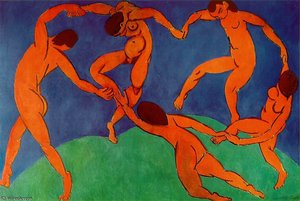 Dance (II), Eremitaget - Henri Matisse
Imagine a circle of figures moving in perfect harmony—a primal celebration of life and connection rendered in hues that seem to vibrate with energy. This is Henri Matisse’s Dance (II), Eremitaget (1910), a masterpiece that embodies the spirit of Fauvism.
The artwork features nude figures arranged in a dynamic circular composition, their simplified forms and bold outlines exuding vitality and joy. The striking orange against a deep blue background creates an electrifying tension—a testament to Matisse’s innovative approach to color and form.
Painted during the height of the Fauvist movement, Dance (II) reflects Matisse's revolutionary exploration of expressive styles. Its circular composition symbolizes unity and continuity, influencing generations of artists with its dynamic poses and vibrant palette.
Its inclusion among the Top 10 masterpieces is well-deserved; it’s not merely a painting but an experience—a testament to art's ability to transform spaces and uplift the human spirit. At , we are proud to offer faithful reproductions of this iconic work, preserving its emotion and texture so you can bring this timeless beauty into your own home.
Portrait of Mme. Matisse - Henri Matisse
 Portrait of Mme. Matisse - Henri Matisse
Gaze into the eyes of Amélie Matisse—a moment captured with a quiet intimacy that reveals more than just a likeness. This 1905 portrait is a pivotal work demonstrating Henri Matisse’s burgeoning exploration of color and form, laying the foundations for his revolutionary contribution to modern art.
While not fully embracing the wilder aspects of later Fauve works, this painting showcases Matisse’s deliberate departure from traditional representation. The vibrant orange shawl dramatically contrasts with cool blues and indigos, creating a visual tension that animates the composition—a hallmark of the emerging Fauvist aesthetic.
The loose brushwork and visible layering of paint imbue the work with palpable energy and immediacy. Amélie’s direct yet distant gaze suggests an inner life, while the simplified features contribute to a sense of both serenity and melancholy.
Its inclusion among the Top 10 masterpieces is well-deserved; it's not merely a portrait but a window into the soul—a testament to art’s ability to transform spaces and evoke profound emotion. Today, this painting continues to inspire with its bold color palette and timeless elegance.
Landscape viewed from a Window - Henri Matisse
 Landscape viewed from a Window - Henri Matisse
Peer through a window into a world bathed in cool blues—a distillation of light and color that captures the essence of Matisse’s revolutionary vision. This is Landscape Viewed from a Window (1913), a masterpiece that invites us to connect with both the intimate interior space and the sun-drenched landscape beyond.
The composition centers around a deep blue window frame, acting as a stage for contrasting floral arrangements—crisp white blossoms against fiery red. These aren’t merely decorative elements but intermediaries between the viewer and the expansive vista.
A quintessential example of Fauvism , this painting deliberately eschews traditional representation in favor of emotional expression. Matisse applies paint in broad, flat planes with visible brushstrokes, creating a dynamic surface that vibrates with life. The heightened colors—particularly the dominant blue—set off the warmth of the landscape.
Its inclusion among the Top 10 masterpieces is well-deserved; it’s not merely a painting but an experience—a testament to art's ability to transform spaces and evoke profound emotion. Today, this work continues to inspire with its bold color palette and timeless elegance, bringing a sense of calm and sophistication to any environment.
Basket with Oranges - Henri Matisse
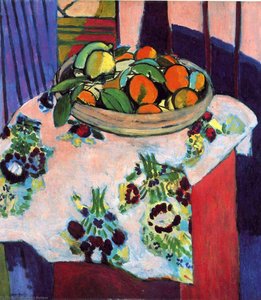 Basket with Oranges - Henri Matisse
Imagine a sun-drenched table brimming with life—a celebration of color and form captured in a single, vibrant moment. This is Basket with Oranges (1913), a masterpiece that embodies the spirit of Fauvism.
The central focus is a bowl overflowing with oranges and lemons, placed on a table adorned with a floral-patterned cloth. Matisse’s arrangement is balanced yet dynamic, drawing the viewer into a world of intense hues and expressive brushwork.
This painting exemplifies Fauvism —a movement known for its bold, non-naturalistic use of color. The thick, visible strokes add a tactile quality, making the still life feel alive with energy. Warm oranges and yellows contrast beautifully with cooler blues and greens, enhancing the overall vibrancy.
Its inclusion among the Top 10 masterpieces is well-deserved; it’s not merely a depiction of fruit but an immersive experience—a testament to art's ability to transform spaces and evoke feelings of freshness and vitality. Today, this work continues to inspire with its bold color palette and timeless elegance.
L'Atelier rouge Huile sur Toile - (181x219) - Henri Matisse
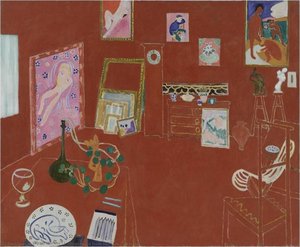 L'Atelier rouge Huile sur Toile - (181x219) - Henri Matisse
Step into a world bathed in a warm, reddish glow—a vibrant interior scene that captures the very essence of artistic energy. This is L'Atelier rouge Huile sur Toile (1911), a masterpiece that embodies the spirit of Fauvism.
The composition invites you into a densely populated studio, where paintings, sculptures, and decorative objects coexist in harmonious chaos. Matisse employs flat, unmodulated areas of paint, creating a dynamic surface that emphasizes emotional impact over realistic depiction.
This artwork exemplifies the Fauvist commitment to color as a primary expressive tool. Loose, gestural outlines and stylized shapes contribute to a sense of spontaneity, while the flattened perspective enhances the decorative quality of the scene.
Its inclusion among the Top 10 masterpieces is well-deserved; it’s not merely a depiction of an artist's studio but an immersive experience—a testament to art's ability to transform spaces and evoke feelings of warmth, passion, and vitality. Today, this work continues to inspire with its bold color palette and timeless elegance.
Conclusion
As the light fades on these ten extraordinary canvases, we are left not with relics of history, but with living presences—works that continue to pulse with the same vibrant energy they possessed over a century ago. The Fauves dared to look at the world anew, stripping away convention and embracing pure, unadulterated color as a means of emotional expression.
These paintings are not merely beautiful objects; they are windows into the souls of artists who sought to capture the very essence of life—the joy of sunlight, the warmth of human connection, the raw power of feeling. They remind us that art is not about imitation, but about interpretation, about transforming the ordinary into something extraordinary.
And now, these masterpieces are within reach. At , we believe that everyone deserves to experience the transformative power of art firsthand. Our skilled artists meticulously recreate each brushstroke, honoring the original’s soul and detail in hand-painted reproductions designed to bring beauty and inspiration into your home.
Explore our full collection and discover the Fauvist works that resonate with you. Allow these timeless visions to ignite your imagination, shape your interiors, and connect you to a legacy of creativity that continues to inspire generations.