Origins & Defining Characteristics: From German Painting to Literary Flourishing
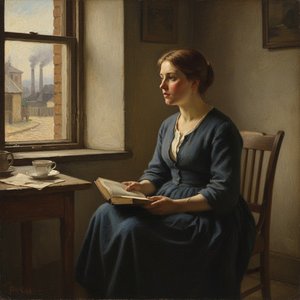
The term “Magic Realism” – or *Magical Realism* as it’s often interchangeably known – first emerged not from the sun-drenched landscapes of Latin America, where it would later flourish, but from the post-World War I art scene in Germany. German painter Franz Roh coined the phrase in 1925 to describe a new style that sought to depict reality with startling clarity and precision, yet imbued within those realistic depictions lay an uncanny sense of mystery and wonder. It was a reaction against abstraction, a desire to ground art in the tangible world while simultaneously acknowledging the unseen forces at play beneath the surface. Early practitioners like Georg Schrimpf and Franz Radziwill painted serene domestic scenes or landscapes with subtle distortions – objects slightly out of scale, shadows behaving unexpectedly – creating an unsettling yet captivating effect. This wasn’t about fantastical creatures or overt supernatural events; it was a quiet disruption of normalcy, a suggestion that the world held more than met the eye.
The movement quickly spread beyond painting and found fertile ground in literature. While Roh's initial focus was visual art, the core principles – a realistic portrayal interwoven with magical elements – proved remarkably adaptable to narrative form. Crucially, Magic Realism distinguishes itself from pure fantasy; it’s not about escaping *to* another world but rather discovering magic *within* this one. Luis Leal, in his seminal article “Magical Realism in Spanish American Literature,” eloquently articulated this difference: its aim is to express emotions, not evoke them through spectacle. The inclusion of magical elements isn't gratuitous; it serves as a lens through which to explore deeper truths about human experience and the complexities of reality itself.
Latin American Roots: A Crucible of Magical Realism – García Márquez, Borges & Beyond
The mid-20th century witnessed Magic Realism’s explosive growth in Latin America, transforming into a defining characteristic of its literary landscape. This wasn't accidental; the region’s rich history—a tapestry woven with indigenous mythologies, colonial legacies, and political upheaval—provided an ideal breeding ground for this unique style. Authors like Gabriel García Márquez, perhaps the most celebrated exponent of Magic Realism, masterfully blended fantastical occurrences with the everyday realities of Colombian life in novels such as *One Hundred Years of Solitude*. The floating yellow butterflies that follow Mauricio Babilonia, the prophecies fulfilled and tragically distorted, the cyclical nature of history – these weren’t mere embellishments but integral components of a narrative exploring themes of love, loss, power, and fate.
Jorge Luis Borges, though often categorized separately, laid crucial groundwork with his exploration of labyrinths, infinite libraries, and alternate realities. His short stories, while more philosophical than Márquez’s sprawling epics, shared the same core principle: a blurring of boundaries between the real and the imagined. Other key figures like Miguel Ángel Asturias, Isabel Allende, Juan Rulfo, and Alejo Carpentier further cemented Magic Realism's place in Latin American literature, each bringing their unique cultural context and stylistic flair to the genre. They used magic not as an escape from reality but as a means of confronting it—to explore identity, memory, social injustice, and the enduring power of folklore.
The Aesthetic Landscape: Blurring Reality and Fantasy in Visual Art & Literature
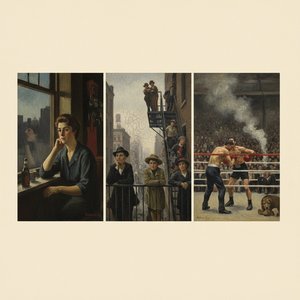
At its heart, Magic Realism is defined by its seamless integration of the extraordinary into the ordinary. In visual art, this manifests as meticulously detailed depictions of realistic scenes punctuated by subtle surreal twists – a floating object, an impossible perspective, or symbolic imagery that defies logical explanation. Consider Frida Kahlo’s *The Two Fridas*, where two versions of the artist are connected by exposed hearts and veins; the hyper-realistic portrayal of her physical form is juxtaposed with fantastical elements that reveal her inner turmoil and fragmented identity. Similarly, Edward Hopper's paintings, like *Nighthawks*, evoke a sense of quiet mystery, blending mundane urban scenes with an almost supernatural stillness.
In literature, this aesthetic translates to narratives where magical events are presented as commonplace occurrences, accepted without question by the characters within the story. Salman Rushdie’s *Midnight's Children* exemplifies this beautifully; the telepathic link between children born at the moment of India’s independence is treated not as an anomaly but as a natural consequence of the nation’s tumultuous birth. This deliberate lack of explanation, this acceptance of the impossible, forces the reader to question their own perceptions of reality and consider alternative possibilities. The power lies in creating a world that feels both familiar and unsettlingly strange.
Themes of Identity, History & the Subconscious: Unveiling Deeper Narratives
Beneath the surface of fantastical events, Magic Realism consistently explores profound themes of identity, history, and the subconscious. Often, these narratives serve as a means of reclaiming cultural heritage—of preserving myths, legends, and oral traditions that have been marginalized or suppressed. The blending of past and present is common, with stories frequently revisiting historical traumas or ancestral memories to illuminate contemporary struggles. Authors use magic as a tool for social commentary, challenging dominant power structures and giving voice to the voiceless.
The exploration of the subconscious is equally central. Magic Realism often delves into dreams, intuition, and the irrational aspects of human experience—those hidden layers of reality that lie beyond conscious control. This can be seen in the recurring motifs of prophecy, premonition, and altered states of consciousness. The works invite audiences to explore their own inner worlds, to question the nature of perception, and to recognize the interconnectedness of all things. The extraordinary isn’t simply *happening* within the narrative; it's a reflection of the characters’ emotional landscapes and collective unconscious.
Magic Realism vs. Surrealism: Distinguishing Dreamscapes from Everyday Wonders
Surrealism is an art and cultural movement that developed in Europe in the aftermath of World War I in which artists aimed to allow the unconscious mind to express itself, often resulting in the depiction of illogical or dreamlike scenes and ideas. I...
While often conflated, Magic Realism and Surrealism represent distinct artistic movements with differing philosophical underpinnings. Surrealism, born in the aftermath of World War I, aimed to unlock the power of the unconscious mind through illogical juxtapositions, dreamlike imagery, and automatic writing—a deliberate attempt to bypass reason and tap into the raw energy of the subconscious. Its intention, as articulated by leader André Breton, was to resolve the contradictions between dream and reality into a “super-reality.” Works of Surrealism often feature shocking or unsettling images designed to provoke a visceral reaction.
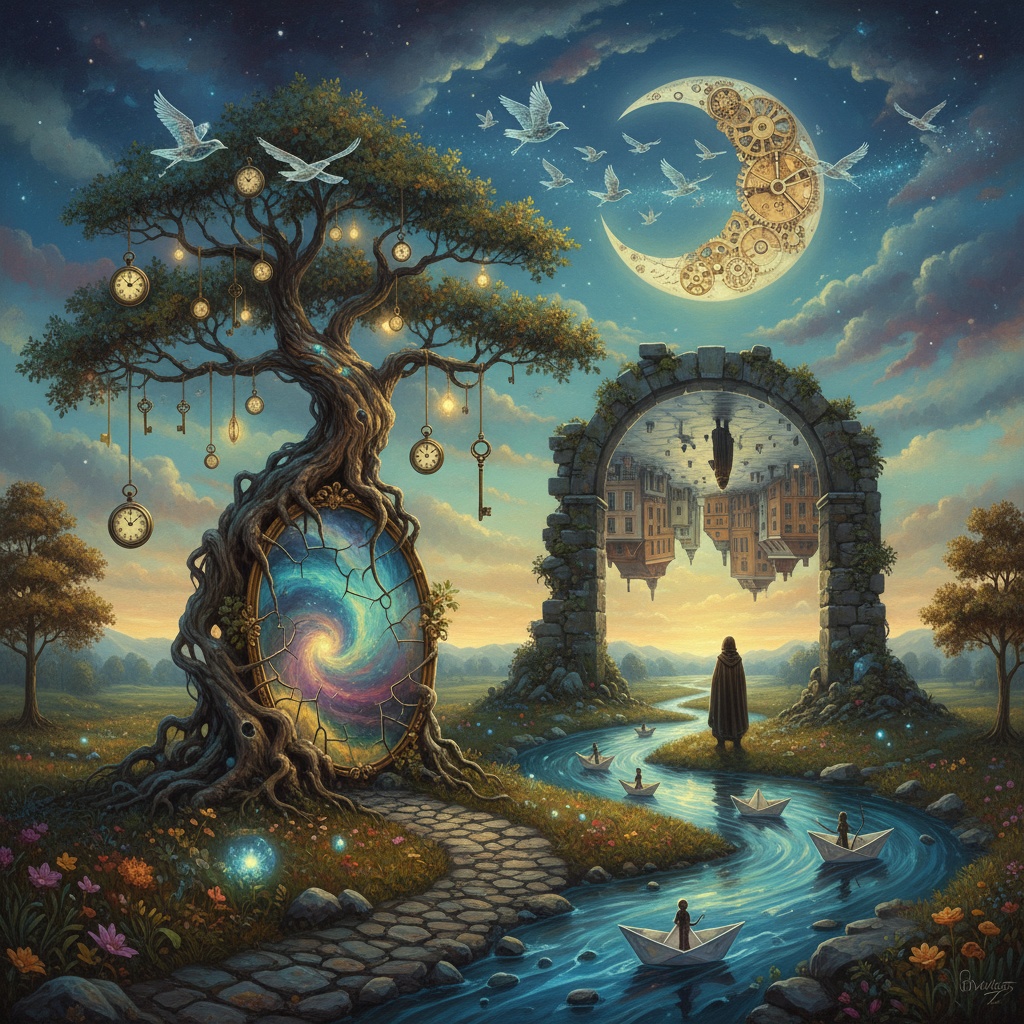
Magic Realism*, however, operates within a framework of realism. It doesn’t seek to *create* an alternate reality but rather to reveal the magic that already exists within our own world. While both movements embrace the irrational and fantastical, Surrealism prioritizes psychological exploration and artistic experimentation, whereas Magic Realism uses magical elements to comment on social, political, or historical realities. The key difference lies in intent: Surrealism aims to disrupt reality; Magic Realism seeks to enrich it.
Contemporary Echoes: The Enduring Legacy of Magic Realism in Modern Art
The influence of Magic Realism continues to resonate in contemporary art and literature, albeit often in more subtle forms. Authors like Neil Gaiman seamlessly blend mythology, folklore, and modern sensibilities in his novels, creating worlds that feel both familiar and otherworldly. Alice Hoffman’s works frequently incorporate magical elements into stories exploring themes of family, identity, and the power of storytelling. The legacy extends beyond Western literature as well, with prominent writers in Bengali literature like Nabarun Bhattacharya and Akhteruzzaman Elias employing magic realism to explore social issues and cultural complexities.
Today, artists continue to draw inspiration from Magic Realism’s core principles—the blurring of boundaries between reality and fantasy, the exploration of identity and history, and the use of magical elements as a means of social commentary. At OriginalUniqueArt, we celebrate this enduring legacy by offering high-quality reproductions of masterpieces that embody the spirit of Magic Realism, allowing you to bring these captivating worlds into your own home. Explore our collection today and discover the magic for yourself – from the evocative landscapes of Karl Bodmer to the fantastical creations of Alejandro Colunga Marín, and beyond.