
The Genesis of Realism: A Rejection of Idealism
The mid-19th century was a period of profound upheaval, a time when the foundations of European society were shaken by industrialization, political revolutions, and burgeoning social consciousness. In the art world, this seismic shift manifested as a decisive break from the established norms of Romanticism and Neoclassicism – a movement that would come to be known as Realism. For decades, artists had prioritized idealized beauty, historical grandeur, and allegorical narratives, often divorced from the realities of contemporary life. But a growing dissatisfaction with these conventions began to simmer, fueled by a desire for authenticity and a commitment to portraying the world as it *was*, not as it was imagined or wished to be. This wasn’t merely a stylistic shift; it was a philosophical one, rooted in the belief that art should engage directly with the present, reflecting the lives of ordinary people and the complexities of modern existence.
The seeds of this rebellion were sown by artists who dared to look beyond the polished surfaces of aristocratic society. While Romanticism had explored emotional intensity, it often did so through dramatic landscapes or exotic subjects. Realists, conversely, turned their gaze inward, focusing on the everyday struggles and triumphs of the working class, the urban poor, and the unglamorous aspects of life that had previously been deemed unworthy of artistic representation. This was a radical act – a deliberate rejection of established hierarchies and a challenge to the very definition of what constituted “high art.” The intellectual climate, too, played a crucial role, with thinkers like Auguste Comte advocating for positivism—the belief in scientific observation as the only true source of knowledge—further encouraging artists to embrace empirical accuracy.
Gustave Courbet and the Foundations of the Movement
Realism was an artistic movement that emerged in France in the 1840s. Realists rejected Romanticism, which had dominated French literature and art since the early 19th century. The artist Gustave Courbet, the original proponent of Realism, sought to ...
No discussion of Realism would be complete without acknowledging the pivotal role of Gustave Courbet. Often hailed as the “father of European Realism,” Courbet wasn’t simply painting what he saw; he was making a conscious statement about the purpose of art itself. His 1855 exhibition, held in opposition to the official Paris Salon after his submissions were repeatedly rejected, served as a manifesto for the movement. He titled it “Pavilion du Réalisme,” boldly declaring his intention to depict life without embellishment or idealization. This wasn’t about technical skill alone; it was about confronting viewers with the unvarnished truth.
The Stonebreakers, though tragically lost during World War II, remains a seminal work emblematic of Courbet's approach. Depicting two laborers engaged in backbreaking toil, the painting eschewed romanticized notions of rural life, instead presenting a stark and unflinching portrayal of poverty and hardship. The monumental scale typically reserved for historical paintings lent dignity to these anonymous figures, challenging the prevailing social order. Similarly, A Burial at Ornans, another groundbreaking work, depicted an ordinary funeral in Courbet’s hometown with a level of detail and realism previously unseen in such large-scale compositions. The absence of idealized figures or dramatic gestures forced viewers to confront the mundane realities of death and mourning.
Courbet's insistence on “showing me an angel, and I’ll paint one” encapsulates his commitment to observable reality. He wasn’t interested in depicting mythological subjects or religious scenes unless he could witness them firsthand. This dedication to truthfulness, however, was often met with criticism and scandal. His paintings were accused of being vulgar, ugly, and politically subversive, but Courbet remained steadfast in his vision, paving the way for a new generation of artists who would embrace realism as a means of social commentary.
Beyond France: The Spread and Adaptation of Realist Principles
While Realism originated in France, its influence quickly spread across Europe and beyond. In Germany, artists like Adolph Menzel embraced the movement’s focus on depicting contemporary life, albeit with a slightly different emphasis. Menzel's work often celebrated the power and progress of the German state, portraying scenes of industrialization and military strength. In Russia, Ilya Repin became a leading figure in Realism, capturing the lives of peasants and workers with remarkable detail and emotional depth. Barge Haulers on the Volga, for example, is a powerful depiction of the arduous labor involved in transporting goods along the river, highlighting the plight of the working class.
The adaptation of Realist principles varied from country to country, reflecting local artistic traditions and social contexts. In Italy, artists like Giulio Rosati focused on Orientalist themes, depicting scenes of North African life with meticulous accuracy and a romantic sensibility. In England, while not forming a cohesive “school” of Realism, artists such as James Abbott McNeill Whistler explored similar themes of everyday life and the beauty of ordinary subjects. The key takeaway is that Realism wasn’t a monolithic style; it was a broad movement characterized by a shared commitment to portraying reality with honesty and accuracy, but expressed through diverse artistic approaches.
Subject Matter & Technique: Capturing the Everyday with Unflinching Accuracy
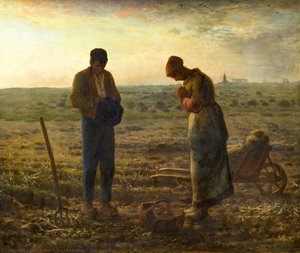
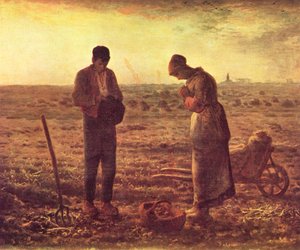
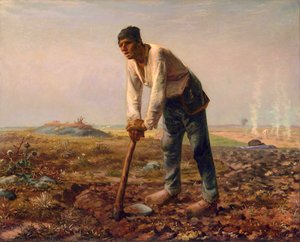
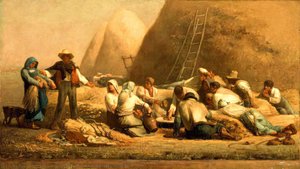
The subject matter of Realist paintings represented a significant departure from previous artistic conventions. Instead of historical heroes or mythological figures, Realists focused on ordinary people engaged in everyday activities – laborers working in fields, families sharing meals, scenes of urban life. This wasn’t simply about depicting the lower classes; it was about recognizing the dignity and humanity of all individuals, regardless of their social status. Artists like Jean-François Millet captured the beauty and resilience of rural life, portraying peasants with a sense of empathy and respect.
Technically, Realist painters often employed techniques that emphasized accuracy and detail. They favored earth tones and muted colors to create a sense of authenticity, avoiding the bright, idealized palettes of Romanticism. Brushstrokes were typically visible, adding texture and depth to their compositions. The goal wasn’t necessarily to create a perfectly polished surface; it was to convey the raw physicality of life. Artists often worked *en plein air* (outdoors), directly observing nature and capturing the nuances of light and shadow. This commitment to empirical observation extended to their studio practice, with artists meticulously studying anatomy, perspective, and composition.
Realism's Legacy: Influence on Subsequent Art Movements
The impact of Realism extends far beyond the 19th century. It laid the groundwork for many subsequent art movements, including Impressionism, Post-Impressionism, and even aspects of modern photography. The Impressionists, while diverging from Realism’s focus on social commentary, inherited its commitment to depicting contemporary life and capturing fleeting moments in time. Post-Impressionist artists like Vincent van Gogh and Paul Cézanne built upon the foundations laid by Realism, exploring new ways of representing emotion and perception.
The enduring legacy of Realism lies in its challenge to established norms and its commitment to portraying the world with honesty and accuracy. It forced viewers to confront uncomfortable truths about society and challenged the very definition of what constituted “art.” Today, Realist paintings continue to resonate with audiences, offering a glimpse into the lives of ordinary people and reminding us of the power of art to reflect and shape our understanding of the world.
Collecting Realism Today: Key Artists and Considerations
For collectors interested in acquiring works from the Realist period, several key artists represent excellent investment opportunities. Gustave Courbet remains highly sought after, though his paintings command significant prices. Jean-François Millet’s depictions of rural life are also highly valued, offering a more accessible entry point for collectors. Honoré Daumier's prints and lithographs provide another affordable option, showcasing the artist’s satirical wit and social commentary.
When collecting Realism, it’s important to consider both the artistic merit of the work and its historical context. Look for paintings that demonstrate a commitment to accuracy, detail, and emotional depth. Provenance – the history of ownership – is also crucial, as it can provide valuable insights into the artwork’s authenticity and significance. At WahooArt.com, we offer museum-quality reproductions of Realist masterpieces, allowing you to experience the beauty and power of these iconic works in your own home. Whether you're a seasoned collector or just beginning your art journey, exploring the world of Realism is sure to be a rewarding experience.