Early Life & Artistic Foundations: From Edinburgh Beginnings to Sporting Scenes
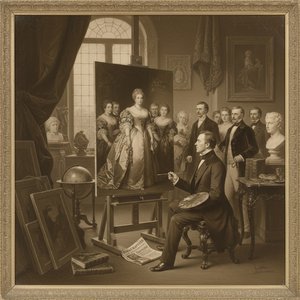
Academic art, academicism, or academism, is a style of painting and sculpture produced under the influence of European academies of art. This method extended its influence throughout the Western world over several centuries, from its origins in Italy...
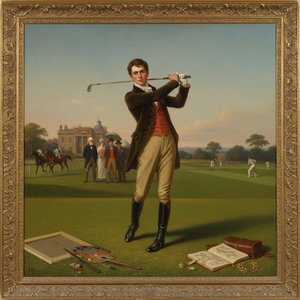
Sir Francis Grant’s journey to becoming one of Victorian England’s most sought-after portraitists began not amidst the refined circles he would later dominate, but in the rugged landscapes of Scotland. Born in Edinburgh on January 18, 1803, into a family steeped in aristocratic tradition – his father was a distinguished lawyer and landowner – young Francis initially seemed destined for a similar path. However, the allure of artistic expression proved too strong to resist. His early training under Alexander Nasmyth, a prominent landscape painter, laid the groundwork for a keen eye for detail and composition, though it was a shift in focus that truly ignited his career. Grant’s initial success wasn't found in capturing likenesses but rather in depicting the vibrant world of sporting life, specifically fox-hunting scenes around Melton Mowbray in Leicestershire. This move proved pivotal; access to wealthy patrons involved in these pursuits provided him with both financial stability and a crucial network that would propel his artistic ascent.
These early paintings weren’t merely depictions of rural leisure; they were imbued with a sense of aristocratic elegance and vitality, capturing the energy and social dynamics of the hunting field. Grant possessed an innate ability to portray not just *what* he saw, but also the atmosphere and character of his subjects. This talent quickly garnered attention, leading to his first significant exhibition at the Royal Academy in 1834 with “Melton Breakfast,” a work that signaled the arrival of a promising new artist.
The Rise to Prominence: Establishing a Reputation in London Portraiture
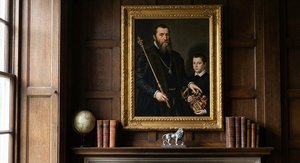
 Thomas Phillips
Discover Thomas Phillips (1770-1845), a British portrait & history painter renowned for detailed realism and capturing prominent figures like Lord Byron. #BritishArt #PortraitPainting
Following the success of “Melton Breakfast”, Grant deftly transitioned from sporting scenes to portraiture, recognizing the greater demand and potential for establishing himself within London’s elite artistic community. He understood that portraits weren't simply about rendering physical features; they were statements of social status, power, and aspiration. His style, while initially influenced by earlier masters like Lawrence, quickly evolved into something uniquely his own – a refined realism tempered with Victorian sobriety. Grant excelled at capturing the youthful beauty and aristocratic poise of his sitters, creating images that exuded both glamour and respectability.
His portraits weren’t flamboyant or overly dramatic; instead, they were characterized by subtle elegance, meticulous attention to detail in clothing and accessories, and a flattering yet honest depiction of character. This approach resonated deeply with the upper classes, who sought paintings that reflected their social standing and refined sensibilities. As his reputation grew, so did his clientele, attracting prominent figures from politics, literature, and society.
Patronage and the Aristocracy: Painting Queen Victoria’s Circle
The portraiture of Queen Elizabeth I (1533–1603) spans the evolution of English royal portraits in the early modern period (1400/1500-1800), from the earliest representations of simple likenesses to the later complex imagery used to convey the power ...
The pinnacle of Grant's success arrived with commissions to paint members of the Royal Family, most notably Queen Victoria herself. This was a testament not only to his artistic skill but also to his ability to navigate the complex world of courtly patronage. Queen Victoria, a discerning patron known for her appreciation of realism and sentimentality, recognized in Grant’s work a sensitivity that captured both her regal authority and personal warmth. To paint the Queen was to enter the very heart of Victorian society, solidifying Grant's position as *the* portraitist of the era.
Beyond Victoria, his studio became a hub for aristocratic families eager to immortalize their likenesses. The 2nd Lord de Tabley, captured by Margaret Sarah Carpenter in academic robes, exemplifies this trend – a refined portrayal showcasing Victorian elegance and social standing. Grant’s success wasn't merely about technical proficiency; it was about understanding the desires of his patrons and translating them into compelling visual narratives that reinforced their status and identity.
Grant as President of the Royal Academy: Shaping Victorian Art & Taste
In 1866, Francis Grant succeeded Sir Eastlake as President of the Royal Academy, a position he held with distinction until his death in 1878. This appointment was more than just an honor; it placed him at the very center of British artistic life, responsible for shaping taste and promoting emerging talent. He instituted the Academy’s custom of holding major loan exhibitions, providing a platform for showcasing both established masters and promising new artists.
As President, Grant championed a balanced approach to art, valuing technical skill alongside originality and emotional depth. He sought to bridge the gap between traditional academic training and emerging artistic movements, fostering a climate of innovation while upholding the standards of excellence that had defined the Academy for generations. His leadership was marked by a commitment to accessibility, ensuring that art remained relevant and engaging for a broad audience.
A Style Defined: Realism, Sobriety, and the Academic Tradition
Grant’s artistic style is best described as a synthesis of realism and academic tradition. He possessed an exceptional ability to capture likenesses with meticulous detail, yet his portraits were never mere photographic representations. He imbued them with a sense of personality and vitality, capturing not just *what* his sitters looked like but also their inner character.
Influenced by artists like Thomas Phillips, known for his detailed realism, Grant tempered this approach with Victorian sensibilities – a sense of sobriety, restraint, and moral uprightness. His work often featured elegant compositions, subtle color palettes, and a focus on flattering light and shadow. While he embraced the academic emphasis on classical form and technique, he also infused his portraits with a distinctly modern sensibility, reflecting the changing social dynamics and aesthetic preferences of Victorian England. Carl Haag’s detailed Orientalist scenes offer a contrasting yet complementary perspective on the artistic landscape of the period, highlighting the diverse influences shaping British art at the time.
Legacy and Influence: Grant's Place in 19th-Century British Art
Sir Francis Grant’s legacy extends far beyond the numerous portraits he created. He left an indelible mark on Victorian society as a chronicler of its elite, a champion of artistic excellence, and a leader who shaped the direction of British art. His influence can be seen in the work of subsequent portrait painters who followed in his footsteps, adopting his refined realism and commitment to capturing both likeness and character.
Today, Grant’s paintings offer a fascinating glimpse into the world of 19th-century Britain – a world of aristocracy, power, and social ambition. His work continues to captivate audiences with its elegance, sophistication, and enduring beauty. At OriginalUniqueArt.com, we are proud to offer high-quality reproductions of Grant’s masterpieces, allowing you to experience the artistry and historical significance of his paintings firsthand. Explore our collection and discover the timeless appeal of Sir Francis Grant – a true master of Victorian portraiture.
- Free Art Consultation – Personalized guidance from art experts
- Custom Paintings from Photos – Handmade oil paintings or digital reproductions from any famous works