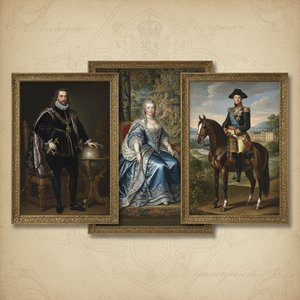
The Rise of Portraiture: Reflecting a New Social Order
 The Embodiment of Power: Exploring Representations of Status in Art History
Explore the fascinating history of status symbols in art! Discover how Renaissance portraits conveyed wealth, power & legacy. Expert insights for discerning collectors at OriginalUniqueArt.
Before the Renaissance, portraiture as we understand it – a dedicated representation of an individual’s likeness – was relatively uncommon. While depictions of rulers and religious figures existed, they were often idealized and symbolic rather than striving for true physical resemblance. The 15th century witnessed a profound shift, fueled by the burgeoning humanist movement in Italy. This new intellectual climate placed increasing value on the individual, their achievements, and their place within society. As merchants and bankers amassed wealth and influence, they sought ways to demonstrate their status and commemorate their lives, leading to an unprecedented demand for portraits. Early examples weren’t always standalone works; often, donors were included in religious scenes, but gradually, the portrait emerged as a distinct genre, reflecting not just physical appearance but also character, ambition, and social standing. Jan van Eyck's Portrait of a Man (1433) exemplifies this transition – it is less about religious devotion and more about capturing the presence and dignity of an individual, a testament to the growing importance of earthly identity.
Symbols of Status: Deciphering the Language of Aristocratic Portraits
 Henri III
Richard Parkes Bonington’s "Henri III" – a lavish Baroque oil painting showcasing aristocratic leisure. Explore rich detail, dramatic lighting & historical elegance.
The power of portraiture lay not just in resemblance but in its ability to communicate status through carefully chosen symbols. Artists became adept at employing visual cues that instantly conveyed a sitter’s position within the social hierarchy. Rich fabrics – velvets, silks, and brocades – were obvious indicators of wealth, as was elaborate jewelry. Certain poses also held significance; a three-quarter view, popularized in Italy, allowed for greater psychological engagement with the viewer, suggesting confidence and authority. Background elements were equally important. A grand architectural setting or an expansive landscape implied land ownership and power. Consider Portrait of a Noblewoman, Probably Isabella of Portugal (1397–1472) by Jan van Eyck; her elaborate headdress, luxurious gown, and the inclusion of symbolic objects all speak to her noble birth and refined taste. Even seemingly innocuous details – the way hands are positioned, the presence or absence of specific animals – could be laden with meaning, understood by a discerning audience. Hans Holbein the Younger’s Portrait of Benedikt von Hertenstein masterfully employs these techniques; the sitter's attire and the meticulously rendered objects surrounding him speak volumes about his position and education.
Patronage & Power: How Wealth Commissioned Artistic Legacy
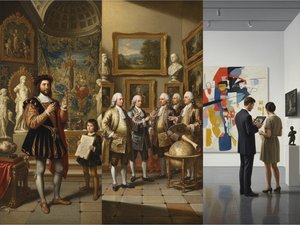 The Patron's Gaze: Art Collectors in Western Painting – A Renaissance to Modern History
Explore the fascinating history of art collectors in Western painting, from Renaissance patrons to modern museum founders. Discover how portraits revealed status, shaped artistic movements & built lasting legacies. Expert insights at OriginalUniqueArt.
The commissioning of a portrait was, in itself, an assertion of power. It required significant financial investment, demonstrating not only wealth but also access to skilled artists – the most sought-after painters were often booked years in advance. Families like the Medici didn’t simply *acquire* art; they actively shaped it, dictating subject matter, style, and even specific details to reinforce their desired image. This control extended beyond mere representation; portraits became tools of propaganda, carefully crafted narratives designed to legitimize authority and project an aura of sophistication. Ludovico Sforza's patronage of Leonardo da Vinci exemplifies this dynamic – commissioning works not only showcased his wealth but also aligned him with the genius of the age. The Borgia family similarly utilized art to bolster their reputation, often employing artists to create grand frescoes depicting their lineage and achievements. The act of collecting itself became a status symbol; owning masterpieces signaled cultural refinement and intellectual prowess.
Masterstrokes of Representation: Key Artists and Their Noble Subjects
 frederick bacon barwell
Explore the portraits of Frederick Bacon Barwell, renowned 19th-century artist specializing in aristocratic subjects & historical figures. Discover his masterful technique.
Several artists rose to prominence during this period, specializing in the art of aristocratic portraiture. Anthony van Dyck, renowned for his elegant depictions of the English aristocracy, captured not just physical likeness but also a sense of refined grace and social standing. His portraits often depicted sitters within opulent interiors, emphasizing their wealth and power. Richard Parkes Bonington’s “Henri III” showcases lavish Baroque oil painting showcasing aristocratic leisure, rich detail, dramatic lighting & historical elegance. Girolamo Forabosco's captivating portraits explored realistic depictions & expressive faces of Venetian nobility, with masterpieces like 'David' and 'Courtesan'. Frederick Bacon Barwell specialized in aristocratic subjects & historical figures, demonstrating a masterful technique that captured the essence of his sitters. Hans Krell (Krehl/Kreil) was renowned for royal portraiture, including the dramatic ‘Battle of Orsha’, showcasing both military prowess and noble bearing. Giulio Campi’s Portrait of Father Galeazzo Campi offers a compelling study in character and piety.
Beyond Likeness: The Psychological Depth in Aristocratic Portraiture
As portraiture matured, artists moved beyond simply capturing physical resemblance to explore the inner lives of their sitters. Subtle nuances in expression, carefully chosen poses, and symbolic details were used to convey personality, ambition, and even vulnerability. The gaze itself became a powerful tool – a direct connection between sitter and viewer that invited contemplation and engagement. Artists like Titian excelled at capturing this psychological depth, imbuing their portraits with a sense of realism and emotional complexity. The subtle play of light and shadow, the delicate rendering of skin tones, and the careful attention to detail all contributed to creating works that felt not just like representations but like intimate encounters with real individuals. This shift marked a profound evolution in portraiture, transforming it from a mere display of status into a powerful form of psychological insight.
Collecting the Gaze: Investing in Representations of Status and History
Today, collecting aristocratic portraits offers more than just aesthetic pleasure; it’s an investment in history, artistry, and cultural legacy. These works provide invaluable insights into past societies, revealing not only the appearance of individuals but also their values, ambitions, and social standing. OriginalUniqueArt.com provides access to a vast collection of museum-quality reproductions, allowing collectors to acquire these masterpieces at accessible price points. Whether you’re seeking a grand statement piece or a subtle accent for your home, our skilled artists meticulously recreate each painting with authentic brushstrokes and gallery-quality materials. Beyond the aesthetic value, owning an aristocratic portrait is a testament to discerning taste and a deep appreciation for art history – a tangible connection to the past that will be cherished for generations. Explore our collection today and discover the power of the gaze.