Introduction
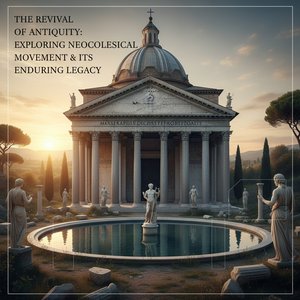
Imagine stepping back into a world yearning for order and reason – a reaction against the ornate excesses of the Baroque and Rococo periods. This is the essence of Neoclassicism, an art movement born from the rediscovery of classical antiquity in the 18th century. More than just a stylistic shift, it was a philosophical embrace of Enlightenment ideals: clarity, balance, harmony, and civic virtue.
The seeds of Neoclassicism were sown during the Grand Tour, where European aristocrats and artists traveled to Italy, captivated by the ruins of Pompeii and Herculaneum. These archaeological finds ignited a passion for Greek and Roman art, architecture, and literature. This wasn’t simply imitation; it was an attempt to distill the perceived purity and nobility of classical forms into something relevant for their own time – a world grappling with revolution, political upheaval, and the rise of democratic thought.
The artworks that emerged from this era weren't merely beautiful objects. They were often imbued with moral lessons, patriotic fervor, and a desire to inspire citizens towards noble action. Think of Jacques-Louis David’s powerful depictions of Roman heroism or Antonio Canova’s sculptures embodying grace and idealism. These pieces reflected the aspirations of a society striving for a new kind of republic – one founded on principles of justice, reason, and self-governance.
But why do these masterpieces continue to resonate with us today? Perhaps it's their timeless quality—the enduring power of human form, the elegance of composition, and the universal themes they explore. Or maybe it’s because they remind us of a time when art was seen as a vehicle for social change, capable of shaping beliefs and inspiring generations.
Over the next few moments, we will embark on a journey through ten exceptional artworks that define the Neoclassical movement. Each piece offers a unique window into this fascinating period, revealing not only artistic brilliance but also the complex cultural forces that shaped it. Prepare to be transported back in time and discover the enduring legacy of Neoclassicism.
The Grande Odalisque - Jean-Auguste-Dominique Ingres
 The Grande Odalisque - Jean-Auguste-Dominique Ingres
Before us lies a vision – a dream spun from silk and shadow, a whisper of exotic lands. This is The Grande Odalisque by Jean-Auguste-Dominique Ingres, completed in 1814. A pivotal work bridging the precision of Neoclassicism with the burgeoning Romantic spirit, it’s no surprise this painting secured its place among the movement's defining masterpieces.
Ingres, a champion of classical form, dared to deviate from strict anatomical accuracy, elongating his subject’s body in pursuit of an aesthetic ideal. This sparked initial criticism but ultimately contributed to the painting’s ethereal quality and undeniable allure. The smooth, polished surface – achieved through layers of meticulous brushwork – invites the eye to linger on every curve and contour.
More than a nude reclining figure, The Grande Odalisque embodies Western fascination with the “Orient.” Though Ingres never journeyed to Turkey, he conjured an idealized harem scene filled with rich fabrics, ornate details, and a languid sensuality. The painting isn’t simply *about* an odalisque; it's about the *idea* of her – a symbol of beauty, mystery, and unattainable desire.
The work continues to captivate because it transcends its historical context. It speaks to our enduring fascination with the human form, the power of imagination, and the delicate balance between realism and idealization. Like all great art, The Grande Odalisque doesn’t just decorate a space; it transforms it – inviting contemplation on themes of beauty, desire, and the complexities of cultural exchange.
Plate one, from A Rake's Progress - William Hogarth
 Plate one, from A Rake's Progress - William Hogarth
Step into a world teeming with life – a chaotic yet captivating glimpse into 18th-century London. This is Plate one, from A Rake's Progress by William Hogarth, an engraving that secured its place among the Top 10 masterpieces not for its serene beauty, but for its unflinching social commentary. Hogarth wasn’t merely depicting a scene; he was crafting a moral tale, a visual novel exposing the pitfalls of wealth and excess.
The meticulous detail is astonishing – from the scattered papers hinting at dubious schemes to the figures engrossed in gambling and frivolous pursuits. Hogarth's mastery of engraving allows for an incredible density of narrative; each line contributes to a sense of overwhelming activity and impending doom. The composition, though seemingly chaotic, is carefully constructed to draw the eye towards the central figure, our “rake,” already on a path of self-destruction.
What sets this work apart is its satirical genius. Hogarth doesn’t simply condemn vice; he dissects it with wit and precision, offering a scathing critique of societal values. The studio itself – cluttered with the tools of creation – becomes symbolic of the messy pursuit of ambition and the fleeting nature of fortune.
Plate one continues to resonate today because its themes are timeless. It’s a cautionary tale about the dangers of unchecked desire, the allure of superficiality, and the importance of moral integrity. More than just an artwork, it's a mirror reflecting our own societal obsessions – a reminder that true wealth lies not in possessions, but in character.
Self Portrait with Her Daughter, Julie - Louise Élisabeth Vigée Le Brun
 Self Portrait with Her Daughter, Julie - Louise Élisabeth Vigée Le Brun
There’s a quiet intimacy that radiates from Self Portrait with Her Daughter, Julie by Louise Élisabeth Vigée Le Brun – a warmth that transcends the centuries. Painted in 1789, on the cusp of revolution, this artwork isn't simply a portrait; it’s a tender testament to maternal love and a celebration of familial bonds.
Vigée Le Brun, renowned for her portraits of Marie Antoinette, masterfully blends Rococo grace with emerging Neoclassical principles. The composition is deceptively simple – mother and daughter embraced against a dark background – yet profoundly moving. Her skillful use of light and shadow sculpts their forms, drawing the eye to their faces and the palpable connection between them.
The muted palette of browns and creams enhances the sense of serenity, while the delicate brushwork creates a luminous quality that feels both timeless and deeply personal. This painting secured its place among the Top 10 not for grand spectacle, but for its ability to capture a universal emotion with such exquisite sensitivity.
At , we believe art should live *with* you – enriching your space and inspiring daily contemplation. Self Portrait with Her Daughter, Julie embodies this philosophy perfectly. It’s a piece that invites quiet reflection, reminding us of the enduring power of love and the beauty found in simple moments.
Watson and the Shark - John Singleton Copley
 Watson and the Shark - John Singleton Copley
Imagine the spray of salt water on your face, the desperate cries echoing across a turbulent sea… This is the visceral power of Watson and the Shark by John Singleton Copley. Completed in 1778, this isn’t merely a painting; it's a dramatic narrative frozen in time – a testament to human resilience against the unforgiving forces of nature.
Copley masterfully captures the harrowing rescue of Brook Watson, a young man attacked by a shark in Havana Harbor. The composition is dynamic and unsettling, with diagonal lines conveying movement and tension. The artist’s skillful use of light and shadow emphasizes the figures' desperation, while the dark, earthy palette evokes a sense of foreboding.
What elevates this work beyond simple reportage is its emotional depth. Copley doesn’t shy away from portraying the brutality of the attack, yet he also imbues the scene with a glimmer of hope – the outstretched hands reaching towards Watson, symbolizing salvation. This painting secured its place among the Top 10 for its ability to capture both terror and triumph.
At , we believe art should resonate on a visceral level. Watson and the Shark does just that – reminding us of our own vulnerability and the enduring power of human connection. It’s a piece that transforms any space into a gallery of emotion, inviting contemplation on life's most profound challenges.
The Death of General Wolfe - Benjamin West
 The Death of General Wolfe - Benjamin West
Close your eyes and imagine the echoes of cannon fire, the scent of gunpowder… This is the world captured in The Death of General Wolfe by Benjamin West, a painting that transcends mere historical documentation. Completed in 1770, it’s a powerful narrative of sacrifice and heroism – a defining moment in the Seven Years' War immortalized on canvas.
West boldly broke with convention by depicting his subjects in contemporary attire rather than classical garb, lending an immediacy to the scene that resonated deeply with audiences. The composition is carefully constructed, drawing the eye towards the fallen General Wolfe – a Christ-like figure surrounded by grief and camaraderie. The rich, earthy palette of browns, reds, and greens evokes a sense of solemnity, while dramatic lighting emphasizes the emotional intensity.
This painting secured its place among the Top 10 for its innovative approach to history painting and its ability to capture both the brutality and nobility of war. The inclusion of Indigenous figures adds another layer of complexity, reflecting contemporary ideals and challenging traditional narratives.
At , we believe art should spark conversation and inspire reflection. The Death of General Wolfe does just that – reminding us of the human cost of conflict and the enduring power of courage. It’s a piece that transforms any space into a gallery of history, inviting contemplation on themes of loss, sacrifice, and national identity.
Basket of Peaches - Jean-Baptiste-Siméon Chardin
 Basket of Peaches - Jean-Baptiste-Siméon Chardin
Imagine the warmth of a summer afternoon, the sweet scent of ripe peaches… This is the world evoked by Basket of Peaches by Jean-Baptiste-Siméon Chardin. Painted in 1768, this isn’t simply a still life; it's an invitation to pause and find beauty in the quiet moments of everyday existence.
Chardin elevates commonplace objects into subjects worthy of profound contemplation through his masterful use of light and texture. The thick application of paint – known as impasto – lends the peaches a tactile quality, almost inviting touch. The soft, diffused lighting gently illuminates the scene, revealing delicate shadows that define their forms.
In an era dominated by Rococo excess, Chardin offered a contrasting vision—one rooted in simplicity and authenticity. This painting secured its place among the Top 10 for its ability to capture the *essence* of his subjects, not through photographic precision but through a sensitive revelation of volume and surface.
At , we believe art should enrich your space with quiet elegance. Basket of Peaches does just that – reminding us of the beauty found in simple pleasures and inviting contemplation on themes of abundance, fleeting time, and the joy of everyday life.
A Bay Hunter With Two Spaniels - George Stubbs
 A Bay Hunter With Two Spaniels - George Stubbs
There’s a stillness that permeates A Bay Hunter With Two Spaniels by George Stubbs – a quiet harmony between animal, landscape, and light. Painted in 1777, this isn't merely an equestrian portrait; it’s a celebration of nature and the enduring bond between humans and animals.
Stubbs’ renowned skill lies in his anatomical accuracy and graceful depiction of form. The majestic bay hunter is rendered with exquisite detail, its muscles rippling beneath its coat. The playful spaniels add a touch of life and movement to the serene scene, while the soft, diffused lighting evokes a sense of tranquility.
This painting secured its place among the Top 10 for its masterful balance of realism and emotion. Stubbs’ ability to capture the *essence* of his subjects – their strength, grace, and vitality – transcends mere representation. The earthy palette and harmonious composition create a timeless quality that resonates deeply.
At , we believe art should inspire calm and sophistication in your space. A Bay Hunter With Two Spaniels does just that – reminding us of the beauty found in nature and inviting contemplation on themes of companionship, leisure, and the enduring power of the natural world.
The Lictors Returning to Brutus the Bodies of his Sons - Jacques-Louis David
 The Lictors Returning to Brutus the Bodies of his Sons - Jacques-Louis David
There’s a profound stillness within The Lictors Returning to Brutus the Bodies of his Sons by Jacques-Louis David – a silence broken only by the weight of duty and sacrifice. Painted in 1789, this isn't merely a historical depiction; it’s an exploration of civic virtue and the agonizing choices that define leadership.
David masterfully employs Neoclassical clarity and precision to render this dramatic scene. The meticulous attention to detail – from the smooth skin of Brutus to the intricate folds of his garments – creates a sense of realism, while the restrained color palette underscores the gravity of the moment. The composition is carefully balanced, drawing the eye towards the central figures and their expressions of sorrow and resolve.
This painting secured its place among the Top 10 for its ability to capture both the personal tragedy and the public duty inherent in Brutus’s story. It became a potent symbol of sacrifice during a period of revolutionary fervor, aligning with ideals of liberty and republicanism.
At , we believe art should inspire contemplation on timeless themes. The Lictors Returning to Brutus the Bodies of his Sons does just that – reminding us of the costs of leadership and inviting reflection on our own moral compasses. It’s a piece that transforms any space into a gallery of history, preserving the emotion and texture of this powerful narrative.
Night, plate four from The Four Times of the Day - William Hogarth
 Night, plate four from The Four Times of the Day - William Hogarth
Imagine a chill night air, the flicker of lamplight casting long shadows on cobbled streets… This is the world William Hogarth unveils in Night, plate four from The Four Times of the Day . More than just a depiction of 18th-century London, this engraving is a stark and unflinching commentary on the moral complexities of urban life.
Hogarth’s masterful use of detail captures a cross-section of society – from the wealthy indulging in clandestine pleasures to the impoverished struggling for survival. The scene is both humorous and critical, revealing the social issues prevalent during his time. The dramatic lighting and chaotic composition create a sense of unease, emphasizing the decay and corruption hidden beneath the city’s surface.
This work secured its place among the Top 10 for its ability to provoke thought and challenge societal norms. It remains relevant today as a reminder of the enduring struggles with poverty, inequality, and human nature. At , we strive to preserve the emotion and detail of Hogarth’s original vision, allowing you to bring this powerful narrative into your own space.
Napoleon at the St. Bernard Pass - Jacques-Louis David
 Napoleon at the St. Bernard Pass - Jacques-Louis David
Feel the wind whipping through your hair, the thunder echoing across the mountains… This is the energy Jacques-Louis David captures in Napoleon at the St. Bernard Pass . More than a portrait, this painting is a carefully constructed myth – an enduring symbol of power and audacious ambition.
David’s masterful application of Neoclassical principles elevates Napoleon to heroic status. The idealized depiction, meticulous detail, and dramatic lighting create a sense of grandeur that resonated with the political currents of France. This work secured its place among the Top 10 for its ability to forge an image – one that continues to inspire awe and contemplation.
At , we believe in making such powerful narratives accessible. We strive to preserve the emotion and detail of David’s original vision, allowing you to bring this iconic masterpiece into your own space – a testament to leadership, courage, and the enduring power of art.
Conclusion
As the light fades on these ten masterpieces, we’re reminded that they are more than just canvases and pigments; they are echoes of human ambition, moral courage, and artistic brilliance. From David's powerful portraits to Hogarth’s unflinching social commentary, each work offers a window into a world both distant and intimately familiar.
These paintings don’t simply reside in museums – they live within us, shaping our understanding of beauty, justice, and the human condition. And at , we believe in bringing that living presence into your own spaces. We partner with interior designers, architects, and collectors to transform hotels, villas, and refined interiors into artistic statements.
Whether you envision a grand gallery wall inspired by Neoclassical ideals or a single, striking piece to anchor a room, our team is dedicated to crafting custom collections tailored to your unique vision. We offer art mockups, museum-quality reproductions, and expert guidance every step of the way – ensuring that every project reflects not just aesthetic excellence but also a deep connection to the stories these artworks tell.
Explore the full collection and discover the timeless beauty of Neoclassicism: full collection . Let us help you transform your space into a sanctuary of inspiration, where history comes alive and art speaks to the soul.