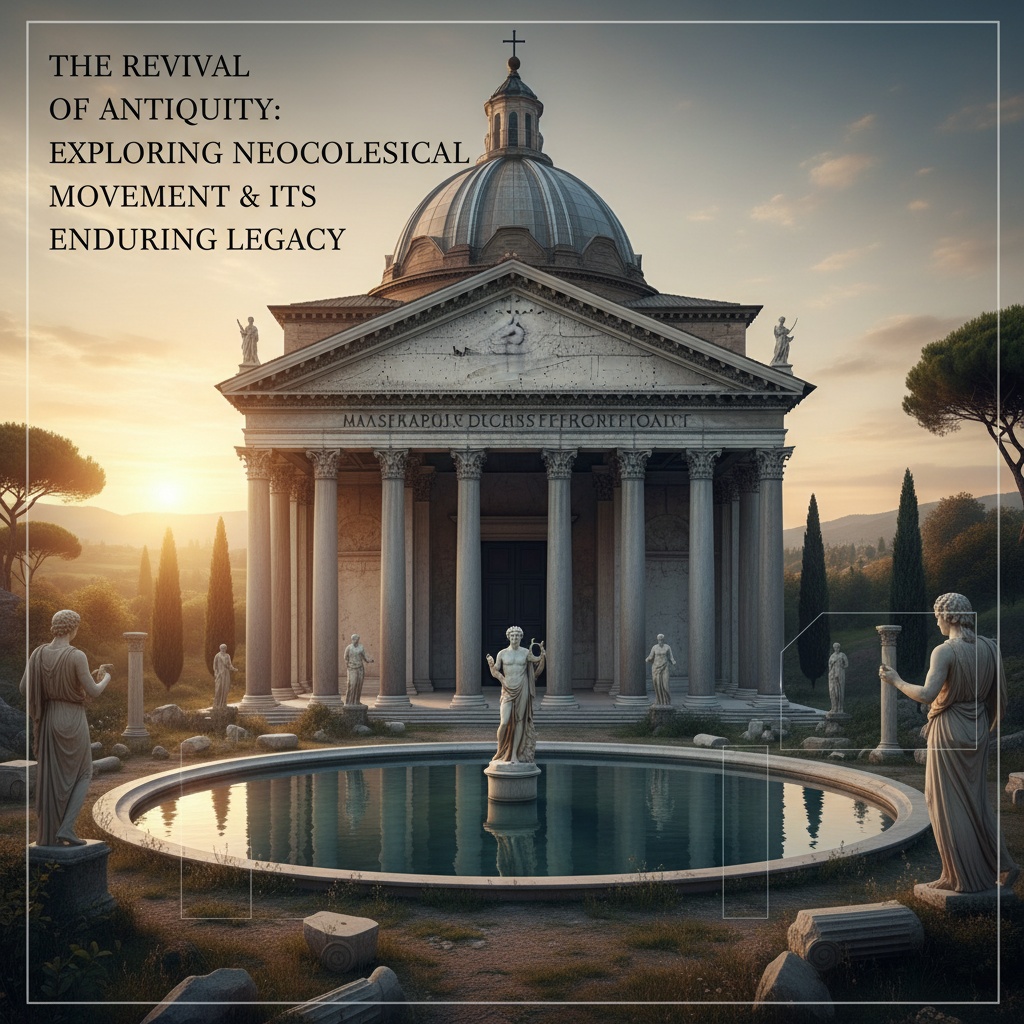
Introduction: The Allure of Classical Ideals
Neoclassicism, also spelled Neo-classicism, emerged as a Western cultural movement in the decorative and visual arts, literature, theatre, music, and architecture that drew inspiration from the art and culture of classical antiquity. Neoclassicism wa...
For centuries, the art world has experienced cyclical returns to the foundational principles of classical antiquity – a fascination with the forms, philosophies, and narratives born in ancient Greece and Rome. This wasn’t merely an aesthetic preference; it was a profound yearning for order, reason, and moral clarity, qualities that resonated deeply throughout history but found particularly potent expression during the 18th century. The Neoclassical movement, emerging as a direct response to the perceived frivolity of the Rococo period, represented more than just a stylistic shift—it signaled a cultural reawakening, a deliberate embrace of civic virtue and intellectual rigor. It was an era where art wasn’t simply meant to be beautiful; it was intended to *instruct*, to inspire, and to elevate.
The Birth of Neoclassicism: Enlightenment, Rediscovery & the Grand Tour
The Grand Tour was the principally 17th- to early 19th-century custom of a traditional trip through Europe, with Italy as a key destination, undertaken by upper-class young European men of sufficient means and rank (typically accompanied by a tutor o...
The seeds of Neoclassicism were sown in the fertile ground of the Enlightenment. Thinkers like Johann Joachim Winckelmann, whose writings championed the purity and nobility of Greek art, provided a theoretical framework for this burgeoning aesthetic sensibility. However, theory alone wasn’t enough to ignite a revolution. The pivotal moment arrived with the archaeological excavations of Pompeii and Herculaneum in 1738 and 1748 respectively. These discoveries unveiled remarkably preserved examples of Roman life – frescoes, sculptures, architecture – offering a tangible connection to the classical world that had been lost for centuries. Simultaneously, the Grand Tour, a traditional coming-of-age journey undertaken by wealthy young Europeans, became increasingly popular. These aspiring artists and patrons returned from Italy imbued with a newfound appreciation for Greco-Roman ideals, eager to translate their experiences into art.
Key Characteristics of Neoclassical Art: Form, Subject Matter & Technique
Neoclassical art distinguished itself through a deliberate rejection of Rococo’s ornate curves and pastel palettes. Instead, artists favored clean lines, symmetrical compositions, and a restrained color scheme often dominated by whites, creams, and muted tones. The emphasis shifted from decorative flourishes to anatomical accuracy and sculptural form. Subject matter also underwent a transformation. While the Rococo celebrated aristocratic leisure and mythological whimsy, Neoclassicism gravitated towards historical narratives – particularly those that emphasized themes of heroism, sacrifice, and civic duty. Paintings often depicted scenes from ancient Greece and Rome, not merely as historical curiosities but as moral exemplars for contemporary society. Technically, artists prioritized precise draftsmanship, meticulous detail, and a polished finish, striving for an effect of timeless elegance and gravitas. The goal was to create works that evoked the clarity and rationality of classical sculpture.
Jacques-Louis David: Embodiment of the Neoclassical Spirit
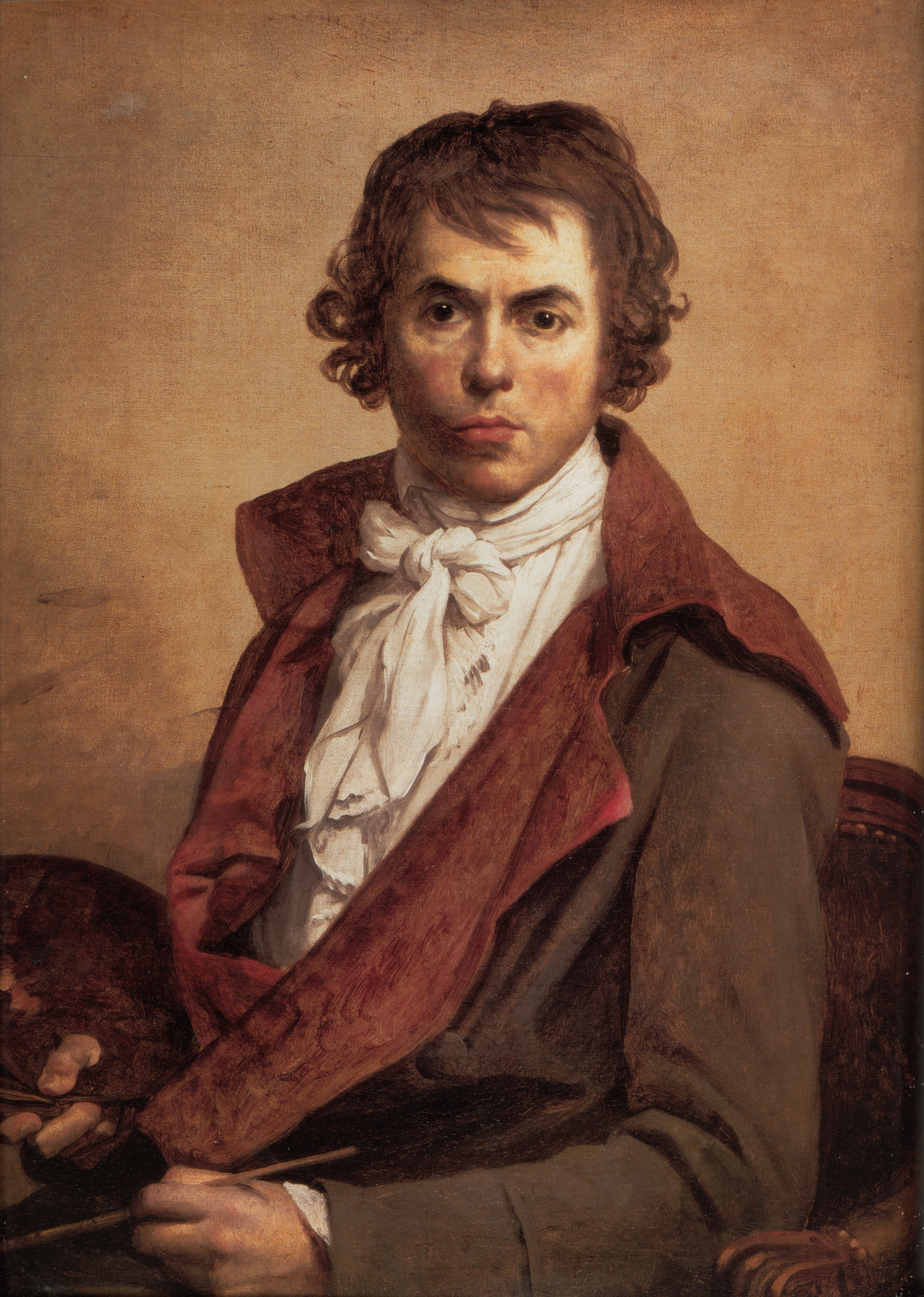 Wikipedia: Jacques-Louis David
Jacques-Louis David (French: [ʒaklwi david]; 30 August 1748 – 29 December 1825) was a French painter in the Neoclassical style, considered to be the preeminent painter of the era. In the 1780s, his cerebral brand of history painting marked a change i...
No discussion of Neoclassicism would be complete without acknowledging Jacques-Louis David (1748–1825). Considered the preeminent painter of the era, David wasn’t simply an artist; he was a cultural force. His early works, such as “Oath of the Horatii” (1784), marked a decisive break from Rococo frivolity and signaled the arrival of a new aesthetic sensibility. The painting's stark composition, dramatic lighting, and emphasis on civic virtue resonated deeply with the growing revolutionary fervor in France. David’s commitment to his principles extended beyond aesthetics; he became an active supporter of the French Revolution and even served as a propagandist for Robespierre during the Reign of Terror. His later works, including “The Death of Marat” (1793) and “Louis XVI Showing the Constitution to his Son, the Dauphin,” further solidified his reputation as a painter of historical significance. David’s influence extended far beyond his own oeuvre; he trained a generation of artists who carried forward the Neoclassical torch.
Beyond Painting: Neoclassicism in Sculpture and Architecture
The impact of Neoclassicism wasn't confined to painting. Sculptors like Antonio Canova embraced classical forms, creating works that emphasized idealized beauty and anatomical perfection. His sculptures, often depicting mythological figures, were characterized by their smooth surfaces, graceful poses, and emotional restraint. In architecture, Neoclassicism manifested in grand public buildings inspired by ancient Roman temples and civic structures. Symmetry, proportion, and the use of classical orders – Doric, Ionic, and Corinthian – became hallmarks of the style. The White House, designed by James Hoban, stands as a prime example of Neoclassical architecture in America, embodying the ideals of democracy and stability through its deliberate references to ancient Roman precedents.
The Enduring Legacy: Influence on Modern Art & Contemporary Aesthetics
The legacy of Neoclassicism extends far beyond the 18th and 19th centuries. While Romanticism eventually challenged its dominance, the movement’s emphasis on form, clarity, and historical narrative continued to influence artists for generations. Even in the 20th century, artists like Picasso drew inspiration from classical forms, demonstrating the enduring power of these foundational principles. Today, Neoclassical aesthetics continue to resonate in architecture, design, and even contemporary art. The pursuit of order, balance, and timeless beauty remains a central theme in artistic expression, proving that the allure of classical ideals is far from diminished. At OriginalUniqueArt.com, we are proud to offer high-quality reproductions of these iconic works, allowing you to bring the elegance and intellectual rigor of Neoclassicism into your own home.