Early Life & David’s Atelier: The Foundation of a Unique Style
 Anne-Louis Girodet de Roussy-Trioson
Discover Anne-Louis Girodet (1767-1824), a French painter bridging Neoclassicism & Romanticism. Explore his dramatic portraits, literary scenes & subtle erotic undertones!
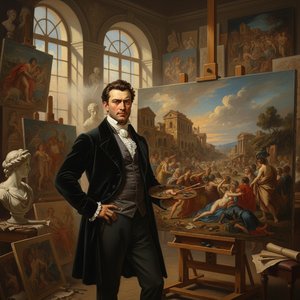
Anne-Louis Girodet de Roussy-Trioson, born in Montargis in 1767, emerged as one of the most intriguing and subtly rebellious figures of late 18th and early 19th century French painting. His trajectory was profoundly shaped by his education under Jacques-Louis David, the leading Neoclassical master. However, Girodet wasn’t merely a disciple; he absorbed David's rigorous draftsmanship and emphasis on historical subject matter but infused it with a burgeoning Romantic sensibility that would ultimately define his singular style. David instilled in him a commitment to clarity of form, precise anatomy, and moralizing narratives – qualities readily apparent in his early works. Yet, even within the confines of academic training, Girodet displayed a penchant for dramatic composition and an emotional intensity that hinted at a departure from David’s cool restraint. The loss of both parents at a young age led to guardianship by Benoît-François Trioson, a physician who would become a lifelong companion and whose name Girodet later adopted, further complicating the artist's identity and hinting at a desire for a new artistic lineage.
Girodet’s success in winning the Prix de Rome with his depiction of Joseph and his Brethren signaled his promise within the established system. His subsequent years in Italy were crucial, allowing him to study classical antiquity firsthand – a cornerstone of Neoclassical ideology. But it was not simply imitation that Girodet sought; he began to explore themes of passion, loss, and psychological complexity, foreshadowing the emotional depth that would characterize his mature work.
The Apotheosis of French Heroes: A Neoclassical Statement with Revolutionary Undertones
 e The Apotheosis Of The French Heroes Who Died For Their Country
Upon returning to France, Girodet embarked on what would become one of his most ambitious and politically charged projects: The Apotheosis of the French Heroes Who Died for Their Country. Completed in 1789, this monumental canvas is a powerful testament to the ideals of the Revolution. While adhering to Neoclassical principles of composition and idealized form, the painting transcends mere historical documentation. It’s not simply a depiction of sacrifice; it's an emotionally resonant celebration of civic virtue and national identity. The figures, though arranged in a classical frieze-like manner, possess a palpable sense of grief and longing. The use of light and shadow is masterful, drawing the viewer’s eye to the central grouping and emphasizing the solemnity of the occasion.
What sets this work apart is its subtle subversion of traditional heroic imagery. The heroes aren't depicted in triumphant glory but rather ascending towards a symbolic afterlife, their faces etched with vulnerability. This nuanced portrayal reflects the complex emotions surrounding the Revolution – the hope for a better future tempered by the very real cost of achieving it. The painting’s reception was mixed; some lauded its patriotic fervor, while others criticized its perceived lack of decorum and restraint.
Ossian and the Embrace of Romantic Sensibility: Exploring Girodet's Literary Inspirations
 Ossian Receiving the Ghosts of French Heroes
The turn of the 19th century marked a significant shift in Girodet’s artistic direction. He became increasingly fascinated with literary themes, particularly the works of James Macpherson’s Ossian, a collection of purportedly ancient Gaelic poems that captivated Europe with their melancholic beauty and heroic narratives. Ossian Receiving the Ghosts of French Heroes (1801) exemplifies this new direction. The painting is steeped in atmosphere, evoking a sense of mystery and emotional turmoil. Unlike his earlier, more formally structured compositions, this work embraces a looser brushstroke and a heightened emphasis on color and light.
Girodet’s interpretation of Ossian wasn't simply illustrative; he used the poems as a vehicle to explore themes of grief, memory, and national identity. The ghostly figures surrounding Ossian are not merely spectral apparitions but embodiments of loss and longing. This painting signaled Girodet’s growing alignment with Romantic ideals – a rejection of strict classical formalism in favor of emotional expression and subjective experience.
Portraits as Psychological Studies: Capturing Character Beyond Likeness
 Portrait of the French architect Jacques-Charles Bonnard
Throughout his career, Girodet was a sought-after portraitist, but he approached the genre with a unique sensibility. He wasn’t content to simply record physical likeness; he aimed to capture the inner life of his sitters. His Portrait of Jacques-Charles Bonnard, for example, is not merely a depiction of a prominent architect but a penetrating psychological study. The subject's gaze is direct and unwavering, conveying intelligence, ambition, and perhaps a hint of melancholy.
Girodet’s portraits often feature dramatic lighting and carefully chosen props that reveal aspects of the sitter’s personality or profession. He was particularly adept at capturing the nuances of expression, imbuing his subjects with a sense of individuality and depth. This focus on psychological realism set him apart from many of his contemporaries who favored more conventional portrait styles.
Girodet’s Later Years & Artistic Evolution: From Grand Manner to Intimate Reflections
The later years of Girodet's life were marked by a growing sense of disillusionment and artistic experimentation. While he continued to receive commissions for large-scale historical paintings, such as The Revolt of Cairo, his work became increasingly introspective and emotionally complex. He struggled with personal demons and health issues, which undoubtedly influenced his art.
His final works often feature a more subdued palette and a looser brushstroke, reflecting a shift away from the grand manner towards a more intimate and expressive style. Though he never fully abandoned Neoclassical principles, Girodet’s later paintings reveal a growing fascination with Romantic themes of passion, loss, and mortality.
Legacy and Influence: A Bridge Between Eras in French Painting
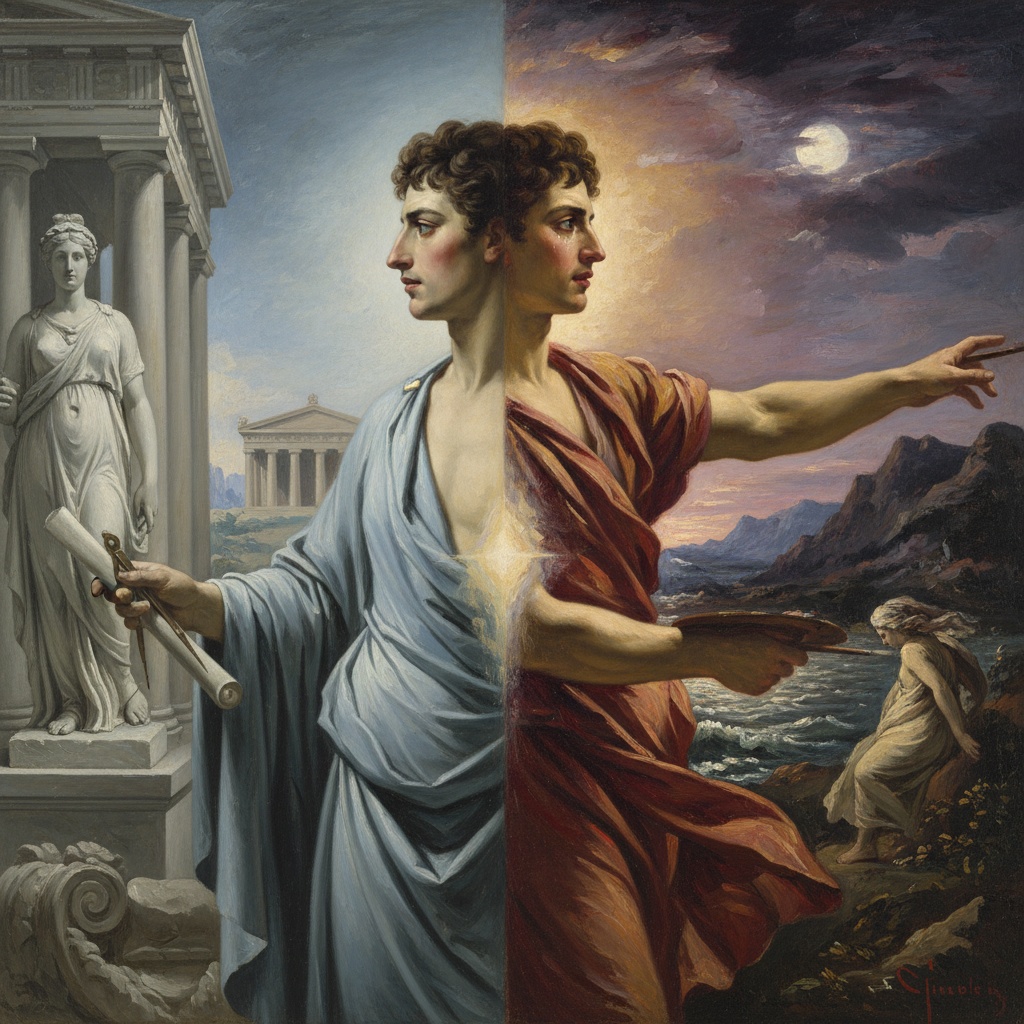
Anne-Louis Girodet de Roussy-Trioson occupies a unique position in the history of French painting. He was not simply a Neoclassical painter or a Romantic artist but rather a bridge between these two eras. His work embodies the tension between reason and emotion, clarity and ambiguity, tradition and innovation.
While his influence on subsequent generations of artists may not be as widely recognized as that of David or Ingres, Girodet’s legacy is undeniable. He paved the way for a more emotionally expressive and psychologically nuanced approach to painting, anticipating many of the key themes and techniques of Romanticism. Today, Girodet's works are celebrated for their beauty, complexity, and enduring power.
Explore the captivating world of Anne-Louis Girodet with OriginalUniqueArt. Discover museum-quality reproductions of his masterpieces, meticulously crafted by skilled artists to capture the essence of his unique artistic vision. From dramatic portraits to emotionally resonant historical scenes, OriginalUniqueArt brings the beauty and complexity of Girodet’s art into your home.