Early Life & Artistic Foundations: A Catalan Beginning
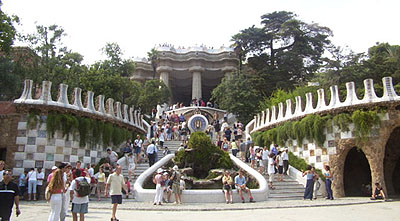 Wikipedia: Modernisme
Modernisme (Catalan pronunciation: [muðərˈnizmə], Catalan for "modernism"), also known as Catalan modernism and Catalan art nouveau, is the historiographic denomination given to an art and literature movement associated with the search of a new entit...
Josep Mompou Dencausse (1888-1968) emerged from the vibrant cultural landscape of Barcelona, a city steeped in artistic tradition and burgeoning with modernist fervor. Born into a family that fostered an appreciation for aesthetics – his brother Federico would become a renowned composer – Mompou’s early life was deeply intertwined with the spirit of Catalonia. While not formally trained in the rigorous academic style prevalent at the time, he absorbed the atmosphere of the city, its light, and its burgeoning artistic movements. This informal education proved pivotal, allowing him to develop a uniquely personal vision unburdened by convention. His initial explorations weren’t marked by immediate stylistic declaration; rather, they were a period of observation, absorbing influences from local masters and the evolving European art scene. The seeds of his later focus on intimacy and emotional resonance were sown in these formative years, nurtured by the distinctive character of Catalan life and landscape.
The Influence of Post-Impressionism & Fauvism on Mompou’s Style
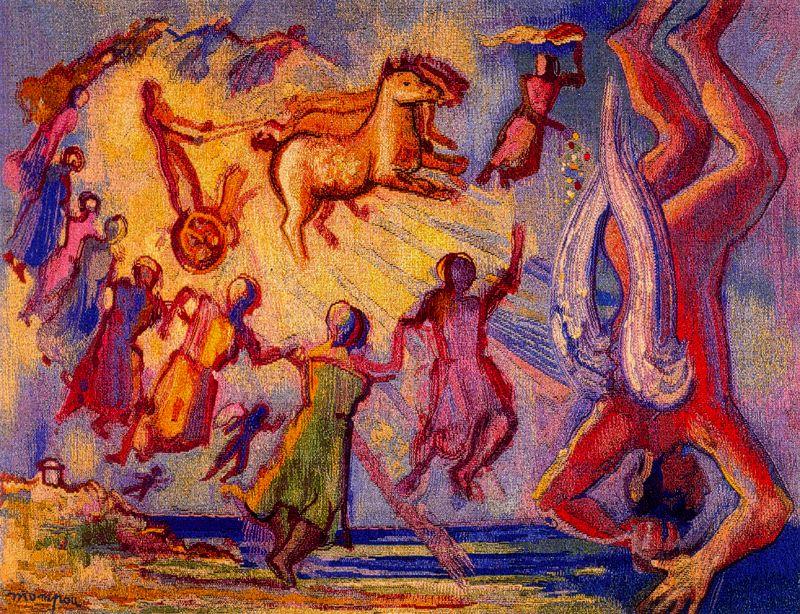 josep mompou dencausse
Discover Josep Mompou Dencausse (1888-1968), a Spanish painter influenced by Post-Impressionism & Fauvism. Explore his landscapes, still lifes, portraits, and illustrations – featured in major museums like the Reina Sofía.
Mompou's artistic trajectory took a decisive turn with his engagement with the revolutionary currents of Post-Impressionism and, to a lesser extent, Fauvism. While he never fully embraced the radical color palettes of artists like Matisse or Derain, the emphasis on subjective experience and expressive brushwork profoundly impacted his approach. He wasn’t interested in replicating reality; instead, he sought to convey its *feeling*, its essence. This is evident in his early landscapes, where forms are simplified and colors are heightened to evoke a particular mood. The influence of Cézanne is particularly noticeable – a focus on structure and the underlying geometry of nature, but softened by a distinctly Mediterranean sensibility. Unlike the analytical Cubism that was also gaining prominence, Mompou’s work remained rooted in observation, albeit filtered through an intensely personal lens. He absorbed these influences not as dogma, but as tools to articulate his own unique vision – one centered on quiet contemplation and emotional depth.
Intimacy in Still Life: Capturing the Essence of Everyday Objects
 Fruittes And Ceramics
Explore 'Fruittes And Ceramics' by Josep Mompou Dencausse – a vibrant post-Impressionist still life featuring citrus & pink tiles. Discover Catalan art influenced by Cezanne.
Perhaps most characteristic of Mompou’s oeuvre are his still life paintings. These aren't grand displays of opulent wealth or symbolic extravagance; rather, they depict humble objects – fruit, ceramics, simple glassware – arranged with a deliberate simplicity that belies their profound emotional weight. Fruittes And Ceramics, for example, is not merely a depiction of citrus and tiles; it’s an exploration of texture, light, and the quiet beauty found in everyday life. The loose brushwork, reminiscent of Impressionism, creates a sense of immediacy and vibrancy, while the carefully chosen color palette evokes warmth and nostalgia. He imbues these objects with a sense of presence, transforming them into vessels of memory and emotion. The compositions are often intimate in scale, inviting the viewer to share in a moment of quiet contemplation. It’s as if Mompou is not simply painting *what* he sees, but *how* it feels to see it – the weight of the fruit in his hand, the coolness of the ceramic against his skin.
Landscapes as Emotional Spaces: Reflecting a Personal Catalonia
 Swimming
Admire 'Swimming' by Josep Mompou Dencausse, a captivating Post-Impressionist painting. Explore Spanish art history & acquire a unique masterpiece today!
Mompou’s landscapes are similarly imbued with emotional resonance. He wasn't interested in panoramic vistas or dramatic geological formations; instead, he focused on smaller, more intimate scenes – sun-drenched fields, quiet groves of trees, the shimmering surface of water. Swimming, for instance, captures not just a physical act but the feeling of immersion, the play of light and shadow on the water’s surface, the sense of solitude and tranquility. These landscapes are deeply rooted in Catalonia – they reflect the specific quality of its light, the texture of its earth, the scent of its vegetation. But they transcend mere topographical representation; they become emotional spaces, imbued with a sense of longing and nostalgia. His paintings often depict scenes near Vic, where he spent much of his life, suggesting a deep personal connection to the land. The colors are muted yet evocative, creating a dreamlike atmosphere that invites contemplation.
Mompou's Place within Modernisme and Catalan Identity
While not strictly adhering to all tenets of Modernisme, Mompou’s work is inextricably linked to this broader cultural movement. Modernisme was characterized by a desire to forge a distinct Catalan identity – a rejection of traditional academic styles in favor of something uniquely rooted in the region's history and culture. Mompou shared this aspiration, albeit expressed through a more intimate and personal lens than some of his contemporaries. His focus on everyday life, his use of local motifs, and his emphasis on emotional resonance all contribute to a distinctly Catalan sensibility. His paintings can be seen as a visual counterpart to the literary and musical explorations of Catalan identity undertaken by artists like Joan Maragall and Federico Mompou (his brother). Palau De La Música, with its vibrant depiction of Barcelona’s iconic opera house, exemplifies this connection – capturing not just a physical landmark but the cultural energy of the city.
Legacy and Continued Appreciation of Josep Mompou Dencausse
Though perhaps less widely recognized than some of his contemporaries, Josep Mompou Dencausse’s work continues to resonate with audiences today. His paintings offer a quiet refuge from the noise and chaos of modern life – an invitation to slow down, contemplate, and appreciate the beauty found in everyday moments. His influence can be seen in the work of later Spanish artists who embraced simplicity and emotional depth. Today, his works are held in major museums like the Museu Nacional d'Art de Catalunya and the Museo Reina Sofía, a testament to their enduring artistic merit. OriginalUniqueArt.com offers high-quality reproductions of Mompou’s paintings, allowing art lovers around the world to experience the intimacy and beauty of his work firsthand. Whether you are drawn to his still lifes, landscapes, or portraits, Mompou's paintings offer a unique window into the soul of Catalonia and the power of minimalist expression.