The Impressionist Legacy: A Foundation of Light and Atmosphere
To understand the seismic shift that occurred at the end of the nineteenth century, one must first appreciate the ephemeral beauty of the movement that preceded it. Impressionism arrived as a breath of fresh air, shattering the rigid, somber constraints of the Académie des Beaux-Arts. Artists like Monet and Renoir sought to capture the fugitive nature of light—the way a sunbeam dances upon a lily pond or how the mist clings to the Seine at dawn. Theirs was an art of the immediate, a celebration of optical truth where the brushstroke served as a vessel for atmosphere and fleeting perception.
The Impressionist palette was revolutionary in its brightness, yet it remained tethered to the observable world. They focused on the way light dissolves form, creating soft edges and a sense of movement that felt profoundly modern. However, while this fascination with the transient moment captured the heartbeat of a changing France, it left a lingering question for the next generation of creators: what lies beneath the surface of the light? The Impressionists had mastered the skin of reality, but they had not yet delaged into its soul.
Breaking the Surface: The Emergence of Post-Impressionist Rebellion
As the nineteenth century waned, a group of visionary rebels began to feel that the spontaneous observations of Impressionism lacked the permanence and structural depth required for true artistic expression. This was not a rejection of light, but rather an expansion of it. These artists—the Post-Impressionists—sought to move beyond the mere recording of visual sensations toward a more profound, subjective experience. They began to use color and form not just to mimic nature, but to interpret it through the lens of human emotion and psychological depth.
This era was marked by a deliberate departure from the "eye" in favor of the "mind" and the "heart." Where an Impressionist might paint a field to show how the midday sun warms the grass, a Post-Impressionist would use that same field to convey a sense of cosmic energy or profound loneliness. The rebellion was found in the thickening of the paint, the deliberate distortion of perspective, and the use of unnatural, saturated hues. It was a movement that transformed the canvas from a window into the world into a mirror reflecting the artist's inner landscape.
The Architecture of Emotion: Structure and Symbolism in New Forms
One of the most significant contributions of this period was the reintroduction of structure and permanence to the painted surface. Artists like Paul Cézanne, often regarded as the father of modern art, looked at the natural world and saw not just light, but underlying geometric truths. He sought to treat nature by means of the cylinder, the sphere, and the cone, creating compositions that possessed a monumental stability. This architectural approach to painting provided a necessary counterweight to the dissolution of form seen in earlier decades.
Alongside this structural rigor, a new language of symbolism began to emerge. Color was no longer merely descriptive; it became symbolic. A deep blue might represent melancholy, while a vibrant yellow could pulse with divine vitality. This period saw the birth of an art that communicated through a coded vocabulary of shapes and tones, inviting the viewer to participate in a deeper, more intellectualized reading of the work. The canvas became a site of construction, where meaning was built layer by certainly, much like the very textures of the paint itself.
A Symphony of Color: Exploring the Expressive Palette of Van Gogh and Gauguin
Perhaps no figures embody the emotional intensity of this revolution more than Vincent van Gogh and Paul Gauguin. For Van Gogh, color was a visceral, almost spiritual force. In masterpieces such as Green Wheat Fields or his evocative Farmhouses Among Trees, we see the use of impasto—thick, textured applications of oil that give the painting a sculptural quality. His brushstrokes do not merely sit upon the canvas; they swirl and surge with a rhythmic energy that mirrors his own turbulent psyche. In works like Paysanne cuisinant dans une cheminee, the bold colors and expressive marks transform a simple scene of rural life into a poignant study of human existence.
In contrast, Gauguin sought a different kind of liberation through color, moving toward Cloisonnism—a style characterized by bold, flat areas of color separated by dark outlines. His journey to Tahiti allowed him to explore a primitive, symbolic palette that rejected Western naturalism in favor of a dreamlike, exoticized reality. Together, these artists demonstrated that color could be used as an independent agent of emotion, capable of evoking sensations that words often fail to capture. Their work turned the act of painting into a symphony of chromatic intensity.
Beyond the Visible: How Post-Impressionism Paved the Way for Modernism
The ripples of the Post-Impressionist revolution eventually became tidal waves that reshaped the entire trajectory of twentieth-century art. By breaking the bond between subject matter and literal representation, these artists provided the essential toolkit for the movements that followed. The structural experiments of Cézanne laid the groundwork for Cubism; the emotive, distorted colors of Van Gogh paved the way for Fauvism and German Expressionism; and the symbolic depth of Gauguin informed the development of Surrealism.
This era fundamentally redefined the relationship between the artist, the subject, and the viewer. It established that art need not be a mirror held up to nature, but could instead be an autonomous creation—a world unto itself. The liberation of the brushstroke and the emancipation of color allowed for a level of creative freedom that continues to inspire contemporary artists today. Post-Impressionism was the bridge between the classical tradition and the radical abstractions of the modern age.
Preserving the Revolution: Bringing Masterpieces into the Modern Home
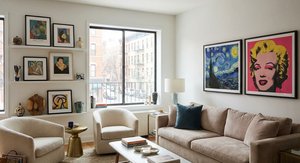
Today, the vibrant energy of the Post-Impressionists remains as potent as ever, offering a profound sense of character and depth to any interior space. For the true art enthusiast, owning a piece that captures this era is about more than mere decoration; it is about inviting a legacy of passion and innovation into one's daily life. Whether through the textured, tactile beauty of an oil reproduction or the curated selection of a fine print, these works serve as timeless anchors in a rapidly changing world.
At OriginalUniqueArt.com, we are dedicated to preserving this incredible human heritage by making museum-quality art accessible to collectors worldwide. Our master artists specialize in recreating the very techniques that defined this revolution—from the thick, emotive impasto of Van Gogh to the structured elegance of the late nineteenth century. We invite you to explore our vast library and discover how the vibrant colors and profound emotions of the Post-Impressionist era can transform your home into a sanctuary of historical beauty.