The Sacred Space of Solitude: Medieval & Renaissance Depictions
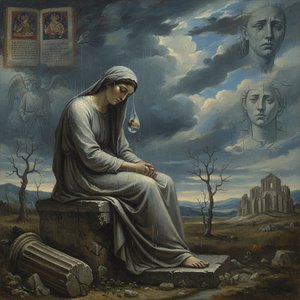
Before the sweeping landscapes and introspective figures of later eras, solitude in art held a distinctly spiritual character. In medieval and early Renaissance painting, withdrawal from the world wasn’t typically an expression of loneliness but rather a deliberate act of devotion—a turning inward to connect with the divine. Consider the countless depictions of saints and hermits nestled within dimly lit cloisters or rugged natural settings. These weren't portraits of isolation as we understand it today; they were visual narratives of a soul seeking communion with God, free from earthly distractions. Giotto’s frescoes, for example, often employ vast, empty space around figures like St. Francis to emphasize this spiritual detachment, creating an atmosphere of quiet holiness and profound contemplation. The power resided not in the absence of company, but in the presence of something greater. Even Hieronymus Bosch, known for his fantastical and often unsettling imagery, used scenes of solitary figures—like those tormented by demons in The Temptation of Saint Anthony—to illustrate the internal battles faced during spiritual trials. Solitude became a crucible, a testing ground for faith rather than a state to be feared.
Romanticism's Embrace of Isolation: Nature, Subjectivity, and the Individual
Romanticism (also known as the Romantic movement or Romantic era) was an artistic and intellectual movement that originated in Europe towards the end of the 18th century. The purpose of the movement was to advocate for the importance of subjectivity...
The Enlightenment’s emphasis on reason and societal norms paved the way for a radical shift in artistic perspective during the Romantic period. Rejecting the strict conventions of the past, artists began to champion subjectivity, imagination, and an almost reverent appreciation of nature. This newfound focus naturally led to a fascination with solitude—not as a religious practice, but as a means of self-discovery and emotional exploration. Caspar David Friedrich’s work epitomizes this shift. His iconic painting, Men by the Sea (1811), is a haunting example; two figures stand dwarfed by the immensity of the ocean and sky, evoking a sense of both awe and isolation. The evocative brushwork and muted palette contribute to the melancholic atmosphere, suggesting a profound connection between the individual and the power of nature. Friedrich’s solitary wanderers aren't necessarily tragic; they are reflective figures seeking meaning in the vastness of the unknown. This embrace of individualism extended beyond landscape painting. Artists increasingly explored the inner lives of their subjects, portraying moments of quiet introspection and emotional turmoil—a direct response to the burgeoning philosophical ideas surrounding personal experience.
Realism and the Weight of Modern Loneliness: Urban Life and Interiority
As society industrialized and urban centers swelled with population, the nature of solitude underwent another transformation. The Realist movement sought to depict life as it was—often unvarnished and unflattering—and this included a growing awareness of loneliness in the modern world. No longer confined to remote landscapes or religious contemplation, isolation became inextricably linked to the anonymity and alienation of city life. While not explicitly focused on solitude, artists like Gustave Courbet captured the psychological weight of existence through their depictions of everyday people grappling with hardship and social injustice. However, it was later masters who truly embodied this theme. Edward Hopper’s Nighthawks (1942) remains perhaps the most iconic representation of urban loneliness—three figures sit in a brightly lit diner late at night, together yet profoundly disconnected. The painting's stark realism and carefully constructed composition create an atmosphere of palpable emptiness, reflecting the isolation that can exist even amidst crowds. The silence within these scenes is as powerful as any dramatic gesture.
Pre-Raphaelite Visions of Solitude: Symbolism, Beauty, and Female Representation
 Woman Holding a Small Book
Admire Dante Rossetti’s "Woman Holding a Small Book." A haunting Pre-Raphaelite masterpiece in rich reds & intricate patterns. Explore its symbolism & timeless beauty – perfect for art collectors.
The Pre-Raphaelites offered a unique perspective on solitude, often intertwined with themes of beauty, symbolism, and—particularly—the representation of women. Dante Rossetti’s Woman Holding a Small Book is a captivating example. The rich reds and intricate patterns draw the eye to the figure's contemplative gaze, suggesting an inner world of thought and emotion. Unlike the more overtly melancholic depictions found in Romanticism or Realism, Rossetti’s work often imbues solitude with a sense of mystery and timeless beauty. However, it’s important to note that representations of female solitude during this period were frequently laden with societal expectations. Women were often depicted in domestic settings or engaged in religious activities—their isolation rarely stemming from independent thought or self-discovery. The symbolism within these paintings is crucial; the book itself can represent knowledge, faith, or a yearning for escape, but it’s always framed within the context of Victorian morality and gender roles.
Existential Echoes: 20th-Century Explorations of Inner Space & Alienation
The 20th century witnessed an intensification of existential anxieties, profoundly impacting artistic representations of solitude. Artists like Edvard Munch delved into the depths of human emotion, portraying feelings of isolation and despair with raw intensity. His work, such as Melancholy (1894–96), depicts a figure slumped in contemplation, seemingly overwhelmed by grief and regret. Alberto Giacometti’s elongated sculptures further explored this theme, embodying the fragility and alienation of modern existence. L'Homme qui marche (The Walking Man), with its thin, attenuated form, suggests an endless journey without destination—a powerful metaphor for the human condition. Francis Bacon took this exploration even further, depicting figures trapped within claustrophobic spaces, screaming in silent agony. For Bacon, solitude wasn’t merely a state of being; it was an inherent part of the human experience, inextricably linked to pain and mortality.
Contemplation as a Universal Theme: Connecting Across Eras
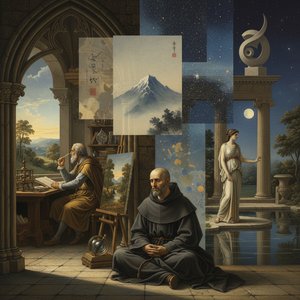 The Stillness Within: Exploring Contemplation in Art Across Eras
Explore the profound beauty of contemplative art across history. Discover how artists have captured solitude, introspection & emotion through iconic paintings. Find handmade oil reproductions at OriginalUniqueArt.
Throughout these diverse artistic movements, a common thread emerges: the enduring power of contemplation. Whether expressed through religious devotion, emotional introspection, or existential angst, artists have consistently sought to capture the profound beauty—and sometimes the unsettling truth—found in moments of solitude. Francisco Goya’s later works, particularly his haunting “Black Paintings,” demonstrate this powerfully; even within scenes of darkness and despair, there's a sense of raw honesty and self-reflection. The grayscale palette used in The Giant prioritizes tonal gradation to define form and create depth, avoiding vibrant colors and focusing instead on the psychological weight of the subject. Ultimately, art serves as a mirror reflecting our own humanity—our yearning for connection, our need for introspection, and our inevitable confrontation with the stillness within. At OriginalUniqueArt, we believe in making these masterpieces accessible to all, allowing you to connect with these timeless themes and explore the rich history of artistic expression from the comfort of your home. Discover handmade oil reproductions and museum-quality prints that capture the essence of these iconic works—and perhaps find a moment of solitude yourself.