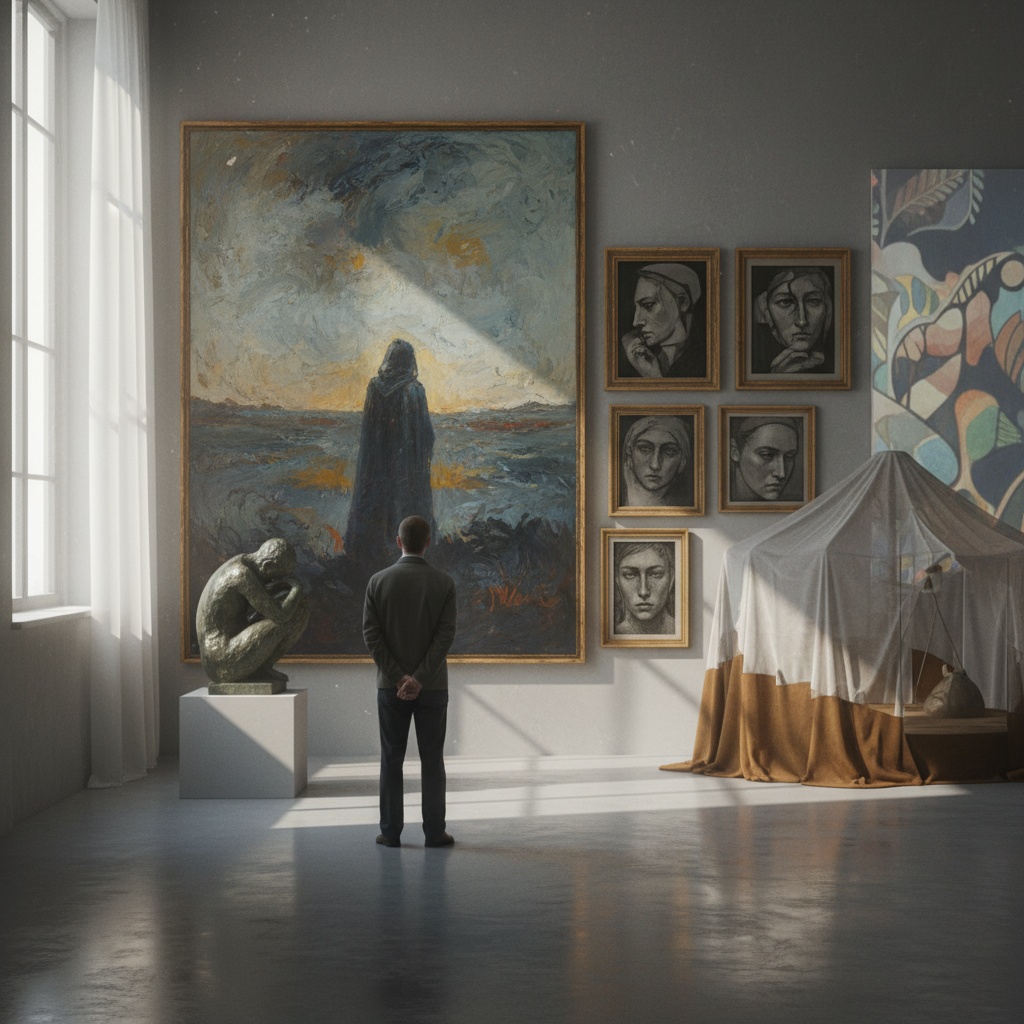
The Allure of Melancholy: Defining Introspection in Visual Art
Melancholy may refer to: Melancholia, one of the four temperaments in pre-modern medicine and proto-psychology, representing a state of low mood Depression (mood), a state of low mood, also known as melancholy Major depressive disorder, a mood disor...
There exists a particular resonance within the realm of art that transcends mere aesthetic appeal, a quality that speaks directly to the human condition – the evocation of melancholy. It’s a sentiment often misunderstood as simple sadness, yet it is far more complex; a profound state of contemplative longing, a wistful awareness of transience, and an acceptance of life's inherent complexities. Throughout art history, artists haven’t simply depicted scenes *with* emotion, but have sought to embody the very essence of introspection itself, inviting viewers into a shared space of quiet reflection. This exploration isn’t about escaping reality, but rather confronting it with a heightened sensitivity, finding beauty within vulnerability and meaning in the ephemeral. The power lies not just in recognizing sadness, but in acknowledging its depth and universality – a testament to our shared human experience.
From Renaissance Portraits to Dutch Golden Age Masters: Early Expressions of Inner Life
 Melancholy
Explore 'Melancholy' by Pieter Jacobsz Codde – a poignant 17th-century Dutch Golden Age portrait. Realistic oil painting evokes introspection & quiet contemplation. Discover this skilled artist’s work.
The seeds of this artistic introspection were sown long ago. While overt displays of emotion weren’t always encouraged, the Renaissance saw a subtle shift in portraiture. Artists began to move beyond idealized representations, imbuing their subjects with a sense of psychological depth. Consider the nuanced gazes and carefully rendered expressions – hints of inner turmoil or quiet contemplation beneath the polished surfaces. This trend blossomed further during the Dutch Golden Age, where artists like Pieter Jacobsz Codde masterfully captured the stillness of everyday life. His “Melancholy” (1627) isn’t a dramatic outpouring of grief, but rather a poignant study in solitude and quiet introspection. The realistic oil painting invites us to ponder the sitter's thoughts, their gaze lost in an internal world. It is this ability to convey such subtle emotional states – through meticulous detail and skillful use of light and shadow – that defines these early expressions of inner life. These weren’t simply portraits; they were windows into the souls of their subjects.
Symbolism & the Search for Solitude: Spilliaert and the Dreamlike Interior
 Léon Spilliaert
Léon Spilliaert (1881-1946) was a Belgian Symbolist painter known for evocative, melancholic works featuring dreamlike landscapes & introspective self-portraits. Influenced by Redon & Poe, his art explores solitude and the mysterious depths of the hu
As art moved into the Symbolist period, the exploration of introspection took on a more overtly dreamlike quality. Belgian artist Léon Spilliaert stands as a compelling example. Haunted by feelings of isolation and existential angst, Spilliaert’s work is characterized by evocative landscapes and introspective self-portraits. Influenced by writers like Edgar Allan Poe and artists like Odilon Redon, he delved into the mysterious depths of the human psyche. His interiors are often stark and unsettling, devoid of warmth or comfort, reflecting a profound sense of solitude. Spilliaert wasn’t interested in depicting external reality; his focus was on capturing the internal landscape – the anxieties, fears, and longings that reside within us all. The muted color palettes and ethereal forms create an atmosphere of quiet desperation, inviting viewers to confront their own inner demons.
American Landscapes of Reflection: Jervis McEntee and the Hudson River School's Poetic Autumns
 Jervis McEntee
Discover Jervis McEntee (1828-1891), Hudson River School painter of melancholic landscapes & insightful journals revealing 19th-century American art life. Explore his poetic autumn scenes and connections to artists like Church, Gifford & Weir.
Across the Atlantic, American artists were also grappling with themes of introspection, albeit through a different lens. Jervis McEntee, a painter associated with the Hudson River School, found solace in the beauty of the natural world. However, his landscapes weren’t simply idyllic depictions of scenic vistas; they were imbued with a sense of melancholy and poetic longing. McEntee's journals reveal a deeply sensitive soul, acutely aware of the transience of life and the inevitability of loss. His autumn scenes, in particular, are filled with a wistful beauty – a recognition of nature’s cycle of decay and renewal. He wasn’t merely painting what he *saw*, but rather what he *felt* when immersed in the landscape. The connection between McEntee's art and his personal writings offers a unique insight into the emotional life of a 19th-century American artist, revealing a profound sensitivity to the beauty and fragility of existence.
Cubist Fragmentation & Emotional Depth: Picasso’s Nuances of Feeling
 The two friends
Explore 'The Two Friends' by Pablo Picasso – a melancholic Expressionist work featuring nude figures in muted tones. Discover its Cubist influences & textural depth. #Picasso #Art #Cubism
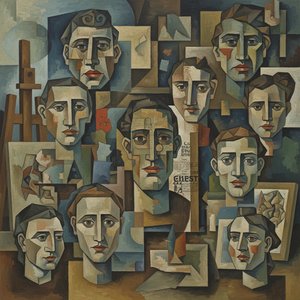
The early 20th century brought about radical shifts in artistic expression. Pablo Picasso, a master of innovation, explored emotional depth through the fragmented forms of Cubism. While often associated with bold experimentation and intellectual rigor, his work also reveals moments of profound melancholy. “The Two Friends” (1903) exemplifies this duality. The muted tones and distorted figures convey a sense of isolation and despair, hinting at the complexities of human relationships. Picasso wasn’t interested in depicting realistic representations; he sought to capture the *essence* of feeling – the raw emotions that lie beneath the surface. The Cubist fragmentation can be seen as a metaphor for the fractured nature of modern life, reflecting a sense of alienation and uncertainty. It is through this deliberate distortion and textural depth that Picasso evokes such powerful emotional responses.
The Enduring Power of Contemplation: A Legacy Across Artistic Styles
From the subtle nuances of Renaissance portraiture to the fragmented forms of Cubism, the exploration of introspection remains a central theme in art history. Artists throughout time have recognized the power of visual expression to convey complex emotional states – inviting viewers into a shared space of quiet reflection and contemplation. The legacy of these masters continues to inspire contemporary artists today, reminding us that true artistry lies not just in technical skill, but in the ability to connect with the human condition on a deeply personal level. At OriginalUniqueArt.com, we celebrate this enduring power of art, offering handmade oil paintings and museum-quality prints that capture the beauty and complexity of the human experience. Explore our collection today and discover artworks that resonate with your soul – pieces that invite you to pause, reflect, and connect with the emotions that make us uniquely human. Find your own echo of introspection within the world of art.