The Genesis of Abstraction: From Impressionism to Early Modern Revolt
Modern art includes artistic work produced during the period extending roughly from the 1860s to the 1970s, and denotes the styles and philosophies of the art produced during that era. The term is usually associated with art in which the traditions o...
The story of modern art isn’t a clean break from the past, but rather an unfolding evolution—a gradual dismantling of established conventions that began with the subtle rebellions of the 19th century. While often pinpointed to figures like Vincent van Gogh and Paul Cézanne, the seeds of abstraction were sown much earlier, in the Impressionists’ radical departure from academic realism. Their focus on capturing fleeting moments of light and color, prioritizing subjective perception over objective representation, initiated a shift in artistic priorities. This pursuit wasn't merely about *how* things looked, but *how they felt*. However, it was Cézanne’s methodical deconstruction of form—his insistence on reducing natural shapes to their geometric underpinnings—that proved particularly influential. He sought not to mimic nature, but to understand its underlying structure, paving the way for a complete rejection of mimetic representation. This intellectual approach, coupled with Gauguin's symbolic explorations and Seurat’s pointillist precision, created fertile ground for the burgeoning avant-garde movements of the early 20th century.
The Fauves, with their unrestrained use of color, further challenged traditional norms, prioritizing emotional expression over accurate depiction. But it was artists like Dwinell Grant who truly pushed boundaries, venturing into entirely new territories. Grant’s ‘Contrathemis, Frame 590’ (1941) stands as a pioneering example of abstract art film—a geometric abstraction that eschews narrative altogether in favor of pure visual experience. The unique color palette and dynamic composition demonstrate an early exploration of the possibilities inherent in non-representational forms, anticipating many of the concerns that would define Abstract Expressionism decades later.
Analytical Realism & The Search for 'Total Painting': Pavel Filonov's Legacy
 Pavel Filonov
Discover Pavel Filonov (1883-1941), the Russian avant-garde master of Analytical Realism. Explore his unique abstract style, philosophical approach & profound impact on modern art.
While Western art was grappling with Cubism and Fauvism, a profoundly original movement was unfolding in Russia: Analytical Realism, spearheaded by the enigmatic Pavel Filonov. Filonov’s work defies easy categorization; it wasn’t simply about abstraction, but about achieving what he termed ‘total painting.’ He believed that art should not merely depict reality, but embody it—to capture the very essence of life through a complex layering of color and form. His paintings are often described as chaotic, yet within this apparent disorder lies a meticulous system rooted in his philosophical beliefs. He saw organic forms as constantly evolving, and sought to represent this dynamism on canvas.
“Goat” (1935), exemplifies Filonov’s unique approach. The painting isn't a literal depiction of an animal; rather, it’s a vibrant, layered composition that evokes the energy and complexity of life itself. The tree-like form emerging from the chaos is not simply a visual element, but a symbol of growth, decay, and renewal. Filonov’s technique involved building up layers of paint—often using tiny brushstrokes—to create a textured surface that seems to pulsate with energy. He aimed for a complete integration of color, line, and form, believing that each element should contribute to the overall ‘making visible’ of life's processes.
Beyond Representation: Exploring the Avant-Garde and its Political Dimensions
 Wikipedia: Avant-garde
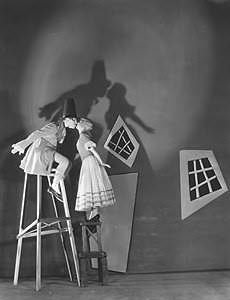
In the arts and literature, the term avant-garde (from French meaning 'advance guard' or 'vanguard') identifies an experimental genre or work of art, and the artist who created it, which usually is aesthetically innovative, whilst initially being ide...
The term avant-garde, meaning “advance guard,” aptly describes the radical artists who challenged not only artistic conventions but also societal norms. Emerging in the early 20th century, these movements—Futurism, Dada, Surrealism—were often driven by a desire for social and political change. They rejected traditional values, embraced experimentation, and sought to disrupt established ways of thinking. The military metaphor is crucial: they were scouts, probing new territories and challenging the status quo.
Artists like Hryhorii Havrylenko in Ukraine contributed significantly to this spirit of innovation with works such as “Abstract Composition (Sketch for ‘Nika’).” This unique sketch in Indian ink demonstrates a bold departure from representational art, embracing geometric abstraction and dynamic composition. The avant-garde wasn't simply about aesthetics; it was often deeply intertwined with political ideology. Artists saw their work as a means of challenging authority, questioning societal structures, and envisioning new possibilities for the future. This commitment to radical change often led to conflict with established institutions, but also fueled a period of unprecedented artistic creativity.
American Abstract Expressionism: A New Center for Artistic Innovation
Abstract expressionism in the United States emerged as a distinct art movement in the aftermath of World War II and gained mainstream acceptance in the 1950s, a shift from the American social realism of the 1930s influenced by the Great Depression an...
Following World War II, the art world’s center shifted from Europe to the United States, and a new movement emerged: Abstract Expressionism. This wasn't a unified style, but rather a collection of diverse artists—Jackson Pollock, Mark Rothko, Willem de Kooning, Franz Kline—who shared a common interest in exploring subjective experience through non-representational forms. Influenced by Surrealism’s emphasis on the subconscious and German Expressionism’s emotional intensity, Abstract Expressionists sought to create art that was raw, visceral, and deeply personal.
The movement embraced spontaneity and improvisation, often employing techniques like drip painting and gestural brushwork. The canvas became an ‘arena,’ as Harold Rosenberg famously described it, where the artist could express their emotions directly through the act of creation. This emphasis on process over product marked a significant departure from traditional artistic values.
Postmodern Critiques & the Fragmentation of Style: Dorfles and Seliger
 angelo eugenio dorfles
Explore the visionary art & philosophy of Gillo Dorfles (1910-2018). Italian painter, critic, & philosopher known for his modernist style & critiques of kitsch & modern culture.
By the mid-20th century, Abstract Expressionism had become dominant, but it also faced increasing criticism. Artists like Angelo Eugenio Dorfles challenged the movement’s emphasis on individualism and emotional intensity, questioning its underlying assumptions and exploring new avenues for artistic expression. Dorfles, an Italian painter, critic, and philosopher, was known for his modernist style and his critiques of kitsch and modern culture. His work often incorporated elements of irony and self-awareness, reflecting a growing skepticism towards grand narratives.
Charles Seliger, another key figure in the post-war art scene, further expanded the boundaries of abstraction with his small, jewel-like paintings and illustrations. His unique style, characterized by meticulous detail and vibrant color, offered a counterpoint to the scale and emotional intensity of Abstract Expressionism. These artists represented a fragmentation of style—a rejection of unified movements in favor of individual expression and critical inquiry.
Collecting Modernity: Identifying Key Movements and Artists
For collectors seeking to build a meaningful collection of modern art, understanding the key movements and artists is essential. Begin by exploring the foundational works of Impressionism and Post-Impressionism—artists like Van Gogh, Cézanne, and Gauguin—to grasp the origins of abstraction. Then delve into the radical experiments of the avant-garde, discovering figures like Dwinell Grant and Hryhorii Havrylenko who pushed boundaries in unique ways.
Pavel Filonov’s work offers a fascinating glimpse into a lesser-known but profoundly original movement—Analytical Realism. And finally, explore the diverse styles of Abstract Expressionism, identifying artists whose work resonates with your personal aesthetic preferences. OriginalUniqueArt.com provides access to high-quality reproductions of these masterpieces, allowing you to experience the power and beauty of modern art firsthand. Our expert team offers free art consultations, custom reproduction services, and appraisal assistance, ensuring a rewarding collecting journey.