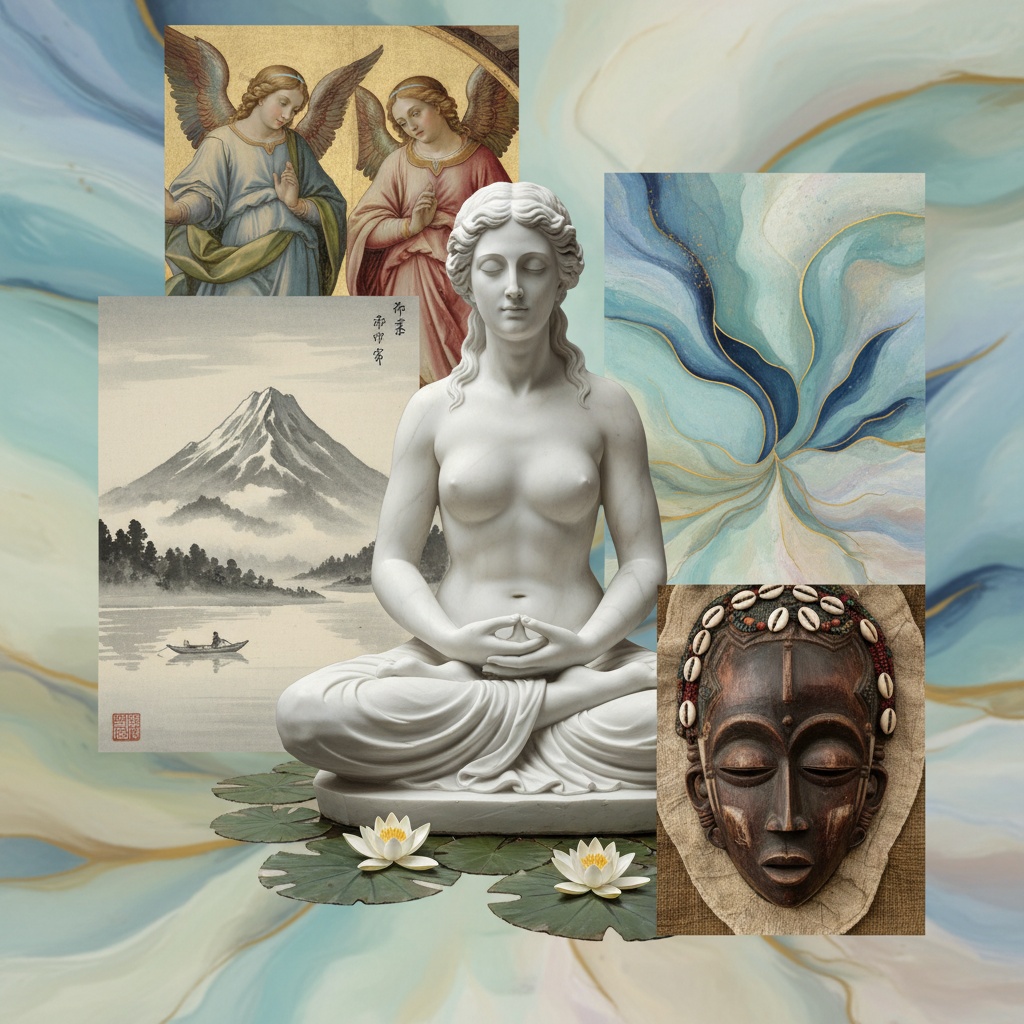
Introduction: The Enduring Appeal of Serenity in Visual Art
From the earliest cave paintings to contemporary abstract works, humanity has sought to capture a sense of inner peace and tranquility through art. This isn’t merely about depicting idyllic scenes; it's about evoking an emotional state – a respite from the chaos of existence, a moment of contemplation, a connection to something larger than ourselves. The desire for serenity is deeply ingrained in the human psyche, and throughout history, artists have responded with works that offer solace, reflection, and a pathway towards inner harmony. The very act of creation can be meditative, transforming anxieties into tangible forms, while the resulting artwork provides a visual anchor for those seeking calm amidst life’s storms.
Ancient Roots: Finding Peace in Eastern Artistic Traditions
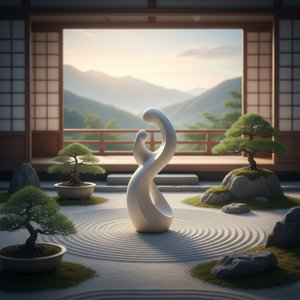
Long before Western art explicitly focused on landscape as a source of spiritual renewal, Eastern traditions – particularly within Zen Buddhism and Taoism – embraced nature as an embodiment of peace. Japanese sumi-e ink wash paintings, for example, aren’t simply representations of mountains or bamboo forests; they are attempts to capture the *essence* of these elements, their inherent stillness and power. The deliberate simplicity of brushstrokes, the use of empty space (ma), and the emphasis on spontaneity all contribute to a sense of quietude. Similarly, traditional Chinese landscape painting often incorporated philosophical principles, inviting viewers to contemplate their place within the natural order. These works weren’t meant to be passively observed; they were tools for meditation, designed to guide the viewer towards enlightenment. The focus wasn't on realistic depiction but on conveying a feeling – a sense of oneness with the universe.
The Romantic Landscape: Nature as a Sanctuary for the Soul
 Farmhouses with Birch Trees
Explore Gustav Klimt's serene 'Farmhouses with Birch Trees,' a beautiful Art Nouveau landscape capturing the tranquility of rural life. A masterpiece of color and composition.
As Western art shifted its gaze outwards during the Romantic period (late 18th and early 19th centuries), nature began to be viewed not just as a backdrop but as a powerful force capable of inspiring awe, reverence, and – crucially – peace. Artists like Caspar David Friedrich depicted solitary figures dwarfed by vast landscapes, emphasizing the sublime beauty and emotional power of the natural world. These weren’t simply pretty pictures; they were explorations of the human condition in relation to something infinitely greater. The untamed wilderness offered an escape from the burgeoning industrialization and societal pressures of the time, a place where one could reconnect with their inner self. This yearning for tranquility is beautifully exemplified in works that showcase misty mountains, secluded forests, and expansive skies – all evoking a sense of solitude and contemplation.
Minimalism and Meditation: Agnes Martin & the Pursuit of Quietude
 Untitled # 9
Experience quiet contemplation with Agnes Martin's Untitled #9 (1984). This minimalist abstract painting features subtle lines & muted tones, evoking serenity and meditative calm.
The 20th century saw a radical shift towards abstraction, and within this movement, Minimalism emerged as a particularly potent expression of serenity. Artists like Agnes Martin stripped away all representational elements, focusing instead on subtle variations in color, line, and texture. Her paintings – often grids or pale washes of color – aren’t about *what* they depict but about *how* they make you feel. Untitled #9 (1984), for instance, invites quiet contemplation through its delicate lines and muted tones. Martin herself described her work as an attempt to evoke “happiness,” not through overt imagery but through a sense of stillness and emotional resonance. The absence of narrative allows the viewer to project their own feelings onto the canvas, creating a deeply personal experience. This is art that demands slow looking, encouraging a meditative state of mind.
Modern Expressions of Inner Harmony: Yoshitomo Nara and Beyond
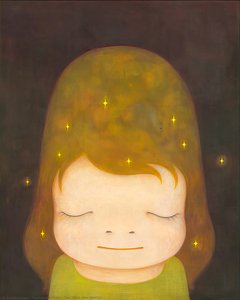 The little star dweller
Discover 'The Little Star Dweller' by Nara Yoshitomo Zuzanna – a dreamy digital painting of innocence & celestial wonder. Explore its unique style, symbolism & captivating appeal.
Contemporary artists continue to explore themes of serenity in diverse ways. While often associated with childhood innocence, the work of Yoshitomo Nara also contains a profound sense of loneliness and introspection. Paintings like The Little Star Dweller, with their large-eyed figures and dreamy backgrounds, evoke a bittersweet nostalgia and a quiet yearning for connection. The simplicity of form and color belies a deeper emotional complexity. Beyond Nara, many contemporary artists are utilizing abstraction, installation art, and digital media to create immersive experiences that promote mindfulness and wellbeing. Gustav Klimt’s Farmhouses with Birch Trees, though rooted in Art Nouveau, also exemplifies this pursuit of harmony through its serene depiction of rural life and masterful use of color and composition. The gentle rhythm of the birch trees and the soft palette create a sense of tranquility that resonates even today.
Conclusion: Cultivating Calm – Art as a Pathway to Wellbeing
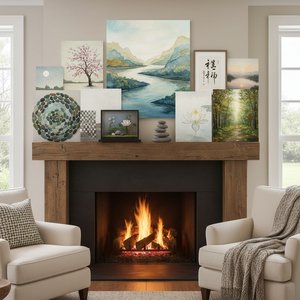
The enduring appeal of serenity in art lies in its ability to transcend cultural boundaries and connect with our deepest emotional needs. Whether through the ancient traditions of Eastern painting, the Romantic landscapes of Europe, or the minimalist abstractions of the 20th century, artists have consistently offered us pathways towards inner peace. At OriginalUniqueArt.com, we believe that art has the power to transform spaces and enrich lives. Explore our collection of handmade oil paintings and museum-quality prints – discover a piece that resonates with your soul and cultivates calm within your home. We offer custom reproductions, allowing you to bring these timeless expressions of serenity into your own environment, creating a sanctuary for reflection and wellbeing.