Early Life & Academic Foundations: From Lille to Courbet's Influence
 Wikipedia: Carolus-Duran
Charles Auguste Émile Durand, known as Carolus-Duran (4 July 1837 – 17 February 1917), was a French painter and art instructor. He is noted for his stylish depictions of members of high society in Third Republic France. == Biography == The son of ...
Charles Auguste Émile Durand, known universally as Carolus-Duran, emerged from the relative provincialism of Lille, France, in 1837, a period steeped in Romantic tradition but rapidly shifting towards Realist ideals. His initial artistic training under Augustin-Phidias Cadet de Beaupré at the Académie de Lille provided a foundational grounding in draftsmanship, yet it was his subsequent tutelage with François Souchon – a student of Jacques-Louis David himself – that instilled within him a respect for classical form and composition. However, the rigid academic constraints of Paris in the 1850s proved insufficient to contain Duran’s burgeoning artistic spirit. He adopted the moniker “Carolus-Duran,” a subtle act of self-fashioning indicative of his ambition and desire to forge a distinct path. The early years were marked by an immersion in the prevailing Realist movement, most notably through exposure to Gustave Courbet's unflinching depictions of contemporary life. While Duran initially absorbed Courbet’s directness and commitment to portraying the world as it was, he soon began to seek a more refined aesthetic, one that balanced realism with elegance and psychological insight.
The Spanish Journey: Velázquez and the Refinement of Style
A pivotal moment in Carolus-Duran's artistic development arrived with his scholarship-funded travels to Rome and Spain in 1862. This sojourn proved transformative, shifting his focus away from Courbet’s often stark realism towards the luminous subtleties of Spanish painting, particularly the work of Diego Velázquez. Duran was captivated by Velázquez’s mastery of light, shadow, and texture – a technique that prioritized suggestion over meticulous detail. He studied Velázquez's portraits intently, absorbing not merely his technical prowess but also his ability to convey character and social standing through subtle gestures and nuanced expressions. This influence is readily apparent in works from this period, where Duran began to experiment with looser brushwork and a more atmospheric rendering of form. The Spanish journey wasn’t simply about copying techniques; it was about understanding the *spirit* of Velázquez – his ability to capture the essence of his subjects without sacrificing artistic grace.
A Parisian Salon Star: Establishing a Reputation in Third Republic Society
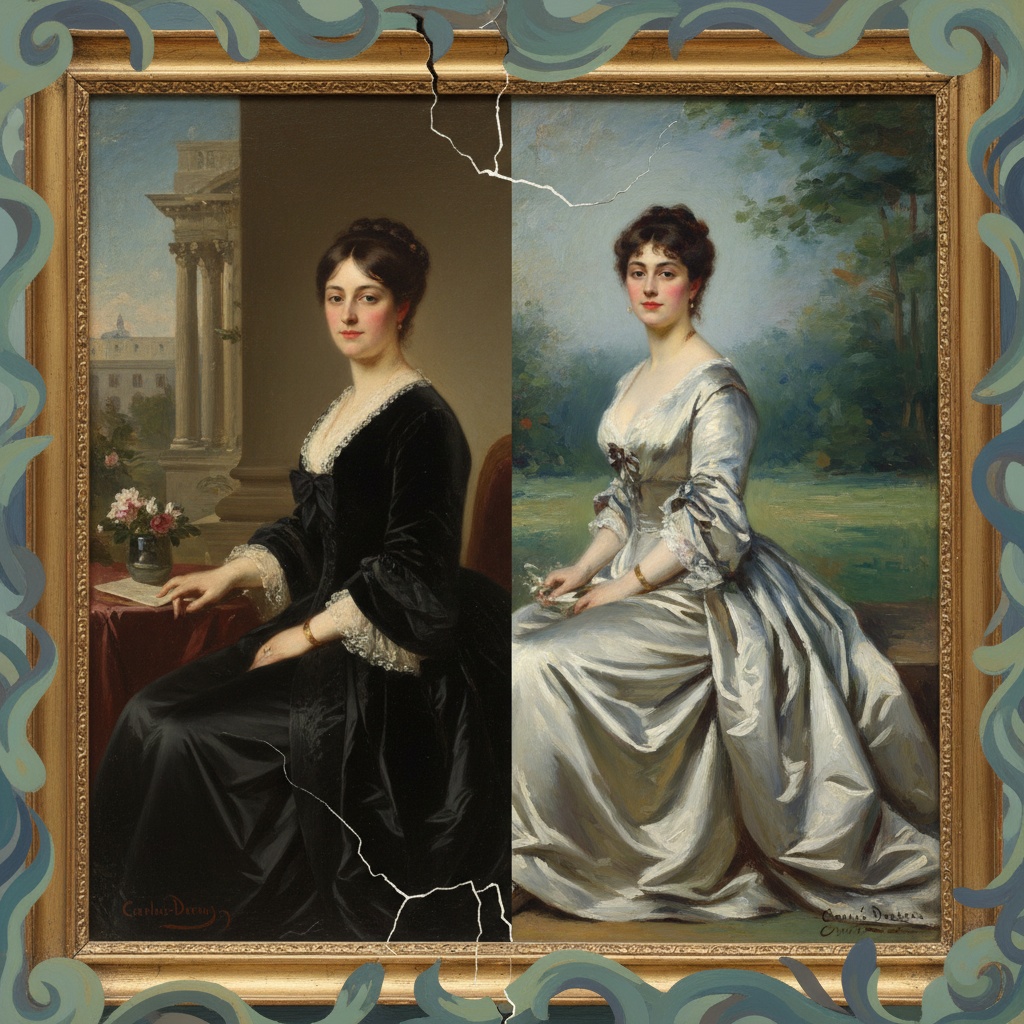
Upon returning to France, Carolus-Duran quickly ascended through the ranks of the Parisian art world. His early successes, such as “Murdered” (1866), demonstrated his technical skill and narrative ability, but it was his burgeoning talent for portraiture that truly cemented his reputation. The Third Republic provided a fertile ground for Duran’s artistry; a society eager to celebrate its newfound prosperity and social mobility. He became the painter of choice for the elite – bankers, industrialists, politicians, and their wives – individuals who desired not merely accurate likenesses but flattering representations of their status and refinement. His paintings from this era are characterized by a stylish elegance, often depicting his subjects in luxurious settings adorned with opulent fabrics and accessories. Duran’s ability to capture both physical resemblance *and* social standing made him an indispensable figure within Parisian high society.
Carolus-Duran as Educator: The Atelier and the Rise of American Impressionism
Perhaps Carolus-Duran's most enduring legacy lies not solely in his paintings but also in his role as a highly influential art instructor. In 1872, he established his own atelier – a private studio where aspiring artists could receive intensive training under his guidance. Duran’s pedagogical approach was remarkably unconventional for the time. He eschewed the traditional academic emphasis on preliminary drawing studies, instead encouraging his pupils to draw and paint simultaneously, working directly with color and form from the live model. This “direct painting” method – a radical innovation – fostered spontaneity and encouraged students to develop their own unique styles. The atelier attracted a remarkable cohort of American painters, including John Singer Sargent, James Carroll Beckwith, Will H. Low, Kenyon Cox, and J. Alden Weir. These artists, many of whom would become leading figures in the burgeoning Impressionist movement, credited Duran with liberating them from academic constraints and providing them with the tools to pursue their own artistic visions.
Technique & Portraiture: Fluidity, Brushwork, and Capturing Likeness
Carolus-Duran’s technique was characterized by a remarkable fluidity of brushwork and an exceptional sensitivity to light and color. He employed a layered approach, building up tones and textures with delicate glazes and scumbling techniques. Unlike the meticulous detail favored by many academic painters, Duran prioritized suggestion and atmosphere, allowing his subjects to emerge from the shadows through subtle gradations of tone. His portraits were not merely representations of physical appearance; they were psychological studies – attempts to capture the inner life of his sitters. He masterfully used clothing, accessories, and background details to convey social status and personality. The celebrated portrait of Carolus-Duran by John Singer Sargent itself exemplifies this approach—a stylish depiction of the artist as a dandy, radiating confidence and sophistication. The inscription on the painting, “To my affectionate Master,” serves as a testament to Duran’s profound influence on his most gifted pupil.
Legacy and Influence: A Bridge Between Tradition and Modern Art
Carolus-Duran's career spanned a period of significant artistic upheaval, bridging the gap between academic tradition and the emerging forces of modern art. While often categorized as a Realist, his work transcends simple labels. He possessed an innate sense of elegance and refinement that distinguished him from his more overtly political contemporaries. His influence on the American Impressionists was profound, providing them with the technical skills and artistic freedom to develop their own unique styles. Though he faced criticism during his lifetime for prioritizing financial success over artistic innovation, Carolus-Duran’s paintings continue to captivate viewers with their stylish beauty and psychological depth. He remains a significant figure in 19th-century art history – a testament to the enduring power of skillful technique, elegant composition, and insightful portraiture. Explore more masterpieces and discover exceptional reproductions at OriginalUniqueArt.com, where artistry meets accessibility.