Early Life & Artistic Awakening: From Boston Society to Painting
 Wikipedia: Lilla Cabot Perry
Lilla Cabot Perry (born Lydia Cabot; January 13, 1848 – February 28, 1933) was an American artist who worked in the American Impressionist style, rendering portraits and landscapes in the free form manner of her mentor, Claude Monet. Perry was an ear...
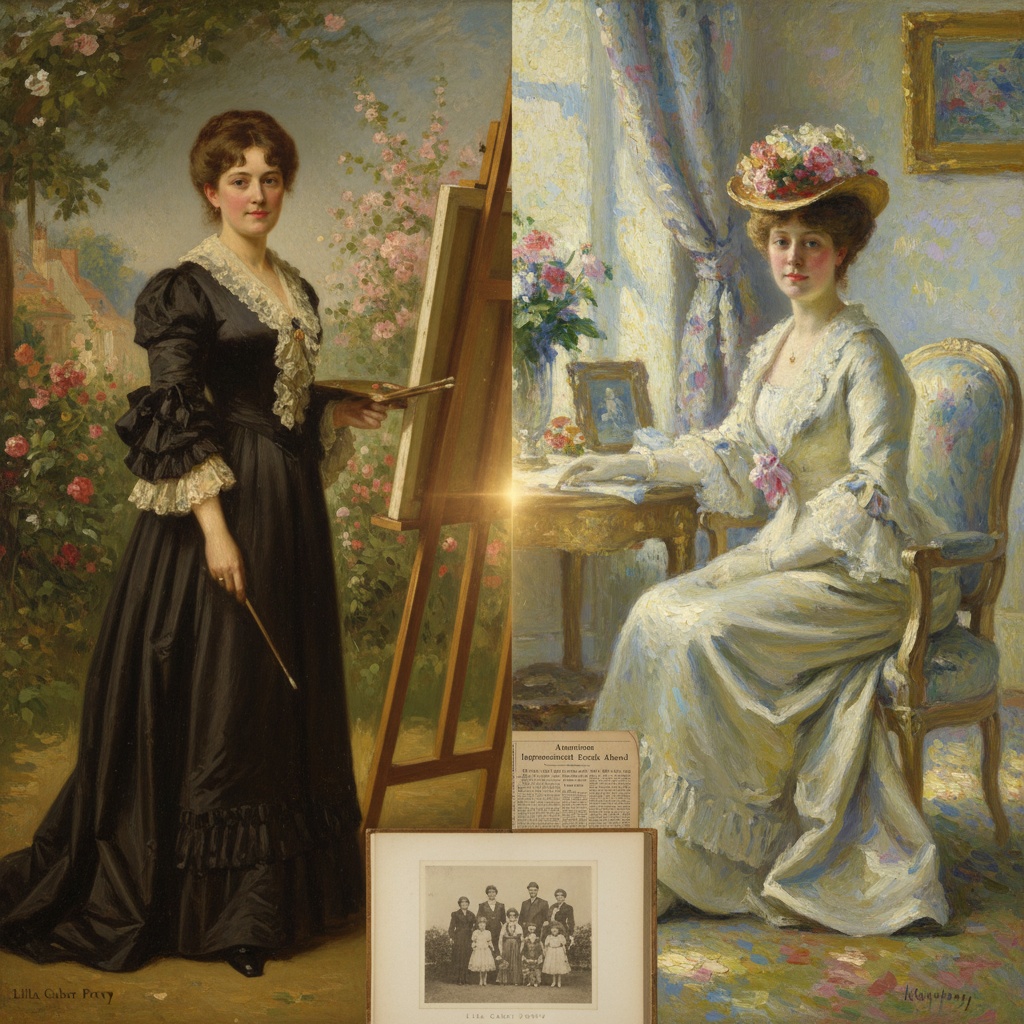
Lilla Cabot Perry, born Lydia Cabot in 1848 into one of Boston’s most established families, initially seemed destined for a life steeped in societal expectations rather than the vibrant world of art. Her lineage – the Cabots were prominent surgeons, chemists, and philanthropists – fostered an environment of intellectual curiosity but not necessarily artistic expression. Yet, beneath the veneer of proper upbringing lay a sensitive spirit drawn to observation and nuance. While her brothers pursued scientific endeavors, Lilla found herself captivated by poetry and music, early indicators of a creative temperament yearning for outlet. It wasn’t until the relatively late age of thirty-six that she formally embraced painting, a decision considered unconventional for women of her social standing at the time. This delay, however, proved formative; Perry brought to her art a maturity of perspective and a refined understanding of human character rarely found in younger artists.
Her early training with Alfred Quentin Collins and later Robert Vonnoh and Dennis Bunker at Boston’s Cowles Art School provided a solid foundation in academic techniques. However, it was exposure to the broader currents of artistic thought – particularly the philosophies of Ralph Waldo Emerson, which emphasized individualism and connection to nature – that truly began to shape her aesthetic sensibility. Perry wasn't merely learning *how* to paint; she was developing a personal vision, one that would soon be profoundly influenced by an encounter with the revolutionary art coming from France.
Embracing Impressionism: Monet's Influence and the Giverny Years
American Impressionism was a style of painting related to European Impressionism and practiced by American artists in the United States from the mid-nineteenth century through the beginning of the twentieth. The style is characterized by loose brushw...
The pivotal moment arrived in 1889 when Perry first encountered the work of Claude Monet at the Galerie Georges Petit in Paris. The exhibition, a collaboration between Monet and Auguste Rodin, was a revelation. Unlike the meticulously detailed academic paintings she had previously studied, Monet’s canvases pulsed with light, color, and an immediacy that captured the fleeting essence of a scene. Perry immediately recognized the power of this new approach, describing it as “fully as impressive as his pictures.” This wasn't simply an aesthetic preference; it was a paradigm shift.
That same summer, through a fortunate introduction, Perry and her husband were invited to Giverny, Monet’s idyllic home and garden. The ensuing decade spent in close proximity to the master proved transformative. Perry absorbed Monet's techniques – his emphasis on *plein air* painting (painting outdoors directly from nature), broken brushstrokes, and vibrant palettes – but she didn’t simply imitate him. She adapted these principles to her own unique style, blending them with a distinctly American sensibility. The close relationship fostered between the Perry and Monet families allowed for invaluable exchange of ideas and techniques, solidifying Perry's commitment to Impressionism.
Portraiture as Social Commentary: Capturing American Elite
 The Letter (Alice Perry)
Discover 'The Letter' by Lilla Cabot Perry – a stunning American Impressionist portrait from 189[date]. Explore her evocative style & historical significance.
While landscapes would feature in her oeuvre, Lilla Cabot Perry found her true calling in portraiture. However, she wasn’t interested in simply creating flattering likenesses of the wealthy and prominent. Her portraits are insightful studies of character, revealing not just physical appearance but also the inner lives and social dynamics of her subjects. She possessed a remarkable ability to capture both the dignity and the vulnerabilities of those she painted, offering a nuanced glimpse into the world of Boston’s upper class.
Perry's portraits often depict women – sisters, daughters, friends – engaged in everyday activities: reading, writing letters, or simply lost in thought. These scenes are not grandiose displays of wealth or status; they are intimate moments that reveal a quiet strength and intellectual curiosity. She subtly challenged conventional notions of femininity by portraying her subjects as independent thinkers and active participants in their own lives.
The Trio and Beyond: Perry’s Distinctive Style in Family Portraits
 The Trio (Alice, Edith and Margaret Perry)
Admire "The Trio" by Lilla Cabot Perry – a vibrant American Impressionist portrait showcasing three sisters. Hand-painted reproduction available now.
Works like “The Trio (Alice, Edith and Margaret Perry)” exemplify Perry's mastery of portraiture. The painting showcases three sisters united by familial bonds yet each possessing a distinct personality. The vibrant colors and loose brushwork characteristic of American Impressionism are evident, but it’s the psychological depth that truly sets this work apart. Each sister is rendered with individual attention to detail, their expressions hinting at complex emotions and inner lives. Similarly, “The Letter (Alice Perry)” captures a moment of quiet contemplation, the subject absorbed in her correspondence, radiating an air of intelligence and grace.
Even in her self-portrait, “Portrait of Lilla Cabot Perry,” painted later in life, we see this same commitment to honest representation. The rich textures and muted tones convey a sense of wisdom and dignity, while the Impressionistic style softens the edges, creating an image that is both realistic and deeply personal. Perry’s distinctive style – a blend of academic training, Monet's influence, and her own unique sensibility – allowed her to create portraits that were not merely representations of individuals but also insightful commentaries on American society.
A Lasting Legacy: Perry’s Contributions to American Art & Advocacy
Lilla Cabot Perry was more than just a talented artist; she was a tireless advocate for Impressionism in the United States. She actively promoted Monet's work, exhibiting his paintings at her home and lecturing on the merits of this revolutionary style. Her efforts were instrumental in introducing American audiences to the beauty and innovation of French Impressionism, paving the way for its eventual acceptance.
Although she faced resistance from conservative art critics and a public accustomed to more traditional styles, Perry persevered, establishing herself as a leading figure in the Boston School of painting. Her work continues to be celebrated for its psychological depth, technical skill, and insightful portrayal of American society. Perry’s legacy extends beyond her paintings; she inspired generations of artists – particularly women – to pursue their creative passions and challenge conventional norms.
Collecting Lilla Cabot Perry: Exploring Her Works Today
Today, the works of Lilla Cabot Perry are highly sought after by collectors and museums alike. Her paintings offer a rare glimpse into the world of late 19th-century America, capturing not just physical appearances but also the inner lives and social dynamics of her subjects. Whether it’s a vibrant family portrait or a serene landscape, each work is imbued with Perry's distinctive style and insightful perspective.
For those interested in acquiring a piece of American Impressionist history, OriginalUniqueArt offers high-quality reproductions of Perry’s most iconic paintings. From “The Trio” to her captivating self-portrait, these reproductions allow you to experience the beauty and nuance of her work firsthand. Explore our collection today and discover the enduring legacy of Lilla Cabot Perry – a true pioneer in American art.