

 Preview
 Send
Send Share
Share
 Details
 Guide
Guide

 Download
 Similars
 X-Ray
X-Ray Diaporama
 Stats
StatsTitle Unknown
 Acrylic On Canvas
- WallArt
- Surrealist Landscape
 1926
1926 92.0 x 65.0 cm
 Metropolitan Museum of Art
 Read More
Hand Made Oil Reproduction
Hand-painted oil on canvas in your size and frame, made to order by our artists. ( Switch to Print Switch to Digital Image)




P118B $10

P118H $10

P118W $10

P438Z $10

P508JH $12

P508YH $12

P805H $10

P805Z $10

P919BZ $10

P919G $10

P919XJ $10

P959ZH $10

P968JZ $12

W106C $8

W218G $10

W218JH $8

W218Y $10

W307PJ $10

W316G $10

W316PJ $8

W316Y $10

W398PJ $8

W4111J $10

W500HY $15

W500JH $15

W692G $12

W849H $8

W940BG $15

W953PJ $8




Pick from our preset sizes that match the artwork's original proportions.

Type the width and the height you need, to fit your frame or your wall. This is hand-painted, so for a size with a different shape the artist can paint a bit more around the picture, or cut a bit — you choose. We send you a digital mockup to approve before the painting starts. The picture shown on this page does not show the real result — only the mockup does.
After order, OriginalUniqueArt.com team will email client for instructions and provide a mockup preview
Worldwide Delivery () in 3/4 weeks instead of standard 5 weeks. (26 October). No compromise on quality.

Free Worldwide Express Shipping

High-Quality Linen Canvas

Full Shipping Insurance

Customs Tax Refund Guarantee

True Color Matching Guarantee

100-Day Return Policy (Defects Only)

100% Money-Back Guarantee

Bulk Discount Offer
 Glass option is only available in size under 110 CM

Title Unknown
Reproduction Medium
Reproduction Size
-


Total Price
$ 300
A Landscape of Dreams: Yves Tanguy’s Echoes of Giorgio de Chirico
Yves Tanguy's "Title Unknown," painted in 1926, stands as a testament to the profound influence exerted by Surrealist pioneers like Giorgio de Chirico. This enigmatic artwork isn’t merely a depiction of a seascape; it’s an invitation into a realm where logic dissolves and subconscious imagery reigns supreme—a characteristic hallmark of Tanguy's distinctive artistic vision. The painting immediately draws the eye with its stark simplicity: a vast expanse of white punctuated by subtle textural variations, mirroring de Chirico’s obsession with pristine backgrounds that heighten the unsettling beauty of his compositions.- Subject Matter & Composition: At first glance, the scene presents a tranquil tableau—a woman reclining on the water's surface alongside what appears to be a boat or cart attached to her torso. However, this apparent stillness belies an intricate layering of symbolism. Scattered across the canvas are elements that defy rational explanation: a school of fish drifting silently beneath the waterline and a child flattened by a cart – motifs directly borrowed from de Chirico’s celebrated paintings like “The Tower.”
- Style & Technique: Tanguy's approach to painting is resolutely nonrepresentational. He eschewed traditional perspective and realistic rendering, opting instead for amorphous forms—biomorphic shapes reminiscent of coral reefs or geological formations—that evoke a sense of primordial landscape. The artist achieved this ethereal effect through meticulous layering of thin washes of pigment, creating a velvety surface that captures the subtle nuances of light and shadow.
De Chirico’s Legacy: Architectural Iconography & Psychological Depth
The connection between Tanguy and de Chirico extends beyond mere stylistic similarities. De Chirico's fascination with architectural spaces—particularly towers—served as a crucial inspiration for Tanguy, who repeatedly incorporated this iconic motif into his artworks. As art historian Rudolf Wittkugel eloquently noted, “De Chirico’s tower is not merely a building; it embodies an unsettling sense of disorientation and isolation—a psychological landscape that anticipates the anxieties of the postwar era.” Tanguy skillfully translated de Chirico's preoccupation with these unsettling spaces into his own canvases, conveying similar feelings of unease and mystery.- Symbolism: The white tower itself symbolizes detachment from reality, representing a retreat into the subconscious mind—a concept central to Surrealist thought. Its presence reinforces the painting’s dreamlike quality, prompting viewers to contemplate themes of solitude, vulnerability, and the confrontation with inner demons.
- Emotional Impact: “Title Unknown” possesses an undeniable emotional resonance. The woman's posture conveys a quiet melancholy, while the boat and bird contribute to a palpable sense of movement and disorientation. Ultimately, the painting invites contemplation—encouraging viewers to delve into their own subconscious anxieties and explore the hidden depths of human experience.
A Reproduction Worth Admiring: Capturing Tanguy’s Atmospheric Brilliance
Reproductions of “Title Unknown” offer an exceptional opportunity to appreciate Tanguy's masterful technique and immersive aesthetic. OriginalUniqueArt.com presents high-quality reproductions that faithfully recreate the painting’s luminous surface and subtle textural variations, allowing collectors and interior designers alike to experience the artwork's captivating beauty firsthand. Consider framing this piece in a minimalist setting—perhaps alongside other Surrealist artworks—to maximize its impact and celebrate the enduring legacy of Yves Tanguy.Questions & Answers
What explains the copyright situation of "Title Unknown" by Yves Tanguy?
"Title Unknown" by Yves Tanguy is in the public domain - its copyright has expired. Copyright duration runs from the artist's death, which occurred in 1955.
What is the creation date of "Title Unknown" by Yves Tanguy?
"Title Unknown" dates from 1926. The date places the work within Yves Tanguy's career and its era.
Are the colors of "Title Unknown" by Yves Tanguy saturated or muted?
"Title Unknown" by Yves Tanguy is recorded with a muted saturation.
Artist Biography
A World Beyond Recognition: The Enigmatic Vision of Yves Tanguy
Yves Tanguy, a name synonymous with the dreamlike landscapes and biomorphic forms of Surrealism, remains one of the most compelling and original voices of 20th-century art. Born in Paris on January 5, 1900, his early life was marked by a sense of displacement and solitude that would profoundly shape his artistic vision. His father, a retired naval captain of Breton origin, passed away when Tanguy was eight, leading to a childhood spent moving between relatives in Brittany. This immersion in the rugged coastal scenery and ancient folklore of his mother’s homeland instilled within him a deep connection to the subconscious and the mysterious—a sensibility that would later permeate his canvases. Though he briefly followed in his father's footsteps by joining the merchant navy, and served in the army, Tanguy’s true calling lay elsewhere. A pivotal moment arrived in 1923 when, while riding a bus through Paris, he glimpsed paintings by Giorgio de Chirico. The unsettling stillness and illogical spaces of De Chirico’s work ignited within Tanguy an irresistible urge to paint, despite having received no formal artistic training.Embracing the Surreal: A Journey into the Unconscious
Tanguy's path quickly led him toward the burgeoning Surrealist movement in Paris. Introduced to André Breton and his circle around 1924, he found intellectual kinship with a group dedicated to exploring the realm of dreams, the irrational, and the subconscious mind. Unlike some of his contemporaries who employed figurative imagery within their surreal compositions, Tanguy embarked on a path of pure abstraction. He began creating vast, otherworldly landscapes populated by enigmatic forms that defied easy categorization. These weren’t depictions *of* anything recognizable; they were manifestations *from* somewhere else entirely—the hidden recesses of the psyche. His palette was typically restrained, favoring muted tones of browns, grays, and ochres, punctuated by occasional flashes of contrasting color that served to heighten the sense of alienation and mystery. The surfaces of his paintings are meticulously smooth, lending a deceptive clarity to these impossible terrains. He worked with an almost obsessive dedication, often becoming completely absorbed in his creations within the confines of his small studio.The Language of Forms: Symbolism and Interpretation
What do these strange shapes mean? This is a question that has followed Tanguy’s work since its inception. He himself resisted any definitive interpretations, preferring to allow viewers to project their own associations onto the canvases. However, certain recurring motifs suggest underlying themes. The smooth, organic forms often resemble marine life or geological formations—echoes of his Breton upbringing and perhaps symbolic representations of primordial forces. Angular, geometric shapes intrude upon these landscapes, hinting at a sense of disruption or an encroaching industrial presence. Some scholars have interpreted these elements as representing psychological states – anxieties, desires, and the fragmented nature of modern consciousness. Works like “Slowly Toward The North” (1942) exemplify this haunting quality, drawing the viewer into a desolate yet strangely compelling world. His paintings aren’t narratives; they are atmospheres—evocations of feeling rather than statements of meaning. "Multiplication of the Arcs" presents an industrial decay in a dense abstract cityscape that is both captivating and intellectually stimulating.A Transatlantic Life and Lasting Legacy
Tanguy's life took another significant turn in 1939 when he fled Europe with his first wife, Jeannette Ducrocq, escaping the looming shadow of World War II. He settled in New York City, where he continued to paint and became a prominent figure in the American Surrealist scene. In 1940, he married Kay Sage, another talented Surrealist painter, forming a deeply creative partnership that lasted until his death. He became a naturalized U.S. citizen in 1948, eventually making his home in Woodbury, Connecticut. Despite achieving recognition during his lifetime—his work was exhibited at the Musée d'Art Moderne in Paris and acquired by influential collectors like Peggy Guggenheim—Tanguy remained a reserved and introspective figure. He died unexpectedly on January 15, 1955, and, true to his enigmatic nature, requested that his ashes be scattered on the beach at Douarnenez in Brittany, alongside those of Kay Sage after her passing in 1963, returning him to the land that had first inspired his unique vision. Yves Tanguy’s contribution to art lies not merely in his distinctive style but in his ability to tap into a universal language of dreams and anxieties, creating worlds that continue to resonate with viewers today. His paintings are invitations to explore the uncharted territories of the human psyche—a journey into the beautiful and unsettling landscapes of the unconscious mind.- Notable Works: “The Satin Tuning Fork” (1942), “Toilette de l'air”, “The Sun in its Jewel Case” (Le soleil dans son écrin).
- Influences: Giorgio de Chirico, André Breton, the landscapes of Brittany.

Yves Tanguy
1900 - 1955 , France
Quick Facts
- Full Name: Yves Tanguy
- Nationality: French-American
- Date Of Birth: 1900
- Date Of Death: 1955
- Place Of Birth: Paris, France
- Notable Artworks:
- The Satin Tuning Fork
- Toilette de l'air
- Sun in its jewel case
- Multiplication of the Arcs
- Slowly Toward The North
- Artistic Movement Or Style: Surrealism
- Artists Who Influenced This Artist: ['Giorgio de Chirico']
Related Articles

Cézanne's Masterpieces: 25 Iconic Artworks to Transform Your Space
Journey through 25 iconic artworks by Paul Cézanne – a master of Impressionism and Post-Impressionism. Explore his landscapes, still lifes, and the stories behind these timeless masterpieces. Discover museum-quality reproductions & curated decor at OriginalUniqueArt.com.

Evocations of Place: A Historical Journey Through Landscape Art
Explore the rich history of landscape art with OriginalUniqueArt. Discover renowned artists, movements like Impressionism & Romanticism, and expert guidance for collecting timeless pieces. Find your perfect serene escape today!

Romantic Landscapes: 10 Masterpieces for Your Home | OriginalUniqueArt
Journey through 10 Romantic landscape masterpieces by Friedrich, Turner & Cole. Explore emotional art, sublime nature scenes & iconic 19th-century paintings. Find museum-quality reproductions for your home at OriginalUniqueArt.com – discover the full collection online!
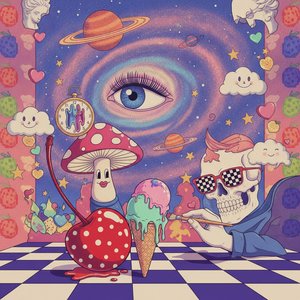
Pop Surrealism Unveiled: The Sophisticated Intersection of Vibrant Pop Art and Dreamlike Subconscious Landscapes
Explore the captivating world of Pop Surrealism. Discover how vibrant Pop Art meets dreamlike subconscious imagery through the works of masters like Jeff Soto and Ryan Heshka. An expert guide for discerning collectors seeking to understand this profound contemporary art movement.

John Constable's Masterpieces: Explore 25 Iconic Landscapes for Your Home
Journey through John Constable's 25 most celebrated landscapes. Explore Romanticism, Dedham Vale & his masterful use of light in iconic paintings like 'Hay Wain'. Find museum-quality art reproductions and elevate your home decor on OriginalUniqueArt.com.


