Preview
 Send
Send Share
Share
 Details
 Guide
Guide

 Download
 Similars
 X-Ray
X-Ray Diaporama
 Stats
StatsScene from The Tempest


 Read More
Giclée / Art Print
Museum-quality giclée or canvas print with fast production and flexible finish options. ( Buy Hand Made Painting Switch to Digital Image)




P118B $10

P118H $10

P118W $10

P438Z $10

P508JH $12

P508YH $12

P805H $10

P805Z $10

P919BZ $10

P919G $10

P919XJ $10

P959ZH $10

P968JZ $12

W106C $8

W218G $10

W218JH $8

W218Y $10

W307PJ $10

W316G $10

W316PJ $8

W316Y $10

W398PJ $8

W4111J $10

W500HY $15

W500JH $15

W692G $12

W849H $8

W940BG $15

W953PJ $8




Pick from our preset sizes that match the artwork's original proportions.

Type the width and the height you need, to fit your frame or your wall. A print can only be cut, never made bigger than the picture, so a size with a different shape loses a part of the image. We send you a digital mockup to approve before we print anything. The picture shown on this page does not show the real cut — only the mockup does.
Worldwide Delivery () in 2 weeks instead of standard 4/5 weeks. (23 October)

Free Worldwide Express Shipping

High-Quality Linen Canvas

Full Shipping Insurance

Customs Tax Refund Guarantee

True Color Matching Guarantee

100-Day Return Policy (Defects Only)

100% Money-Back Guarantee

Bulk Discount Offer
 Glass option is only available in size under 110 CM

Scene from The Tempest
Giclée / Art Print
Reproduction Size
-


Total Price
$ 81
A Celestial Encounter in the Earth's Depths
In the profound stillness of a subterranean world, William Trost Richards captures a moment of transcendent revelation in his 1850 masterpiece, Scene from The Tempest. This is not merely a landscape, but a dramatic biblical tableau that invites the viewer into a cavernous expanse of textured rock and ancient shadows. At the heart of this geological cathedral, a regal king, draped in heavy green robes and crowned in gold, stands in silent communion with a young woman clad in ethereal white. The composition is masterfully vertically oriented, pulling the eye upward through the dark, imposing walls of the cavern toward a radiant orb of light that pierces the gloom. This celestial glow serves as more than just a light source; it acts as a divine messenger, illuminating the central figures and casting long, dramatic shadows that breathe life into the rugged stone surroundings.
The painting is a breathtaking example of the Romantic tradition, yet it is infused with the scientific precision that would later earn Richards the moniker of the "Painter-Botanist." While many of his contemporaries in the Hudson River School sought to dramatize nature through theatrical exaggeration, Richards utilized chiaroscuro—the intense interplay between light and dark—to heighten the emotional weight of the narrative without sacrificing anatomical or geological accuracy. The visible brushstrokes add a palpable sense of texture to the scene, allowing the viewer to feel the roughness of the damp cave walls and the soft, flowing grace of the woman's garments. This meticulous technique creates an immersive experience, making the cavern feel like a tangible, breathing space.
Symbolism and the Spirit of Discovery
Beyond its striking visual impact, Scene from The Tempest is rich with symbolic resonance, making it a profound choice for collectors who value art with intellectual depth. The dark, labyrinthine cavern serves as a metaphor for the uncertainties and challenges of the human condition, representing the unknown depths of the soul or the hardships of life. Conversely, the radiant orb of light descending from above symbolizes hope, divine guidance, and the clarity of truth. The interaction between the king and the woman—a moment of revelation or blessing—suggests a bridge between the earthly and the divine, an idea that would have deeply resonated with the mid-19th-century audience.
For the interior designer or the discerning art lover, this piece offers a commanding presence. Its palette of deep blues, forest greens, earthy browns, and brilliant golds provides a sophisticated anchor for a room, capable of evoking both mystery and grandeur. Whether placed in a quiet study to inspire contemplation or as a focal point in a grand living space, this reproduction of Richards's work brings with it the weight of history and the beauty of scientific observation. It is an invitation to look closer, to find the light within the darkness, and to appreciate the meticulous craftsmanship of an artist who saw the divine in every geological detail.
Questions & Answers
What mood would "Scene from The Tempest" bring to a space?
The romantic atmosphere of "Scene from The Tempest" by William Trost Richards matches its recommended space: a living room.
How do movement and era meet in "Scene from The Tempest" by William Trost Richards?
In "Scene from The Tempest" by William Trost Richards, the Romanticism movement meets the 19th-Century era.
What emotion does "Scene from The Tempest" by William Trost Richards convey?
The emotional tone recorded for "Scene from The Tempest" by William Trost Richards is dramatic. It summarizes the feeling the work expresses.
Artist Biography
A Meticulous Vision of Nature: The Life and Art of William Trost Richards
William Trost Richards, born in Philadelphia on November 14, 1833, occupies a unique position within the pantheon of American landscape painters. He wasn’t driven by the dramatic flourishes or romanticized ideals that characterized many of his contemporaries within the Hudson River School; instead, Richards pursued an almost scientific fidelity to nature, rendering scenes with a precision and detail that bordered on photographic realism. His early life provided a foundation for this distinctive approach. While formally educated at Central High School in Philadelphia, it was his apprenticeship between 1850 and 1855 with the German artist Paul Weber, combined with work as a designer of ornamental metalwork, that instilled within him a dedication to meticulous craftsmanship and observation. This blend of artistic training and practical skill would become the hallmark of his mature style. He wasn’t simply painting what he *felt* about nature; he was painstakingly documenting what he *saw*.From European Influences to American Shores
Richards's artistic journey took him to Europe in 1853, alongside fellow painters William Stanley Haseltine and Alexander Lawrie. This period proved formative, exposing him to the Düsseldorf School of painting—renowned for its detailed landscapes. However, upon his return to America, Richards began forging a path distinctly his own. He exhibited at the Pennsylvania Academy of Fine Arts from 1852 until 1905, gaining recognition within the Philadelphia art community. His first major public exhibition came in 1858 with a show organized by Albert Bierstadt in New Bedford, Massachusetts, aligning him, albeit loosely, with the Hudson River School tradition. Yet, even then, his work stood apart. While others sought to capture the sublime grandeur of nature, Richards focused on its intricate details—the texture of rocks, the play of light on water, the delicate structure of foliage. In 1862 he was elected an honorary member of the National Academy of Design and became a full academician in 1871, solidifying his standing within the American art establishment. He also joined the Association for the Advancement of Truth in Art, an American Pre-Raphaelite group, further emphasizing his commitment to realism and detailed observation.The White Mountains and Coastal Reveries
Perhaps Richards is best known for his watercolor views of the White Mountains of New Hampshire. These works, created during summers spent on the East Coast following his European sojourn, are remarkable for their almost clinical accuracy. He didn’t attempt to impose a romantic narrative onto the landscape; he simply presented it as it was—a complex interplay of geological formations, vegetation, and atmospheric conditions. Many of these watercolors now reside in the collection of the Metropolitan Museum of Art, testament to their enduring artistic merit. Later in his career, Richards shifted his focus almost exclusively to coastal scenes, particularly along the shores of New Jersey, Maine, and Rhode Island. These paintings reveal a deep fascination with the ocean’s rhythms—the relentless crashing of waves, the shifting patterns of light on the water's surface, the subtle gradations of color in the sky. He built a house in Jamestown, Rhode Island, in 1881, where he lived and worked until his death, fully immersed in the maritime world that became his primary subject matter.A Legacy of Precision and Observation
William Trost Richards passed away on November 8, 1905, in Newport, Rhode Island, leaving behind a body of work that continues to captivate viewers with its meticulous detail and unwavering commitment to realism. His influence can be seen in the works of later artists who embraced a more objective approach to landscape painting. His rejection of romanticism, his insistence on factual accuracy, and his masterful technique set him apart as a unique voice within American art history. He wasn’t interested in creating idealized visions of nature; he wanted to capture its essence with uncompromising honesty. His paintings are held in numerous prestigious museums across the United States, including the National Gallery, the Saint Louis Art Museum, and the Smithsonian American Art Museum, ensuring that his legacy will endure for generations to come. His daughter, Anna Richards Brewster, also followed in his footsteps as a painter, further extending the family’s artistic contribution.Exploring Further
- Discover more of Richards' work at online art databases like OriginalUniqueArt.com.
- Delve deeper into his life and career through resources such as Wikipedia and the Smithsonian Archives of American Art.
- Explore works by artists influenced by Richards, such as Enrique Arrigoni and his daughter Anna Richards Brewster.
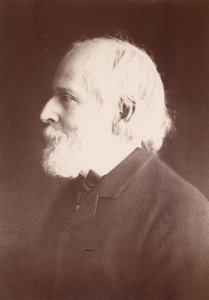
William Trost Richards
1833 - 1905 , United States of America
Quick Facts
- Full Name: William Trost Richards
- Nationality: American
- Date Of Birth: 1833
- Date Of Death: 1905
- Place Of Birth: Philadelphia, United States of America
- Notable Artworks:
- Lago Avernus
- Woodland Landscape
- Interior of Woods…
- Artistic Movement Or Style: Hudson River School
- Artists Who Influenced This Artist:
- Paul Weber
- Albert Bierstadt
- Artists Or Movements Influenced By This Artist: ['Anna Richards Brewster']
Related Articles

Romantic Realism: The Masterful Fusion of Raw Emotion and Hyper-Realistic Detail for the Modern Collector
Discover the captivating world of Romantic Realism. Explore how master artists blend raw emotion with hyper-realistic detail to create timeless, museum-quality oil paintings perfect for sophisticated modern collectors and luxury home interiors.
William Trost Richards: Luminism, Spirituality & the American Landscape Tradition
Explore the captivating landscapes of William Trost Richards, a master of Luminism associated with both the Hudson River School & American Pre-Raphaelite movements. Discover his spiritual connection to nature and lasting influence on American art.

Oil on Canvas: A Historical & Technical Exploration of a Timeless Artistic Medium
Explore the rich history & enduring techniques of oil painting on canvas. Discover the science behind its longevity, conservation practices, and contemporary relevance. Expert insights for art enthusiasts.

The Enduring Legacy of Oil on Canvas: Technique, History & Aesthetic Impact
Explore the rich history & techniques of oil painting – from Renaissance masters to Impressionism. Discover pigments, layering methods, and why this timeless medium endures. Expert insights for artists & art enthusiasts.

Romantic Realism's Finest: 10 Masterpieces for Your Home | OriginalUniqueArt
Explore 10 defining masterpieces of Romantic Realism! Discover Courbet, Millet & Daumier's powerful paintings—capturing emotion and social realities. Find museum-quality reproductions for your home at OriginalUniqueArt.com.