Preview
 Send
Send Share
Share
 Details
 Guide
Guide

 Download
 Similars
 X-Ray
X-Ray Diaporama
 Stats
StatsParade, Washington Square


 Read More
Giclée / Art Print
Museum-quality giclée or canvas print with fast production and flexible finish options. ( Buy Hand Made Painting Switch to Digital Image)




P118B $10

P118H $10

P118W $10

P438Z $10

P508JH $12

P508YH $12

P805H $10

P805Z $10

P919BZ $10

P919G $10

P919XJ $10

P959ZH $10

P968JZ $12

W106C $8

W218G $10

W218JH $8

W218Y $10

W307PJ $10

W316G $10

W316PJ $8

W316Y $10

W398PJ $8

W4111J $10

W500HY $15

W500JH $15

W692G $12

W849H $8

W940BG $15

W953PJ $8




Pick from our preset sizes that match the artwork's original proportions.

Type the width and the height you need, to fit your frame or your wall. A print can only be cut, never made bigger than the picture, so a size with a different shape loses a part of the image. We send you a digital mockup to approve before we print anything. The picture shown on this page does not show the real cut — only the mockup does.
Worldwide Delivery () in 2 weeks instead of standard 4/5 weeks. (24 October)

Free Worldwide Express Shipping

High-Quality Linen Canvas

Full Shipping Insurance

Customs Tax Refund Guarantee

True Color Matching Guarantee

100-Day Return Policy (Defects Only)

100% Money-Back Guarantee

Bulk Discount Offer
 Glass option is only available in size under 110 CM

Parade, Washington Square
Giclée / Art Print
Reproduction Size
-


Total Price
$ 81
Parade, Washington Square: A Glimpse of Early 20th Century New York
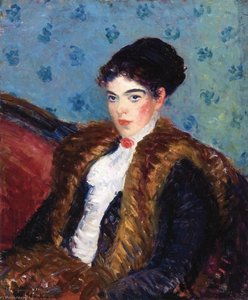
William James Glackens' "Parade, Washington Square," housed within the esteemed Whitney Museum of American Art, offers a vibrant snapshot of pre-World War I New York City life. Created in 1912, this oil on canvas painting captures a bustling parade scene unfolding against the backdrop of Washington Square. The artwork exemplifies Glackens' unique blend of realism and impressionistic flair, showcasing his keen observation skills and ability to convey movement and energy.
Artistic Style and Influences
Glackens was a pivotal figure in the Ashcan School, a movement that championed depicting everyday urban life with unflinching honesty. Rejecting the formal constraints of the National Academy of Design, Glackens and his contemporaries focused on portraying the realities of working-class and middle-class neighborhoods. While rooted in realism, "Parade, Washington Square" reveals the influence of Renoir, particularly evident in its brighter tones and looser brushwork compared to earlier works. This blend resulted in a style that is both grounded in observation and imbued with a sense of dynamism.
Composition and Technique
The painting's composition is characterized by a lively arrangement of figures and forms, creating a palpable sense of movement. The parade winds through Washington Square, populated by a diverse crowd engaged in the festivities. Glackens masterfully uses short, broken brushstrokes to capture the energy of the scene, layering colors to create depth and texture. The perspective is somewhat flattened, prioritizing an immediate impression over strict realism—a hallmark of Impressionism. The use of light and shadow further enhances the vibrancy of the scene, highlighting the flags and banners carried by the parade participants.
Historical Context and Symbolism
"Parade, Washington Square" provides a valuable window into early 20th-century American society. The painting reflects a period of rapid urbanization and social change in New York City. The parade itself likely commemorates a significant event or celebration, possibly related to the 1904 World’s Fair. The flags displayed symbolize national pride and internationalism. Beyond its documentary value, the artwork captures a sense of collective joy and community spirit—a moment of shared experience amidst the bustling urban landscape.
Emotional Impact and Legacy
Glackens' "Parade, Washington Square" evokes feelings of excitement, energy, and optimism. The vibrant colors and dynamic composition create an immersive experience for the viewer, transporting them to a lively scene in early 20th-century New York. As a significant work within the Ashcan School, it stands as a testament to Glackens' ability to capture the essence of urban life with both realism and artistic sensitivity. The painting’s enduring appeal lies in its ability to resonate with viewers across generations, offering a glimpse into a bygone era while celebrating the vibrancy of human connection.
Questions & Answers
Is "Parade, Washington Square" by William James Glackens a bright or a dark artwork?
The perceived brightness of "Parade, Washington Square" by William James Glackens is balanced. It can be matched to the light of the intended space.
What technique and style characterize "Parade, Washington Square" by William James Glackens?
In "Parade, Washington Square", the oil on canvas technique meets the American realism movement.
How do the colors of "Parade, Washington Square" relate to each other?
"Parade, Washington Square" by William James Glackens displays a balanced harmony color harmony.
Artist Biography
a pioneer of the ashcan school
william james glackens, a prominent figure in american art, left an indelible mark on the canvas of history with his captivating realist paintings. born in philadelphia, pennsylvania, in 1870, glackens' artistic journey was a testament to his unwavering passion for capturing the essence of everyday life.early life and influences
glackens' early years were marked by an innate inclination towards art, which led him to enroll at the pennsylvania academy of the fine arts. under the tutelage of thomas anshutz, a renowned realist, glackens honed his skills, eventually becoming one of the founders of the ashcan school. this movement rejected the conventional boundaries of artistic beauty, instead focusing on the gritty realities of metropolitan life.artistic career
glackens' work is characterized by its dark-hued, vibrantly painted street scenes and depictions of daily life in pre-wwi new york and paris. his later pieces, influenced by renoir, showcased a brighter tone, reflecting his growth as an artist. notably, glackens also worked as an illustrator for newspapers and magazines in philadelphia and new york city.- view of haarlem with bleaching grounds, a painting by jacob isaakszoon van ruisdael (ruysdael), exemplifies the level of detail and craftsmanship that defines glackens' work. this piece is now part of the collection at the chrysler museum of art.
- glackens' own masterpiece, the shoppers, is a testament to his skill in capturing the essence of urban life. this painting can be found in the new realism collection at OriginalUniqueArt.com.
legacy and impact
glackens' contributions to american art are multifaceted, extending beyond his own work. he played a pivotal role in helping albert c. barnes acquire european paintings for the barnes foundation in philadelphia. this collection has become a cornerstone of american art history. key works and collections: * the shoppers (new realism, oil on canvas, chrysler museum of art) * view of haarlem with bleaching grounds (ruysdael, sforza castle, milan, italy) recommended reading: * [https://OriginalUniqueArt.com/@/william-james-glackens](https://OriginalUniqueArt.com/@/william-james-glackens) - explore the extensive collection of glackens' work on OriginalUniqueArt.com. * [https://en.wikipedia.org/wiki/william_glackens](https://en.wikipedia.org/wiki/william_glackens) - delve into the detailed biography of william james glackens on wikipedia.
William James Glackens
1870 - 1938 , United States of America
Quick Facts
- Artistic Movement Or Style: Ashcan School, American Realism
- Artists Who Influenced This Artist:
- Thomas Anshutz
- Renoir
- Full Name: William James Glackens
- Nationality: American
- Notable Artworks:
- The Shoppers
- Central Park in Winter
- La Villette
- Lenna with Rabbit Hound
- Home in New Hampshire
- Place Of Birth: Philadelphia, United States of America
- Date Of Birth: 1870
- Date Of Death: 1938
Related Articles

The Unvarnished Truth: A Cultural Journey Through the Soul of American Realism
Explore the profound beauty of American Realism. From the Ashcan School's urban grit to intimate portraits, discover how artists captured the authentic soul of a nation through unvarnished truth and masterful observation.

American Realism's Defining Works: 10 Masterpieces for Your Home
Explore 10 defining American Realism masterpieces – Hopper, Homer & more. Discover the stories behind these iconic paintings and bring timeless art to your home with OriginalUniqueArt's museum-quality reproductions. Explore the full collection online.
American Realism: Social Commentary & Artistic Representation in Early 20th-Century Painting
Explore the powerful social commentary & artistic representation of American Realism. Discover key artists like Bellows & Sloan, and understand the movement's lasting impact on 20th-century art history.
The Ashcan School: Realism, Urban Life & the Democratization of American Art
Explore the revolutionary Ashcan School! Discover how artists like Henri & Sloan challenged tradition with gritty realism, capturing urban life in early 20th-century America. Learn about their impact on American art history.
William Glackens: Capturing Modern American Life with Ashcan Realism
Explore the life & art of William Glackens, a pioneer of American Realism and founding member of the Ashcan School. Discover his vibrant depictions of early 20th-century New York & Paris. Learn about his influences & lasting legacy.