 Switch to Print
 Read More







































 For artworks or reproductions larger than 105 cm (approximately 41 inches) on any side, the frame will be shipped as a kit, disassembled. This method ensures safe delivery and prevents damage during transport.


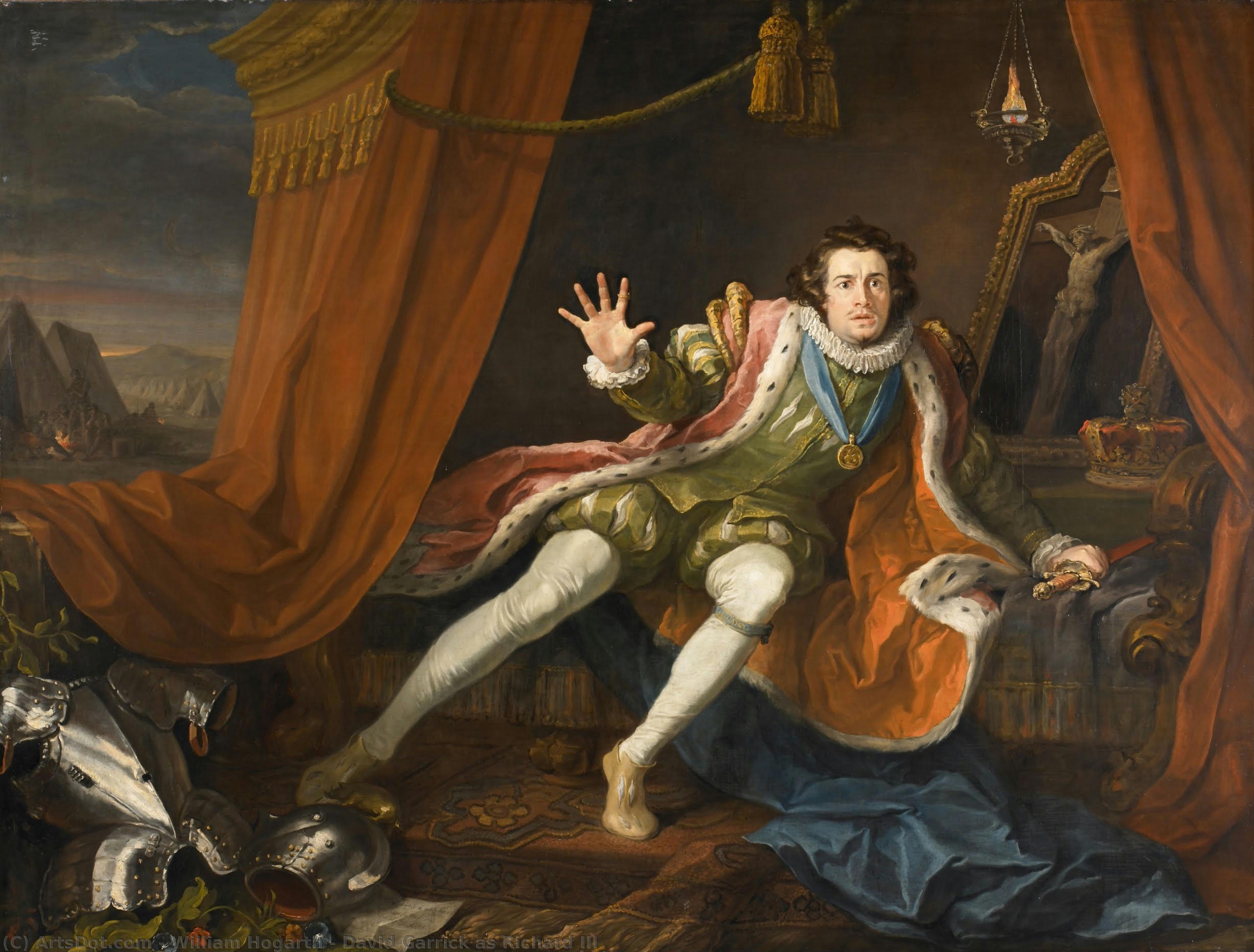
David Garrick as Richard III: A Triumph of Dramatic Portraiture
William Hogarth’s “David Garrick as Richard III,” completed in 1745, stands as a monumental achievement in theatrical portraiture—a testament to both artistic innovation and the artist's astute understanding of his era. More than just a depiction of a celebrated actor, this oil on canvas masterpiece delves into themes of ambition, betrayal, and psychological torment, cementing its place within the canon of British Baroque art and securing its prominent position at the Walker Art Gallery in Liverpool.- Artist: William Hogarth (1697 – 1764)
- Born City: London
- Born Country: United Kingdom
- Medium: Oil on Canvas
- Size: 2508 x 1905 cm
- Location: Walker Art Gallery, Liverpool
A Collaboration Born of Friendship and Publicity
The genesis of “David Garrick as Richard III” lies in a remarkable partnership between Hogarth and David Garrick himself—a celebrated Shakespearean performer who captivated audiences with his interpretations of iconic roles. Recognizing Garrick’s burgeoning fame, Hogarth skillfully leveraged this association to elevate his own artistic reputation, transforming the portrait into a shrewd promotional endeavor. This wasn't merely about capturing Garrick's likeness; it was about conveying the very essence of his theatrical persona—a dramatic portrayal that sought to embody Shakespeare’s tormented villain.Composition and Symbolism: Capturing the Nightmare Before Battle
The painting’s composition is meticulously crafted, brimming with symbolic elements designed to heighten its emotional impact. Garrick is positioned within a tent on Bosworth Field—the site of Henry VIII's decisive victory over Richard III—just before the fateful battle. Hogarth brilliantly captures Garrick’s psychological state: “the lights burn blue! Is it not dead midnight? Cold fearful drops hang upon my trembling flesh…” This evocative description underscores Garrick’s apprehension and vulnerability, mirroring the anxieties surrounding the impending conflict. Beneath his helmet lies a crumpled note—a poignant reminder of the betrayal that looms large over Richard III's character.Artistic Technique and Visual Drama
Hogarth employed masterful brushwork to convey texture and depth, skillfully blending colors to create an atmosphere of palpable drama. The use of red curtains drawn back reveals Garrick onstage—a deliberate device that emphasizes the theatrical context of the portrait. Furthermore, the inclusion of two dogs and a bird adds layers of visual intrigue, enriching the scene’s narrative complexity. These elements contribute to a sense of immediacy and invite contemplation on themes of power, deception, and fate.Legacy and Relevance Today
“David Garrick as Richard III” remains an enduring symbol of British Baroque art—a captivating blend of historical realism and psychological drama. Its influence can be seen in subsequent theatrical portraits and continues to inspire artists today. For those seeking inspiration or considering a high-quality reproduction, the Walker Art Gallery offers unparalleled access to this masterpiece. Alongside “David Garrick as Richard III,” explore Gibson’s “The Tinted Venus” – another stunning example of Hogarth's artistic prowess—available on OriginalUniqueArt for collectors and enthusiasts alike.Questions & Answers
What color harmony does "David Garrick as Richard III" by William Hogarth display?
The colors of "David Garrick as Richard III" by William Hogarth show a strong color unity harmony. Harmony describes how the colors relate to each other.
Where in William Hogarth's career does "David Garrick as Richard III" fall, given its date?
Given its 1745 date, "David Garrick as Richard III" falls in William Hogarth's Mature.
How intense are the colors in "David Garrick as Richard III" by William Hogarth?
The colors in "David Garrick as Richard III" by William Hogarth have a monochromatic intensity.
More about this painting
 Preview
 Send
Send Share
Share
 Details
 Guide
Guide

 Download
 Similars
 X-Ray
X-Ray Diaporama
 Q&A
Q&A Stats
Stats








