
 Preview
 Send
Send Share
Share
 Details

 Download
 Similars
 X-Ray
X-Ray Diaporama
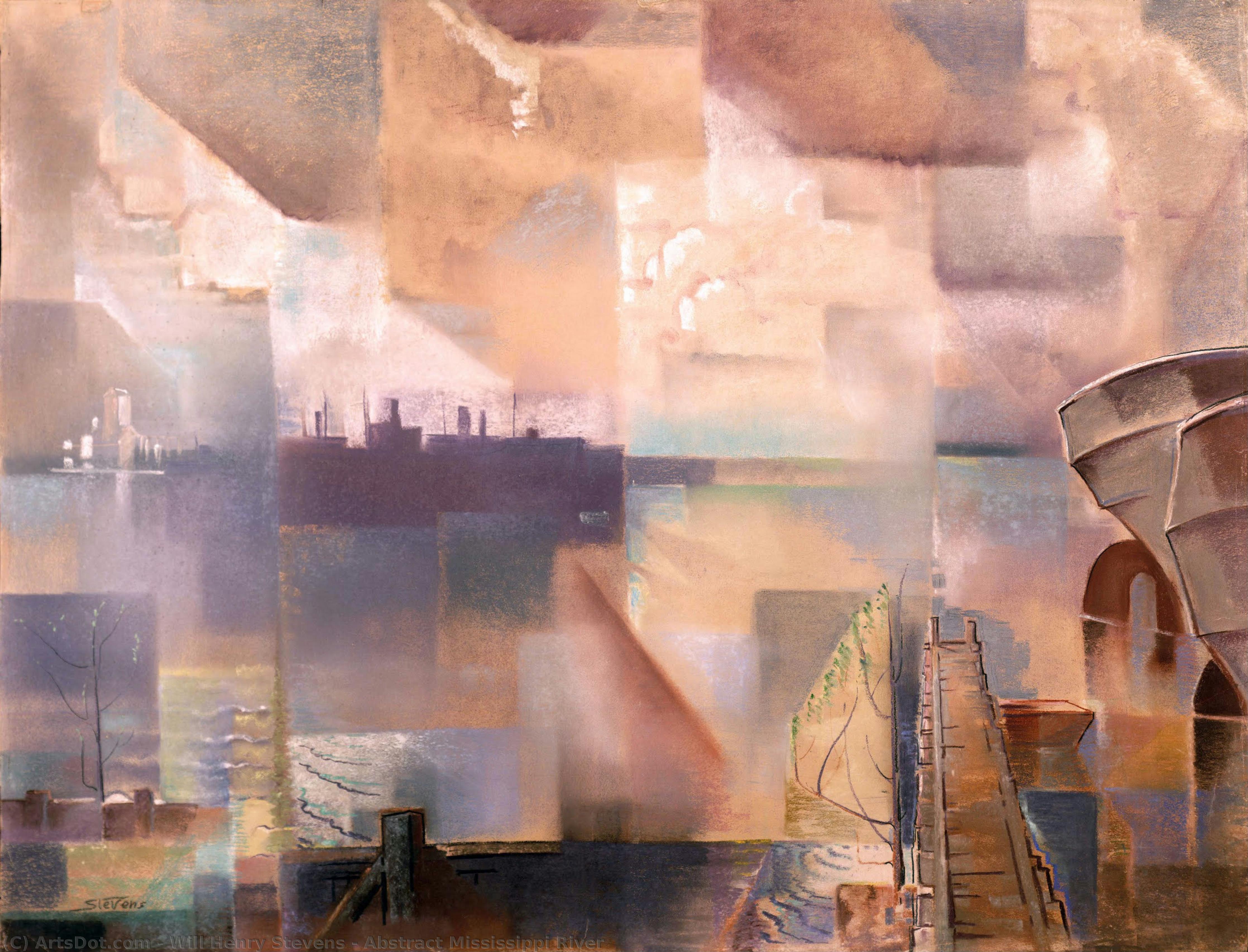
Abstract Mississippi River


 Read More
Hand Made Oil Reproduction
Hand-painted oil on canvas in your size and frame, made to order by our artists. ( Buy Print Buy Image)




































Pick from our preset sizes that match the artwork's original proportions.

You may enter your own dimensions to fit a specific frame or space. If your selected size does not match the original image's proportions, we will either crop the artwork or extend the painting with additional hand-painted elements. A digital mockup will be sent for your approval before production begins.
Please note that the on-screen preview does not reflect the actual cropping or extension. Only the mockup will accurately show the final composition.
While custom sizes are available, we recommend selecting a dimension from the predefined list to preserve the original proportions.
After order, OriginalUniqueArt.com team will email client for instructions and provide a mockup preview
Worldwide Delivery () in 3/4 weeks instead of standard 5 weeks. (20 August). No compromise on quality.

Free Worldwide Express Shipping

High-Quality Linen Canvas

Full Shipping Insurance

Customs Tax Refund Guarantee

True Color Matching Guarantee

60-Day Return Policy (Defects Only)

100% Money-Back Guarantee

Bulk Discount Offer
 Glass option is only available in size under 110 CM

Abstract Mississippi River
Reproduction Medium
Reproduction Size
-


Total Price
$ 300
Artwork Description
Artist Biography
The Alchemist of Southern Light
Will Henry Stevens stands as a singular figure in American modernist painting, celebrated for his evocative depictions of the rural South and his pioneering exploration of tonal pastel mediums. Born November 28, 1881, in Vevay, Indiana—a town nestled along the banks of the Ohio River—Stevens’ artistic journey unfolded against the backdrop of a burgeoning interest in naturalism and a profound connection to the landscapes of his formative years. His father, an apothecary, instilled in him a meticulous attention to detail and a foundational understanding of chemistry, skills that would later prove invaluable in his experimental approach to pigment formulations.
Stevens’ formal artistic education began at the Cincinnati Art Academy, where he honed his drawing skills before embarking on a career path marked by serendipitous encounters and intellectual stimulation. Notably, he befriended Jonas Lie, Van Dearing Perrine, and Albert Pinkham Ryder—artists who championed the principles of naturalism and encouraged Stevens to prioritize observation over idealized representation. These formative relationships profoundly shaped his artistic vision, fostering an appreciation for the philosophical explorations of nature found in the works of Emerson, Thoreau, and Whitman. The influence of Whistler and Twachtman further solidified his commitment to tonal painting—a technique prioritizing subtle gradations of color and emphasizing the expressive qualities of light and shadow over conventional, heavy brushstrokes.
Innovation Through Chemistry and Color
What truly distinguished Stevens from many of his contemporaries was his scientific approach to the medium itself. He did not merely use art supplies; he created them. Drawing upon the chemical knowledge inherited from his father, Stevens developed a unique pastel medium, meticulously crafted through the careful grinding and mixing of raw pigments. This innovative approach liberated him from the constraints of traditional oil painting, allowing for an unparalleled freedom in capturing the fleeting, ephemeral moments of Southern light and atmosphere. His ability to manipulate texture and tone allowed him to bridge the gap between representational landscape and pure abstraction.
His career was a beautiful duality of styles. While he is often categorized as a modernist, his work remained deeply rooted in a love for the natural world. He moved seamlessly between two distinct modes:
- The Representational: Detailed, realistic landscapes that captured the soul of the Southern terrain, particularly during his summers in the mountains of Western North Carolina and Eastern Tennessee.
- The Abstract: Non-objective works and abstractions of nature that explored the underlying rhythms, shapes, and energies of the environment.
A Legacy Etched in the American Landscape
As Stevens transitioned into his later years, he became a fixture of the Southern art scene, notably serving on the faculty of Newcomb College of Art in New Orleans. This period marked a significant evolution toward modernism, as he successfully integrated the nationalistic spirit of the American Regionalists with the groundbreaking philosophies of the European avant-garde. Even as his work moved toward more abstract forms, it never lost its connection to the earth and the light that defines it.
Today, the historical significance of Will Henry Stevens is preserved in some of the most prestigious institutions in the United States. His ability to capture the "spirit" of a place through the lens of modern technique has earned him a permanent place in the canon of American art. His works can be found in the collections of:
- The Smithsonian American Art Museum
- The Museum of Fine Arts, Boston
- The Los Angeles County Museum of Art (LACMA)
- The North Carolina Museum of Art
- The Ogden Museum of Southern Art
Through his mastery of the pastel medium and his unwavering devotion to the nuances of nature, Stevens left behind a body of work that serves as both a scientific achievement in pigmentary innovation and a poetic tribute to the enduring beauty of the American landscape.

Will Henry Stevens
1881 - 1949 , United States of America
Quick Facts
- Artistic Movement Or Style: Naturalism & Modernism
- Artists Or Movements Influenced By This Artist: ['James McNeill Whistler']
- Artists Who Influenced This Artist:
- Ralph Waldo Emerson
- Henry David Thoreau
- Walt Whitman
- Date Of Birth: November 28, 1881
- Date Of Death: August 25, 1949
- Full Name: Will Henry Stevens
- Nationality: American
- Notable Artworks: ['Abstract Mississippi River']
- Place Of Birth: Vevay, United States
Related Articles

Kandinsky's Masterpieces: 25 Paintings That Define Abstract Art | OriginalUniqueArt
Journey through Wassily Kandinsky's 25 most iconic abstract paintings. Explore his revolutionary use of color, form & spiritual expressionism. Find museum-quality Kandinsky reproductions and elevate your home decor with OriginalUniqueArt.com. Discover all masterpieces on OriginalUniqueArt.com!

Abstract Expressionism's 10 Defining Masterpieces |
Explore 10 defining Abstract Expressionism masterpieces by Pollock, Rothko & de Kooning. Discover the stories behind these iconic paintings and find museum-quality art reproductions to elevate your home decor on .

Geometric Abstraction's 10 Defining Masterpieces | Art for Your Home - OriginalUniqueArt
Explore 10 defining masterpieces of Geometric Abstraction! Discover Kandinsky, Mondrian & Malevich’s iconic works. Find museum-quality art reproductions and curated decor ideas to elevate your home at OriginalUniqueArt.com.

Kazimir Malevich: 25 Masterpieces of Suprematism & Abstract Art | OriginalUniqueArt
Explore 25 iconic artworks by Kazimir Malevich, pioneer of Suprematism & abstract art. Discover the stories behind 'Black Square' and more! Find museum-quality prints & elevate your home decor with OriginalUniqueArt.com.
Paul Klee's Masterpieces: Explore 25 Iconic Paintings & Prints | OriginalUniqueArt
Journey through Paul Klee's 25 most iconic paintings & prints. Explore his abstract style, Bauhaus influence, and vibrant color palettes. Find museum-quality art reproductions & decor ideas at OriginalUniqueArt.com. Discover all masterpieces online.


