![Title Page [plate 1] — Walter Crane](/media/artworks/images/full/e3/1e/e31eabed54c142b986a50253267339cd.Jpg)
 Preview
 Send
Send Share
Share
 Details

 Download
 Similars
 X-Ray
X-Ray Diaporama
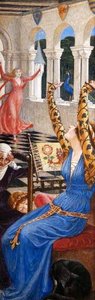
Title Page [Plate 1]


 Read More
Hand Made Oil Reproduction
Hand-painted oil on canvas in your size and frame, made to order by our artists. ( Buy Print Buy Image)




P118B $10

P118H $10

P118W $10

P438Z $10

P508JH $12

P508YH $12

P805H $10

P805Z $10

P919BZ $10

P919G $10

P919XJ $10

P959ZH $10

P968JZ $12

W106C $8

W218G $10

W218JH $8

W218Y $10

W307PJ $10

W316G $10

W316PJ $8

W316Y $10

W398PJ $8

W4111J $10

W500HY $15

W500JH $15

W692G $12

W849H $8

W940BG $15

W953PJ $8




Pick from our preset sizes that match the artwork's original proportions.

You may enter your own dimensions to fit a specific frame or space. If your selected size does not match the original image's proportions, we will either crop the artwork or extend the painting with additional hand-painted elements. A digital mockup will be sent for your approval before production begins.
Please note that the on-screen preview does not reflect the actual cropping or extension. Only the mockup will accurately show the final composition.
While custom sizes are available, we recommend selecting a dimension from the predefined list to preserve the original proportions.
After order, OriginalUniqueArt.com team will email client for instructions and provide a mockup preview
Worldwide Delivery () in 3/4 weeks instead of standard 5 weeks. (14 August). No compromise on quality.

Free Worldwide Express Shipping

High-Quality Linen Canvas

Full Shipping Insurance

Customs Tax Refund Guarantee

True Color Matching Guarantee

60-Day Return Policy (Defects Only)

100% Money-Back Guarantee

Bulk Discount Offer
 Glass option is only available in size under 110 CM

Title Page [Plate 1]
Reproduction Medium
Reproduction Size
-


Total Price
$ 300
Artwork Description
A Moment Frozen in Time: Walter Crane’s Shakespeare's Garden
Shakespeare’s Garden, painted by Walter Crane in 1906, isn’t merely a depiction of a picturesque English landscape; it’s an exquisitely crafted meditation on beauty, femininity, and the restorative power of nature. Crane, a celebrated British illustrator known for his whimsical narratives and meticulous attention to detail, captured a fleeting moment of serenity within this renowned horticultural retreat – a place established by William Shakespeare himself as a haven for contemplation and artistic inspiration.- Subject Matter: The painting portrays a woman seated gracefully on the ground amidst a profusion of flowers, primarily roses. This central figure embodies idealized femininity, representing not just physical beauty but also inner peace and receptiveness to the natural world.
- Style: Crane’s style is distinctly Impressionistic, prioritizing capturing the ephemeral qualities of light and atmosphere over precise realism. He eschews harsh outlines and strives instead for soft edges that blend seamlessly together, creating a hazy luminescence characteristic of the Impressionist movement.
- Technique: Employing wood engraving – a technique Crane mastered during his apprenticeship with William James Linton – Crane achieved remarkable tonal range and textural complexity. The intricate linework meticulously etched into the wood block resulted in a surface finish that subtly reflects light, mimicking the velvety petals of roses and conveying a palpable sense of tactile richness.
Artist Biography
Early Life and Artistic Foundations
Walter Crane, born in Liverpool on August 15th, 1845, emerged from a family deeply interwoven with the artistic fabric of Victorian England. His father, Thomas Crane, was a respected portrait painter and miniaturist, instilling within young Walter an early appreciation for form and detail. This familial atmosphere, further enriched by his brother Thomas’s own pursuit of illustration, fostered a creative environment where artistry wasn't merely a profession but a way of life. From the outset, Crane’s path seemed destined to follow a similar trajectory, yet he would ultimately forge a unique identity within the burgeoning world of British art. His initial training began not with oils or watercolors, but with the meticulous discipline of wood-engraving – an apprenticeship under William James Linton that proved foundational. This rigorous process honed his observational skills and instilled a deep understanding of line, texture, and composition, qualities that would become hallmarks of his distinctive style. The influence of the Pre-Raphaelite Brotherhood was also profoundly felt during these formative years; their commitment to narrative storytelling, vibrant color palettes, and meticulous detail resonated deeply with Crane’s developing aesthetic sensibilities. He became a dedicated student of John Ruskin, whose writings championed craftsmanship and the integration of art into everyday life – ideals that would shape Crane's artistic philosophy for decades to come.A Blossoming Career: Illustration and the Arts & Crafts Movement
Crane’s artistic journey was remarkably versatile, encompassing painting, illustration, and decorative arts. However, it was in the realm of children’s book illustration that he truly distinguished himself, becoming a pivotal figure in shaping the genre as we know it today. His collaboration with Edmund Evans, beginning in 1865, proved particularly fruitful, leading to a series of beautifully illustrated books that captivated young audiences and redefined expectations for children's literature. These weren’t merely whimsical depictions; they were carefully crafted works of art, imbued with intricate detail, vibrant colors, and a palpable sense of imagination. A recurring motif in Crane’s illustrations was the “child-in-the-garden” theme – a romanticized vision of innocence and connection with nature that became emblematic of English children's literature during the Victorian era. Beyond his work for Evans, Crane extended his artistic reach into various decorative fields, creating ceramic tiles, wallpapers, and other designs that reflected the principles of the Arts and Crafts movement. This commitment to integrating art into everyday life aligned perfectly with Ruskin’s teachings and solidified Crane’s position as a leading figure in this influential aesthetic movement.Key Works and Artistic Style
Among Crane's most celebrated works are “Walter Crane: W to Z,” a delightful collection showcasing his artistic range through alphabet illustrations, "The Sweep," a poignant depiction of a young boy’s life that subtly incorporates social commentary, and “Summer,” which perfectly embodies the idyllic “child-in-the-garden” motif with its vibrant depictions of nature and childhood joy. These pieces, along with countless others, reveal Crane's distinctive style – characterized by meticulous detail, flat planes of color, a strong sense of design, and an elegant simplicity. He frequently employed wood engraving and lithography techniques to achieve his unique visual effects, often incorporating elements of Japanese art into his compositions. This Japonisme influence, prevalent in Victorian England, is evident in his use of bold outlines, simplified forms, and decorative patterns.- His work wasn’t merely about aesthetic beauty; it was also imbued with a sense of social consciousness.
- Crane believed that art should be accessible to all, not just the elite.
- He actively used his artistic talents to promote socialist ideals and advocate for social reform.
Legacy and Enduring Influence
Walter Crane’s legacy extends far beyond his own prolific output. He is rightfully considered a pioneer of children's book illustration, significantly shaping the genre’s development and establishing it as a distinct field within the broader art world. His emphasis on design and detail helped elevate the status of illustrated books, transforming them from simple educational tools into cherished works of art. Crane influenced generations of artists and illustrators, including Randolph Caldecott and Kate Greenaway, who further popularized illustrated children’s books and carried forward his commitment to quality and innovation. His contributions to the Arts and Crafts movement were equally significant, championing the integration of art into everyday life and advocating for a more holistic approach to design. Even today, Crane's work continues to inspire artists, designers, and educators alike, demonstrating the enduring power of illustration to engage, educate, and uplift. His illustrations have been exhibited in museums worldwide, including Christ’s Hospital Museum in Horsham, United Kingdom, the British Museum, and the Victoria and Albert Museum – a testament to his lasting artistic impact. Walter Crane died on March 14th, 1915, leaving behind a rich and diverse body of work that continues to resonate with audiences around the globe.
Walter Crane
1845 - 1915 , United Kingdom
Quick Facts
- Artistic Movement Or Style: Arts & Crafts, Pre-Raphaelite
- Artists Or Movements Influenced By This Artist:
- Randolph Caldecott
- Kate Greenaway
- Artists Who Influenced This Artist:
- John Ruskin
- Pre-Raphaelites
- Date Of Birth: August 15, 1845
- Date Of Death: March 14, 1915
- Full Name: Walter Crane
- Nationality: British
- Notable Artworks:
- W to Z
- The Sweep
- Summer
- Place Of Birth: Liverpool, UK
Related Articles

Engraving's Golden Age: 10 Masterpieces That Redefined Art | OriginalUniqueArt
Journey through art history with our Top 10 Legendary Engravings! Explore masterpieces by Dürer, Rembrandt & Goya. Discover the stories behind these iconic prints and find museum-quality reproductions for your home at OriginalUniqueArt.com.

Cultivating Paradise: A Historical & Artistic Exploration of Gardens in Painting
Explore the rich history of gardens in painting! Discover masterpieces from Renaissance to Impressionism & beyond. Learn about symbolism, artists like Monet & Klimt, and find your perfect artwork at OriginalUniqueArt.

Engraving: A Historical Survey of Technique, Artistic Expression & Enduring Legacy
Explore the rich history of engraving with OriginalUniqueArt. Discover techniques, iconic artists like Dürer & Callot, collecting tips, and expert guidance for preserving your art investment. Learn about intaglio printing & more!

Walter Crane: Aestheticism, Socialism & the Evolution of British Decorative Art
Explore the life & work of Walter Crane, a pivotal figure in Aestheticism & the Arts & Crafts movement. Discover his socialist ideals, stunning illustrations, and lasting impact on British art & design.

The Intricate World of Engraving: A Historical Survey of Technique, Artistic Expression & Enduring Legacy
Explore the rich history of engraving with OriginalUniqueArt. Discover techniques, iconic artists like Dürer & Callot, collecting tips, and expert guidance for preserving your art investment. Learn about intaglio printing & more!


![Title Page [Plate 1]](/media/artworks/images/thumbnails/15/84/15844f35a64d4ca2af82946d7688733e.jpg)