

 Preview
 Send
Send Share
Share
 Details
 Guide
Guide

 Download
 Similars
 X-Ray
X-Ray Diaporama
 Stats
StatsLob Noir

 Read More
The artwork displayed on this page is protected by copyright law, which means we cannot legally create or sell an identical reproduction. This protection is enforced under international agreements such as the Berne Convention and by national laws, including those outlined by the U.S. Copyright Law - Title 17.
As a respectful and legal alternative, we offer custom, hand-painted artworks inspired by the original. Our skilled and professional artists carefully study the original's style, mood, and artistic essence to create a new, unique piece that evokes the same feeling - while remaining an original creation in its own right.
This method fully complies with copyright regulations because it does not involve copying or duplicating the protected artwork. Instead, it is a creative reinterpretation - a new painting that is influenced by the original but not identical to it.
Hand Made Oil Reproduction
Hand-painted oil on canvas in your size and frame, made to order by our artists. ( Switch to Print Switch to Digital Image)




































Pick from our preset sizes that match the artwork's original proportions.

Type the width and the height you need, to fit your frame or your wall. This is hand-painted, so for a size with a different shape the artist can paint a bit more around the picture, or cut a bit — you choose. We send you a digital mockup to approve before the painting starts. The picture shown on this page does not show the real result — only the mockup does.
After order, OriginalUniqueArt.com team will email client for instructions and provide a mockup preview
Worldwide Delivery () in 3/4 weeks instead of standard 5 weeks. (23 October). No compromise on quality.

Free Worldwide Express Shipping

High-Quality Linen Canvas

Full Shipping Insurance

Customs Tax Refund Guarantee

True Color Matching Guarantee

100-Day Return Policy (Defects Only)

100% Money-Back Guarantee

Bulk Discount Offer
 Glass option is only available in size under 110 CM

Lob Noir
Reproduction Medium
Reproduction Size
-


Total Price
$ 300
Lob Noir: A Geometric Dance of Darkness and Light
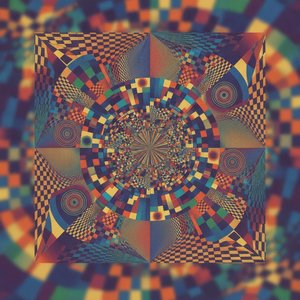
Victor Vasarely’s *Lob Noir* (Black Lob) stands as a quintessential embodiment of Op Art—Optical Art—a movement that revolutionized visual perception in the mid-20th century. Painted around 1953, this striking canvas captures the essence of geometric abstraction while simultaneously provoking contemplation on illusion and sensory experience. The artwork’s immediate impact is achieved through its masterful manipulation of contrasting colors: a deep, saturated black dominating the background against which bursts a vibrant yellow hue—a dynamic duo that immediately draws the eye and establishes a palpable tension.- Composition & Form: At first glance, *Lob Noir* presents a deceptively simple arrangement. A large, incomplete circle occupies the lower right quadrant, while a smaller, fragmented circular shape appears in the upper left corner. Dominating the canvas is an irregular yellow form extending from the left edge, partially overlapping the larger circle. This interplay of shapes isn’t merely decorative; it's deliberately designed to disrupt our habitual visual processing, creating a sense of movement and instability that defies static representation.
- Color Palette & Technique: Vasarely’s palette is remarkably restrained—confined primarily to black and yellow—yet profoundly effective. The black serves as an anchor, grounding the composition while simultaneously amplifying the brilliance of the yellow. The artist achieved this luminous effect through meticulous application of oil paint onto canvas, utilizing a technique characterized by smooth surfaces and minimal brushstrokes. This flatness characteristic of Op Art contributes to the artwork’s graphic quality and reinforces its illusionistic properties.
- Historical Context & Influence: Emerging in the wake of World War II, Op Art arose from a fascination with scientific discoveries concerning retinal physiology—specifically, Hermann von Helmholtz's work on color perception. Artists like Vasarely sought to exploit these perceptual phenomena, creating images that tricked the eye into perceiving patterns and shapes that weren’t physically present. *Lob Noir* exemplifies this ambition, mirroring the broader aesthetic concerns of its time: a rejection of representational art in favor of exploring the relationship between visual stimuli and subjective experience.
- Symbolism & Emotional Resonance: While devoid of explicit narrative content, *Lob Noir*'s stark contrast between black and yellow transcends mere visual aesthetics. Black often symbolizes darkness, mystery, and introspection—elements that are subtly countered by the energetic vibrancy of yellow, representing optimism, enlightenment, and vitality. Together, these colors evoke a feeling of dynamic equilibrium—a visual paradox that invites viewers to consider themes of balance, transformation, and perhaps even subconscious awareness.
- Overall Impression: Ultimately, *Lob Noir* succeeds in capturing the spirit of its era while maintaining enduring artistic merit. It’s more than just an image; it's a carefully crafted illusion—a testament to Vasarely’s mastery of geometric abstraction and his profound understanding of how our eyes perceive the world around us. Its timeless appeal lies in its ability to stimulate contemplation and provoke a visceral response, cementing its place as a landmark achievement in modern art history.
Questions & Answers
Where should a reproduction of "Lob Noir" by Victor Vasarely be hung?
Format (square) and recommended space (hotel lobby) are the two placement facts recorded for "Lob Noir" by Victor Vasarely.
What kind of colors does "Lob Noir" use?
The colors of "Lob Noir" form an earthy palette. This classification describes the dominant color families.
What space matches the colors of "Lob Noir" by Victor Vasarely?
The earthy colors of "Lob Noir" by Victor Vasarely match its recommended space: a hotel lobby.
Artist Biography
A Life Forged in Geometry: The World of Victor Vasarely
Born Károly Vaszary in 1906 in Pécs, a city then nestled within Austria-Hungary (now Croatia), Victor Vasarely’s journey to becoming a pioneer of Op Art and kinetic art was anything but predetermined. His early life hinted at a path far removed from the canvas; he initially pursued medical studies at Eötvös Loránd University in Budapest. However, the allure of visual expression proved too strong, leading him to abandon medicine for the world of painting in 1927, enrolling at the Podolini-Volkmann Academy. This decision marked not merely a change in vocation but the beginning of a lifelong exploration into the fundamental principles governing perception and form. A pivotal moment arrived with his enrollment in Sándor Bortnyik’s workshop – Műhely – a school deeply influenced by the Bauhaus movement. Here, Vasarely absorbed the tenets of functional design and geometric abstraction, seeds that would blossom into his signature style. These formative years weren't simply about acquiring technique; they were about dismantling traditional artistic conventions and embracing a new visual language rooted in logic and precision.
From Early Abstraction to the Dawn of Op Art
The late 1920s and early 1930s witnessed Vasarely’s gradual departure from representational art, as he delved deeper into the realm of geometric abstraction. Works like “Blue Study” and “Green Study,” created in 1929, exemplify this transition – a deliberate shedding of narrative content in favor of pure form and color relationships. While influenced by masters such as Piet Mondrian and Kazimir Malevich, Vasarely wasn’t content to simply emulate their styles. He sought to transcend the static compositions of his predecessors, aiming for a dynamism that would actively engage the viewer's perception. This quest led him to Paris in 1930, where he established himself as a graphic designer and advertising artist, honing his skills while continuing to develop his unique artistic vision. It was during this period that he began experimenting with techniques that would later become hallmarks of Op Art – manipulating shapes and colors to create illusions of movement and depth. The seeds were sown for a revolution in visual experience.
The Systematic Illusion: Defining a Movement
By the 1960s, Victor Vasarely had fully emerged as a leading figure in the burgeoning Op Art movement. Unlike many artists who relied on intuition and spontaneous expression, Vasarely approached his work with a distinctly systematic methodology. He employed grids and mathematical principles to generate patterns that created powerful optical illusions – visual vibrations, swirling effects, and sensations of depth where none physically existed. This wasn’t about trickery; it was about revealing the inherent dynamism within perception itself. He believed in reproducibility and mass appeal, aiming to democratize art by making it accessible beyond the confines of galleries and museums. His work challenged viewers to question their own visual experience, forcing them to actively participate in the creation of meaning. This deliberate engagement with perception set Op Art apart and cemented Vasarely’s place at its forefront. He wasn't merely painting pictures; he was constructing experiences.
Beyond the Canvas: Kinetic Exploration and a Lasting Legacy
Vasarely’s artistic exploration didn’t stop at static illusions. He increasingly ventured into kinetic art, creating works that incorporated actual movement or appeared to move through carefully orchestrated visual effects. “Georges Pompidou” (1976), a large kinematic object installed at the Centre Pompidou in Paris, stands as a testament to this ambition – an integration of art with architecture and urban design on a grand scale. He also demonstrated remarkable innovation by applying his designs to commercial products, most notably through his collaboration with Rosenthal porcelain, resulting in the iconic “Suomi” tableware series. This willingness to blur the boundaries between fine art and functional objects further underscored his belief in art’s potential to permeate everyday life. The establishment of the Fondation Vasarely in Aix-en-Provence ensured the preservation and promotion of his extensive body of work, while a remarkable event – the inclusion of serigraphs aboard the French-Soviet spacecraft Salyut 7 in 1982 – symbolized the global recognition of his art and its connection to the broader human endeavor of exploration. Victor Vasarely’s legacy extends far beyond the realm of painting; he profoundly influenced graphic design, fashion, interior design, and even early computer graphics, inspiring generations with his innovative vision and unwavering commitment to exploring the possibilities of perception. He remains a pivotal figure in modern art history, a true visionary who dared to challenge our understanding of what art could be.
Historical Significance
Vasarely’s contribution to art history is multifaceted. He moved beyond traditional painting techniques to create works that actively engage the viewer’s perception. His systematic approach challenged conventional notions of artistic creativity and paved the way for computer-generated art and digital design. By embracing reproducibility and commercial applications, Vasarely blurred the boundaries between fine art and popular culture, leaving an enduring mark on both. He wasn't simply creating aesthetically pleasing objects; he was conducting visual experiments that revealed fundamental truths about how we see the world. His work continues to resonate today, reminding us of the power of abstraction, the beauty of geometry, and the endless possibilities of human creativity.

Victor Vasarely
1906 - 1997 , Croatia
Quick Facts
- Full Name: Victor Vasarely
- Nationality: Hungarian-French
- Date Of Birth: 1906
- Date Of Death: 1997
- Place Of Birth: Pécs, Croatia
- Notable Artworks:
- Blue Study
- Green Study
- Zebra
- Suomi tableware
- Artistic Movement Or Style: Op Art, Kinetic Art
- Artists Who Influenced This Artist:
- Piet Mondrian
- Kazimir Malevich
- Artists Or Movements Influenced By This Artist:
- Graphic design
- Interior design
Related Articles

Victor Vasarely: Pioneering Op Art & Democratizing Visual Experience
Explore the revolutionary world of Victor Vasarely, father of Op Art. Discover his geometric masterpieces, artistic system, & lasting impact on modern design. A guide for discerning art collectors.

Op Art Unveiled: The Science of Optical Illusion and Kinetic Movement in Geometric Abstraction
Explore the science of Op Art through the lens of masters like Victor Vasarely. Discover how geometric abstraction uses optical illusions to create movement and delve into the neuroaesthetics of perception with our expert art history guide.

Neo-Abstract Art: The High-Impact Evolution of Modern Visual Energy and Geometric Sophistication
Discover the power of Neo-Abstract art. Explore how bold geometric forms and high-impact visual energy are redefining modern design. Learn to curate sophisticated, high-energy spaces with the latest trends in contemporary abstraction and structural color.
Mastering Illusion: The Vibrant World of Victor Vasarely's Op Art and the Geometry of Perception
Explore the mesmerizing world of Victor Vasarely. Discover how his Bauhaus-inspired Op Art masters the science of perception through geometric abstraction and vibrant color. A sophisticated guide for discerning art collectors seeking to understand the legacy of optical illusion.

Geometric Abstraction's 10 Defining Masterpieces | Art for Your Home - OriginalUniqueArt
Explore 10 defining masterpieces of Geometric Abstraction! Discover Kandinsky, Mondrian & Malevich’s iconic works. Find museum-quality art reproductions and curated decor ideas to elevate your home at OriginalUniqueArt.com.


