Preview
 Send
Send Share
Share
 Details
 Guide
Guide

 Download
 Similars
 X-Ray
X-Ray Diaporama
 Q&A
Q&A Stats
StatsForeigner

- 43.0 x 24.0 cm


 Read More
Giclée / Art Print
Museum-quality giclée or canvas print with fast production and flexible finish options. ( Buy Hand Made Painting Switch to Digital Image)




P118B $10

P118H $10

P118W $10

P438Z $10

P508JH $12

P508YH $12

P805H $10

P805Z $10

P919BZ $10

P919G $10

P919XJ $10

P959ZH $10

P968JZ $12

W106C $8

W218G $10

W218JH $8

W218Y $10

W307PJ $10

W316G $10

W316PJ $8

W316Y $10

W398PJ $8

W4111J $10

W500HY $15

W500JH $15

W692G $12

W849H $8

W940BG $15

W953PJ $8




Pick from our preset sizes that match the artwork's original proportions.

Type the width and the height you need, to fit your frame or your wall. A print can only be cut, never made bigger than the picture, so a size with a different shape loses a part of the image. We send you a digital mockup to approve before we print anything. The picture shown on this page does not show the real cut — only the mockup does.
Worldwide Delivery () in 2 weeks instead of standard 4/5 weeks. (31 October)

Free Worldwide Express Shipping

High-Quality Linen Canvas

Full Shipping Insurance

Customs Tax Refund Guarantee

True Color Matching Guarantee

100-Day Return Policy (Defects Only)

100% Money-Back Guarantee

Bulk Discount Offer
 Glass option is only available in size under 110 CM

Foreigner
Giclée / Art Print
Reproduction Size
-


Total Price
$ 81
Vasili Ivanovich Surikov: A Titan of Russian Realism
Vasili Ivanovich Surikov (1848–1916) stands as one of the most celebrated figures in Russian art history, a painter whose canvases capture not merely visual representations but profound explorations of Russia’s soul. Born in Krasnoyarsk, Siberia, Surikov's early life was marked by hardship and familial struggles—a formative experience that instilled within him an unwavering dedication to portraying the realities of rural Russian society with unflinching honesty. This commitment would become the cornerstone of his artistic vision, propelling him to create monumental works that continue to resonate powerfully today. Early Influences: Surikov’s artistic sensibilities were nurtured by a fascination with folklore and peasant life—themes prevalent in Siberian culture. His father, a teacher, instilled in him a love for literature and history, shaping his intellectual curiosity and providing the foundation for his meticulous research He was particularly drawn to tales of Cossack heroism and resilience, which would inform many of his later paintings. The Artistic Style: Surikov’s distinctive style is characterized by an unparalleled attention to detail and an ability to capture the intricacies of his subjects—a hallmark of Russian Realism. Unlike Impressionists who sought to depict fleeting moments of light and color, Surikov aimed for a more contemplative and psychologically resonant portrayal of human experience. He meticulously researched historical events and incorporated them into his canvases with painstaking accuracy, striving to convey not just what happened but how it felt. His compositions are often dramatic and theatrical, utilizing pyramidal structures and carefully positioned figures to guide the viewer’s gaze and create a sense of grandeur. Technique: Surikov's mastery of oil on canvas is evident in every brushstroke—a medium that allows for rich textures and expressive brushstrokes. He employed a technique known as “Alla Prima,” meaning “at first sight,” applying paint directly onto the canvas without extensive underpainting or blending. This method resulted in textured surfaces that captured the immediacy of observation, conveying both visual splendor and emotional depth. The artist’s meticulous layering of colors—often muted browns, creams, and reds—created a sense of atmospheric perspective and enhanced the realism of his scenes. Notable Works: Surikov's most iconic paintings include “The Morning of the Streltsy Execution” (1881), depicting the brutal aftermath of the Decembrist Revolt; “Boyarynya Morozova” (1887), portraying a portrait session between Tsar Alexander II and his wife, Elizaveta Alexandrovna; and “T. Domozhilova” (1893), capturing a poignant moment in the life of a peasant family. These works exemplify Surikov’s ability to convey complex emotions and psychological nuances—a testament to his artistic genius. Legacy: Vasily Ivanovich Surikov's legacy extends far beyond the canvases he created. He established the Surikov Art School in Krasnoyarsk, nurturing generations of aspiring artists and fostering a tradition of Russian Realism that continues to inspire painters today. His paintings remain treasured symbols of Russia’s cultural heritage—powerful reminders of its history, values, and enduring spirit. Further Exploration: For those interested in delving deeper into Surikov's oeuvre, OriginalUniqueArt.com offers exceptional handmade oil painting reproductions, including “Strelets in a Cap (study)” and “T. Domozhilova”. These meticulously crafted pieces allow collectors to experience the beauty and artistry of Surikov’s original vision—a celebration of Russian culture and artistic excellence. To discover more about Surikov's life and work, visit /art/list/?Filter=vasili+ivanovich+surikov. And for a comprehensive understanding of the Tretyakov Gallery’s collection and its role in preserving Russian art history, explore /art/list/?Filter=A@D3BCCR-The-Museum-State-Tretyakov-Gallery-(Russia).Questions & Answers
When and with what materials was "Foreigner" made?
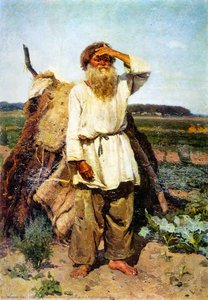
"Foreigner" was made in 1879, in oil on canvas.
Can I see an X-ray view of "Foreigner" by Vasily Ivanovich Surikov?
"Foreigner" can be examined layer by layer on the artwork's X-Ray page, a viewer inspired by a conservator's light bench with eleven optical readings of the image.
What stage of Vasily Ivanovich Surikov's development does "Foreigner" represent?
"Foreigner" represents the Mature Period of Vasily Ivanovich Surikov.
Artist Biography
The Soul of a Nation Captured in Paint
Vasily Ivanovich Surikov stands as one of the most celebrated figures in Russian art history, a painter whose canvases capture not merely visual representations but profound explorations of Russia’s soul. Born in 1848 in Krasnoyarsk, Siberia, Surikov's early life was marked by hardship and familial struggles—a formative experience that instilled within him an unwavering dedication to portraying the realities of rural Russian society with unflutched honesty. This commitment would become the cornerstone of his artistic vision, propelling him to create monumental works that continue to resonate powerfully today.
His artistic sensibilities were nurtured by a fascination with folklore and peasant life, themes deeply prevalent in Siberian culture. His father, a teacher, instilled in him a love for literature and history, shaping his intellectual curiosity and providing the foundation for his meticulous research into historical subjects. Recognizing Surikov’s talent, his father secured him admission to the St Petersburg Academy of Arts, where he honed his skills under the guidance of masters like Konstantin Dmitrievich Makovsky and Ivan Alekseyevich Kramskoy. These influential figures championed Realism as a dominant artistic style, encouraging Surikov to depict everyday life with psychological depth and emotional resonance.
A Master of Historical Epic and Psychological Depth
Surikov’s oeuvre is characterized by an extraordinary ability to convey atmosphere and emotion through masterful technique. He employed a distinctive approach to painting, meticulously studying the nuances of light and color to achieve unparalleled realism. His brushstrokes were deliberate and expressive, capturing not just what was seen but also what was felt—a hallmark of the Realist movement’s ambition to depict human experience truthfully. His canvases are renowned for their dramatic compositions and evocative lighting, transporting viewers directly into the heart of Russia's most turbulent eras.
The artist gained wide recognition for his large-scale paintings devoted to pivotal episodes from Russian history. These works were distinguished by their immense scale, rigorous attention to historical detail, and a profound psychological expressiveness that breathed life into historical figures. Some of his most enduring contributions to the art world include:
- The Morning of the Streltsy Execution: A hauntingly powerful depiction of political upheaval and human tragedy.
- Boyarynya Morozova: A monumental exploration of religious conviction and social conflict.
- Suvorov Crossing the Alps: A breathtaking scene of military leadership and epic endurance.
- Yermak’s Conquest of Siberia: A tribute to the expansion and rugged spirit of the Russian frontier.
Legacy and Historical Significance
As a prominent member of the Peredvizhniki (The Wanderers) movement and the Union of Russian Artists, Surikov played a vital role in shifting the focus of Russian art toward national identity and social truth. His work bridged the gap between academic tradition and a new, visceral realism that sought to document the struggles and triumphs of the common people alongside the grand narratives of the Tsars. Through his lens, history was not merely a collection of dates, but a living, breathing drama of human will.
Today, the masterpieces of Vasily Surikov are preserved in the world's most prestigious collections, including the State Tretyakov Gallery in Moscow and the State Russian Museum in Saint Petersburg. His influence persists as a testament to his ability to transform historical research into emotional truth, ensuring that his vision of the Russian spirit remains an indelible part of the global artistic heritage.

Vasily Ivanovich Surikov
1848 - 1916 , Russia
Quick Facts
- Full Name: Vasily Ivanovich Surikov
- Nationality: Russian
- Date Of Birth: 1848
- Date Of Death: 1916
- Place Of Birth: Krasnoyarsk, Russia
- Notable Artworks:
- Third Ecumenical Council of Ephesus
- Old Man in a Kitchen Garden
- Artistic Movement Or Style: Realism
Related Articles

Discover Russian Realism: Soulful Masterpieces and the Timeless Spirit of the Peredvizhniki for Your Modern Home
Elevate your home with the soulful beauty of Russian Realism. Discover exquisite hand-painted reproductions of Peredvizhniki masterpieces, from lyrical landscapes to profound portraits, curated to bring historical depth and timeless elegance to your modern interior design.

Vladimir Makovsky: Realism, Social Commentary & Russian Life in Late 19th-Century Painting
Explore the captivating world of Vladimir Makovsky, a leading Russian realist painter. Discover his insightful depictions of 19th-century life, social commentary & legacy with OriginalUniqueArt.

Soul of the Steppes: Capturing the Majesty and Social Realism of 19th Century Russian Art
Explore the profound beauty of 19th-century Russian art. From Ilya Repin's realism to pastoral landscapes, discover the soul of the steppes through our expert historical analysis and museum-quality hand-painted reproductions for discerning collectors.

Russian Realism: The Soulful Power of Truth and the Unyielding Spirit of the Peredvizhniki
Explore the profound depth of Russian Realism. From the social truths of the Peredvizhniki to epic folklore, discover the soulful power of masters like Perov and Yaroshenko through our expert art history insights and museum-quality reproductions.

Vasily Surikov: Historical Epic & Psychological Realism in 19th-Century Russian Painting
Explore the powerful historical paintings of Vasily Surikov, a leading figure of Russian Realism. Discover his dramatic compositions, psychological depth & lasting influence on 19th-century art. Learn about collecting Surikov's masterpieces.