Switch to Print
 Read More







































 For artworks or reproductions larger than 105 cm (approximately 41 inches) on any side, the frame will be shipped as a kit, disassembled. This method ensures safe delivery and prevents damage during transport.


A Silent Witness to Resilience
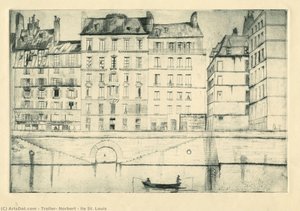
In the hauntingly quiet lines of "Terezin: Yard," we are transported back to 1943, a period defined by profound darkness and the indomitable strength of the human spirit. Created by the Czech-American artist Norbert Troller during his harrowing imprisonment in the Theresienstadt concentration camp, this drawing serves as much more than a mere visual record; it is a poignant window into a stolen moment of communal existence. The scene captures a group of individuals gathered within a courtyard, their figures arranged in a way that suggests a fragile sense of normalcy amidst the surrounding chaos. Through his meticulous observation, Troller transforms a simple social gathering into a profound meditation on presence and survival.
The composition is striking in its starkness, utilizing a monochromatic palette that strips away the distractions of color to focus entirely on form, light, and shadow. The artist employs a delicate yet purposeful technique, likely using charcoal or graphite, to render the diverse group of people. Some figures are seated upon benches, while others stand in quiet contemplation, all oriented toward a singular, unseen focal point. This shared gaze creates an invisible thread of connection between the subjects, suggesting a collective experience—perhaps a moment of shared storytelling, a lecture, or simply the heavy silence of waiting. The architectural elements of the yard, though minimalist, provide a structured boundary that emphasizes the enclosure of the camp while highlighting the organic, human movement within it.
The Art of Documentation and Memory
To understand the emotional weight of this piece, one must consider Troller’s unique position as both an architect and a witness. His training in architecture is evident in the way he perceives space and the structural arrangement of the courtyard, yet his soul as an artist allows him to imbue these geometric realities with deep human emotion. Every line drawn in 1943 was an act of resistance—a way to reclaim identity and dignity when such things were being systematically stripped away. The diversity of ages and heights depicted in the crowd serves as a testament to the breadth of lives caught within the machinery of war, making the artwork a universal symbol of the human condition.
For the discerning collector or interior designer, "Terezin: Yard" offers a profound opportunity to possess a piece of history that transcends mere decoration. It is a work of immense gravity and intellectual depth, perfect for spaces dedicated to reflection, history, or the celebration of human endurance. A high-quality reproduction of this drawing allows the subtle textures of Troller's strokes and the somber atmosphere of the original to be appreciated in a contemporary setting, serving as a powerful conversation piece that honors the memory of those who lived through these turbulent times. It is not merely an image of a yard; it is a portrait of hope persisting in the shadows.
Questions & Answers
Where can I buy a print of "Terezin: Yard" by Troller, Norbert?
To get a print of "Terezin: Yard" by Troller, Norbert, simply order it on its Fine Art Print page: a fine art print on cotton canvas or archival canvas paper.
Who created "Terezin: Yard" and what style is it in?
Behind "Terezin: Yard" stand Troller, Norbert and the Contemporary Realism movement.
Who sells hand-painted copies of "Terezin: Yard" by Troller, Norbert?
"Terezin: Yard" is available as a hand-painted oil reproduction on linen canvas. The order can be placed on its Hand-Painted Reproduction page, with a choice of sizes.
More about this painting
 Preview
 Send
Send Share
Share
 Details
 Guide
Guide

 Download
 Similars
 X-Ray
X-Ray Diaporama
 Q&A
Q&A Stats
Stats