Preview
 Send
Send Share
Share
 Details
 Guide
Guide

 Download
 Similars
 X-Ray
X-Ray Diaporama
 Q&A
Q&A Stats
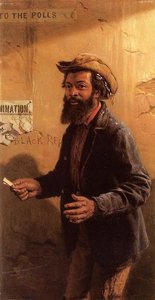
StatsElection Returns


 Read More
Giclée / Art Print
Museum-quality giclée or canvas print with fast production and flexible finish options. ( Buy Hand Made Painting Switch to Digital Image)




































Pick from our preset sizes that match the artwork's original proportions.

Type the width and the height you need, to fit your frame or your wall. A print can only be cut, never made bigger than the picture, so a size with a different shape loses a part of the image. We send you a digital mockup to approve before we print anything. The picture shown on this page does not show the real cut — only the mockup does.
Worldwide Delivery () in 2 weeks instead of standard 4/5 weeks. (5 November)

Free Worldwide Express Shipping

High-Quality Linen Canvas

Full Shipping Insurance

Customs Tax Refund Guarantee

True Color Matching Guarantee

100-Day Return Policy (Defects Only)

100% Money-Back Guarantee

Bulk Discount Offer
 Glass option is only available in size under 110 CM

Election Returns
Giclée / Art Print
Reproduction Size
-


Total Price
$ 81
Artist Biography
A Life Forged in Vermont and New York
Born in the quiet town of Montpelier, Vermont, Thomas Waterman Wood emerged from a background rooted in craftsmanship and tradition. The son of John Wood, a cabinet maker, the young artist spent his early years immersed in the tactile world of his father's workshop. This foundational connection to material and form likely informed the meticulous precision found in his later works. While his formal art education was largely self-acquired—beginning with the practical application of painting signs and creating patent drawings for inventors—his talent eventually led him toward more profound artistic pursuits. His journey took him from the local studios of New England to the prestigious art circles of Europe, where he explored the light and techniques of masters in London, Paris, Rome, and Florence.
By 1852, Wood had established himself in New York, opening a studio that would become a cornerstone of his professional identity. His career was marked by a remarkable ability to transition between different modes of painting, from the technical rigor of portraiture to the emotive depth of genre scenes. His residence and studio, known as Athenwood, stood as a testament to his connection to his Vermont roots, even as he navigated the bustling, competitive art scene of New York City. This duality of life—the urban sophistication of Manhattan and the rustic charm of Montpelier—deeply influenced the thematic breadth of his oeuvre.
The Art of American Realism and Narrative
Wood is most celebrated for his contributions to 19th-century American Realism, particularly through his evocative genre paintings. His work often served as a window into the soul of a changing nation, capturing the unpretentious, rural ways of democratic America with a sense of nostalgic charm. He possessed a unique ability to weave historical weight into his compositions, moving beyond mere depiction to offer meditations on agency and identity. One of his most poignant achievements is the triptych A Bit of War History: The Contraband, completed in 1865. In this work, he masterfully navigated the complex themes of the American Civil War, focusing on the lived experiences of African Americans and the pursuit of freedom during the era of Reconstruction.
His technical mastery was characterized by a sophisticated use of light and atmospheric perspective, reminiscent of the second generation of the Hudson River School. Through the delicate technique of glazing—applying multiple thin, translucent layers of oil paint—Wood achieved a luminous surface that seemed to breathe with life. This method allowed him to capture the subtle interplay of shadow and radiance, whether he was depicting a bustling street scene in Neglecting Trade or the quiet intensity of an elderly man reading in Election Returns. His paintings were not merely observations but narratives, imbued with a sense of movement and historical significance.
Legacy and Professional Eminence
The professional trajectory of Thomas Waterman Wood was marked by significant recognition within the American art establishment. His election to the National Academy of Design in 1871 and his subsequent eight-year tenure as its president underscored his status as a leading figure in his era. Beyond his individual canvases, his commitment to the arts extended to the preservation of culture; late in life, he founded and donated his personal collection to the Wood Art Gallery in Montpelier, ensuring that his passion for beauty would endure for future generations.
The enduring significance of his work lies in its ability to capture the tension between tradition and transformation. His paintings remain vital historical documents, reflecting:
- The social shifts of the Reconstruction era through poignant narrative sequences.
- The celebration of American democratic ideals and rural life.
- A technical bridge between the precision of portraiture and the atmospheric depth of landscape painting.

Thomas Waterman Wood
1823 - 1903 , United States of America
Quick Facts
- Artistic Movement Or Style: American Realism
- Artists Who Influenced This Artist: ['Chester Harding']
- Full Name: Thomas Waterman Wood
- Nationality: American
- Notable Artworks:
- His First Vote
- Election Returns
- Neglecting Trade
- The Baltimore Newsvendor
- A Bit of War History: The Contraband
- Place Of Birth: Montpelier, United States of America
- Date Of Birth: 1823
- Date Of Death: 1903
Related Articles
American Regionalism: A Crucible of Identity – Exploring Themes of Place, Labor & Social Commentary
Explore American Regionalism's powerful depiction of the American heartland during the Great Depression. Discover Grant Wood, Thomas Hart Benton & more. Expert analysis & high-quality art reproductions at OriginalUniqueArt.

American Regionalism: The Soul of the Heartland and the Mastery of Grant Wood
Explore the profound history of American Regionalism. Discover how Grant Wood captured the heart of the Midwest through masterpieces like American Gothic. An expert guide to the movement, its cultural impact, and the enduring beauty of American Realism.

The Unvarnished Truth: A Cultural Journey Through the Soul of American Realism
Explore the profound beauty of American Realism. From the Ashcan School's urban grit to intimate portraits, discover how artists captured the authentic soul of a nation through unvarnished truth and masterful observation.

American Realism's Defining Works: 10 Masterpieces for Your Home
Explore 10 defining American Realism masterpieces – Hopper, Homer & more. Discover the stories behind these iconic paintings and bring timeless art to your home with OriginalUniqueArt's museum-quality reproductions. Explore the full collection online.

Grant Wood & American Regionalism: Identity, Myth & the Rural Landscape
Explore the world of Grant Wood & American Regionalism with OriginalUniqueArt. Discover the symbolism behind 'American Gothic', recurring themes, and the movement's lasting impact on art history. High-quality reproductions available.