Text size

() ·

A painting made for you, by hand

The South Gate, Exeter

Hand Made Oil Reproduction

Hand-painted oil on canvas in your size and frame, made to order by our artists. ( Switch to Print Switch to Digital Image)

Collectible Description

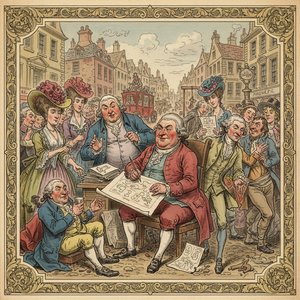
Explore 'The South Gate, Exeter' by Thomas Rowlandson (1810). A charming watercolor capturing Georgian England’s bustling street life. Romantic style & social observation.

Artist Biography

Explore the witty world of Thomas Rowlandson (1756-1827), a master Georgian caricaturist! Discover his satirical prints, social commentary & iconic illustrations like Dr. Syntax.

from ·

Chapter 1

How large should it be?

Slide to change the size; the picture on the left shows the frame at its real width. The proportions of the original are kept.

Standard
custom
CM
INCH

Pick from our preset sizes that match the artwork's original proportions.

width
height

Type the width and the height you need, to fit your frame or your wall. This is hand-painted, so for a size with a different shape the artist can paint a bit more around the picture, or cut a bit — you choose. We send you a digital mockup to approve before the painting starts. The picture shown on this page does not show the real result — only the mockup does.

Chapter 2

How should it arrive?

Choose the edges of the stretched canvas

Choose your frame

Corner sample of the WhiteWrap canvas edge finish, stretched on solid wood bars
White $1
Corner sample of the BlurSideWrap canvas edge finish, stretched on solid wood bars
Blurside $1
Corner sample of the ExtendedWrap canvas edge finish, stretched on solid wood bars
Extended $1
Corner sample of the P118B picture frame: moulded polystyrene, 5 cm wide and 3 cm thick
P118B $10
Corner sample of the P118H picture frame: moulded polystyrene, 5 cm wide and 3 cm thick
P118H $10
Corner sample of the P118W picture frame: moulded polystyrene, 5 cm wide and 3 cm thick
P118W $10
Corner sample of the P438Z picture frame: moulded polystyrene, 5.5 cm wide and 3.5 cm thick
P438Z $10
Corner sample of the P508JH picture frame: moulded polystyrene, 7 cm wide and 3.5 cm thick
P508JH $12
Corner sample of the P508YH picture frame: moulded polystyrene, 7 cm wide and 3.5 cm thick
P508YH $12
Corner sample of the P805H picture frame: moulded polystyrene, 5 cm wide and 3.5 cm thick
P805H $10
Corner sample of the P805Z picture frame: moulded polystyrene, 5 cm wide and 3.5 cm thick
P805Z $10
Corner sample of the P919BZ picture frame: moulded polystyrene, 7 cm wide and 3.5 cm thick
P919BZ $10
Corner sample of the P919G picture frame: moulded polystyrene, 7 cm wide and 3.5 cm thick
P919G $10
Corner sample of the P919XJ picture frame: moulded polystyrene, 7 cm wide and 3.5 cm thick
P919XJ $10
Corner sample of the P959ZH picture frame: moulded polystyrene, 5 cm wide and 3 cm thick
P959ZH $10
Corner sample of the P968JZ picture frame: moulded polystyrene, 6 cm wide and 4 cm thick
P968JZ $12
Corner sample of the W106C picture frame: solid wood, 5 cm wide and 3 cm thick
W106C $8
Corner sample of the W218G picture frame: solid wood, 5 cm wide and 3 cm thick
W218G $10
Corner sample of the W218JH picture frame: solid wood, 5 cm wide and 3 cm thick
W218JH $8
Corner sample of the W218Y picture frame: solid wood, 5 cm wide and 3 cm thick
W218Y $10
Corner sample of the W307PJ picture frame: solid wood, 6 cm wide and 3 cm thick
W307PJ $10
Corner sample of the W316G picture frame: solid wood, 6 cm wide and 3 cm thick
W316G $10
Corner sample of the W316PJ picture frame: solid wood, 6 cm wide and 3 cm thick
W316PJ $8
Corner sample of the W316Y picture frame: solid wood, 6 cm wide and 3 cm thick
W316Y $10
Corner sample of the W398PJ picture frame: solid wood, 5 cm wide and 3 cm thick
W398PJ $8
Corner sample of the W4111J picture frame: solid wood, 6.5 cm wide and 3.5 cm thick
W4111J $10
Corner sample of the W500HY picture frame: solid wood, 7 cm wide and 5 cm thick
W500HY $15
Corner sample of the W500JH picture frame: solid wood, 7 cm wide and 5 cm thick
W500JH $15
Corner sample of the W692G picture frame: solid wood, 8 cm wide and 4 cm thick
W692G $12
Corner sample of the W849H picture frame: solid wood, 5 cm wide and 3 cm thick
W849H $8
Corner sample of the W940BG picture frame: solid wood, 7.5 cm wide and 4.5 cm thick
W940BG $15
Corner sample of the W953PJ picture frame: solid wood, 6 cm wide and 3.5 cm thick
W953PJ $8
Corner sample of the H24-GOLD picture frame: carved wood with gesso, 10 cm wide and 6 cm thick
H24-GOLD $30
Corner sample of the H24-SILVER picture frame: carved wood with gesso, 10 cm wide and 6 cm thick
H24-SILVER $30
Corner sample of the H36-GOLD picture frame: carved wood with gesso, 15 cm wide and 6.5 cm thick
H36-GOLD $45
Corner sample of the H36-SILVER picture frame: carved wood with gesso, 15 cm wide and 6.5 cm thick
H36-SILVER $45
Frame preview
Framed

Moulding: . Overall size with the frame: .

Chapter 3

Who paints it, and should anything change?

Examples of what can be changed: Replace face with customer photo; Add pet (e.g., replace cat with dog); Include hidden message in background; Change background landscape or elements.
After order, OriginalUniqueArt.com team will email client for instructions and provide a mockup preview

Worldwide Delivery () in 3/4 weeks instead of standard 5 weeks. (3 November). No compromise on quality.

Chapter 4

The finishing touches

A nameplate, as in a museum?

Engraved Bronze Plaque Details

This elegant plaque features the artist's name and the title of the artwork, finely engraved for a timeless presentation.

It is made from bronze with a refined, elegant finish. The text is precisely laser-engraved for a sharp and permanent result. Measuring 9x2 cm, the plaque is compact yet easy to read. It's built to be durable and scratch-resistant, offering a professional, museum-quality look. Mounting is simple thanks to the included adhesive backing.

Transparent Acrylic Plaque Details

The plaque includes essential engraved details such as the artist's name, the title of the artwork, the date it was created, the type of media used-like oil on canvas or watercolor-a brief description of the piece, and a QR code that links to the complete artwork information.

It is crafted from clear acrylic, offering a sleek, modern appearance. The text is UV-engraved in black to ensure strong visual contrast. With a size of 10x15 cm, it ensures optimal readability. It comes equipped with two metal hooks for secure wall mounting. The plaque is designed to be weather-resistant, making it suitable for various environments, and it includes interactive features that work seamlessly with smartphone scanning.

Black Acrylic Plaque Details

This elegant plaque includes engraved information such as the artist's name, the title of the artwork, the date it was created, the type of media used (like oil on canvas or watercolor), a short description of the artwork, and a QR code for quick access to more information.

The plaque itself is made from refined black acrylic with a premium finish. The text is laser-engraved in white for high contrast and readability. Its size is 10x15 cm, designed to be easy to read. It comes with two metal hooks for professional mounting. The design is sleek and fits any interior style. It is also weather-resistant and durable, with built-in digital integration for mobile compatibility.

A protective varnish?

When do you need it?

Chapter 5

Your painting, as you ordered it

The South Gate, Exeter

Reproduction Medium

Reproduction Size

-

Elite Senior Artist

More detail, finesse, and extra production time

-

Reproduction Frame

-

-

For artworks or reproductions larger than 105 cm (approximately 41 inches) on any side, the frame will be shipped as a kit, disassembled. This method ensures safe delivery and prevents damage during transport.

Professional assembly required - this is not a DIY product.
The kit must be assembled and the canvas stretched by an experienced professional framer, using wood glue (not supplied), a canvas stretching plier and clamps to hold the bars square while the glue dries. Incorrect assembly or uneven canvas tension can permanently damage the artwork and is not covered by our warranty.

  • All solid wood bars are included, precisely cut to size.

  • Assembled with the screws provided, plus wood glue for the corner joints, which is not supplied and must be sourced by your framer.

  • Professional tools are required and not included: a canvas stretching plier (tensioner) and clamps to hold the bars square while the glue dries.

Important:
The corner joints require wood glue, the bars must be held with clamps until the glue is fully dry, and tightening the canvas on the assembled frame requires a canvas stretching plier. None of these are included in the kit. Please arrange an experienced professional framer before ordering this size.

Nameplate

-

-

Protective Varnish

Glossy Varnish (enhances colors, protects against light/moisture)

-

Customize My Artwork

Examples of what can be changed: Replace face with customer photo; Add pet (e.g., replace cat with dog); Include hidden message in background; Change background landscape or elements.

-

Urgent

Worldwide Delivery () in 3/4 weeks instead of standard 5 weeks. (3 November). No compromise on quality.

-

Express Shipping

Worldwide Delivery () in 5 weeks. (10 November).

Included

Total Price

$ 475

Total Price $ 475

Glass option is only available in size under 110 CM

Included with every order

  • Free Worldwide Express Shipping
  • High-Quality Linen Canvas
  • Full Shipping Insurance
  • Customs Tax Refund Guarantee
  • True Color Matching Guarantee
  • 100-Day Return Policy (Defects Only)
  • 100% Money-Back Guarantee
  • Bulk Discount Offer

A Snapshot of a Bustling Era: Thomas Rowlandson’s “The South Gate, Exeter”

Thomas Rowlandson's watercolor, "The South Gate, Exeter," isn’t merely a depiction of a street scene; it’s a vibrant portal into the heart of Georgian England. Painted around 1810, this work captures a moment of intense urban life within the historic South Gate area of Exeter, offering a captivating glimpse into the daily rhythms and social dynamics of the time. Rowlandson, a master of satirical observation, doesn’t simply record; he breathes life into his subject, imbuing it with a palpable sense of energy and human interaction.

The composition immediately draws the eye to the central focus: the South Gate itself, rendered as a sturdy, imposing structure that anchors the scene. Flanking this grand entrance are buildings – shops and residences – layered with detail, each contributing to the overall density of the streetscape. Notice the careful arrangement of figures; they aren’t isolated individuals but rather part of a complex tapestry of activity—a merchant haggling over prices, children playing near a horse-drawn cart, shoppers navigating the crowded thoroughfare, and even a gentleman observing the scene with an air of detached amusement. Rowlandson's skill lies in his ability to compress this multitude of elements into a single, dynamic image.

The Art of Satirical Observation: Rowlandson’s Technique

Rowlandson’s distinctive style is immediately recognizable through his loose, expressive brushwork and the watercolor medium itself. The colors are rich and layered, creating a sense of depth and texture that belies the relatively flat perspective. He employs washes of color to build up form, allowing for subtle gradations in tone and light – a diffused daylight suggesting an overcast day. The lines are predominantly loose and gestural, conveying movement and immediacy. The artist’s hand is clearly visible in the application of paint, adding to the work's authenticity and charm.

Crucially, Rowlandson wasn’t interested in photographic realism; he prioritized capturing the *essence* of a scene – its atmosphere, its energy, and its social commentary. The slightly exaggerated proportions of figures, the crowded composition, and the overall sense of bustling activity all contribute to this effect. The artist's use of color is particularly noteworthy, with vibrant hues used for clothing and details, contrasting against the more muted tones of the buildings.

Historical Context: Exeter in the Early 19th Century

To fully appreciate “The South Gate, Exeter,” it’s essential to understand its historical context. Exeter, a significant trading center in Devon, was experiencing considerable growth during this period. The city's South Gate, as depicted by Rowlandson, represented the gateway to this thriving commercial hub. The scene captures a moment of relative prosperity, reflecting the economic vitality of the region. The presence of shops and merchants suggests a bustling marketplace, while the diverse array of figures hints at the social stratification within the community.

Furthermore, Rowlandson’s work reflects the broader artistic trends of the time – particularly the rise of Romanticism. While not strictly adhering to the movement's idealized aesthetic, his focus on capturing everyday life and portraying human emotion aligns with its core principles. The painting offers a glimpse into the lives of ordinary people, inviting viewers to contemplate their experiences and interactions.

Symbolic Layers: A Window into Georgian Society

Beyond its immediate visual appeal, “The South Gate, Exeter” is rich in symbolic meaning. The crowded marketplace represents the social hub of the city, a place where commerce, gossip, and community life intersected. The figures themselves embody various aspects of Georgian society – merchants, laborers, shoppers, and onlookers—each contributing to the complex tapestry of urban existence. Even the gate itself can be interpreted as a symbol of authority and control, guarding access to the heart of the city.

Rowlandson’s work serves as a valuable historical document, offering insights into the social customs, economic activities, and cultural values of 19th-century England. It's a testament to his keen eye for detail and his ability to capture the essence of a bygone era.

Questions & Answers

At what size is "The South Gate, Exeter" recommended to be printed?

The recommended print size for "The South Gate, Exeter" by Thomas Rowlandson is medium.

How is the color composition of "The South Gate, Exeter" by Thomas Rowlandson built?

In "The South Gate, Exeter", a serene contrast is paired with a unified palette harmony.

Can I watch "The South Gate, Exeter" as a full-screen slideshow?

"The South Gate, Exeter" by Thomas Rowlandson can be viewed as a slideshow on the artwork's Diaporama page.

More about this painting

Preview AR preview Switch to Print Switch to Digital Image Send
Details Guide Add to favorites Download Similars X-Ray Diaporama Q&A Stats

In numbers

  • 1810the year it was painted
  • 29frames to choose from
  • standard sizes, in its own proportions
  • 5weeks to paint and deliver it
Thomas Rowlandson

Thomas Rowlandson

1756 - 1827, United Kingdom

Quick facts about Thomas Rowlandson

  • Full Name: Thomas Rowlandson
  • Nationality: British
  • Date Of Birth: 1756
  • Date Of Death: 1827
  • Place Of Birth: London, United Kingdom
  • Notable Artworks:
    • Schoolmaster's Tour
    • Dr. Syntax series
    • Weeping
    • The Horse Dealer
    • Dinner
    • Glorious Defeat
  • Artistic Movement Or Style: Caricature, Satire
  • Artists Who Influenced This Artist:
    • Peter Paul Rubens
    • Thomas Gainsborough

Artist Biography

A Life Etched in Satire: The World of Thomas Rowlandson

Born amidst the bustling streets of Old Jewry, London, on July 13th, 1756 (baptized July 23rd, 1757), Thomas Rowlandson emerged as a defining voice – and pen – of Georgian England. His life, initially shadowed by his father’s financial struggles that necessitated a move to Richmond, North Yorkshire in 1759, would ultimately blossom into an artistic career marked by unparalleled wit and incisive social commentary. Rowlandson wasn't merely documenting his era; he was holding a mirror to its follies, exaggerating its vanities, and immortalizing its characters with a uniquely satirical eye. From humble beginnings, nurtured by an uncle’s support that allowed him access to education at Dr. Barwis’ school in Soho Square, Rowlandson embarked on a path that would see him become one of the most celebrated – and controversial – caricaturists of his time. Even as a schoolboy, his innate talent manifested itself in playful sketches adorning the margins of his books, foreshadowing a career dedicated to visual storytelling with a mischievous edge.

Formative Years and Artistic Development

Rowlandson’s formal artistic training began at the Royal Academy in 1772, where he honed his skills for six years, including a period of study in Paris under Jean-Baptiste Pigalle. This exposure to continental techniques proved invaluable, laying the foundation for his distinctive style – a blend of delicate draughtsmanship and bold exaggeration. However, it was upon returning to England that Rowlandson truly found his voice. Initially attempting portraiture, he soon discovered his true calling lay not in flattering representation but in pointed satire. The financial pressures following his aunt’s death further propelled him towards caricature as a means of livelihood, yet this shift wasn't merely pragmatic; it was an artistic awakening. He began to dissect the social landscape with ruthless accuracy, targeting politicians, aristocrats, and everyday citizens alike. His early works were characterized by a remarkable facility for line and a keen understanding of human expression, qualities that would become hallmarks of his mature style.

Collaboration and The Rise to Prominence

The true flowering of Rowlandson’s career came through his fruitful collaboration with publisher Rudolph Ackermann. This partnership yielded some of his most enduring works, including the immensely popular *The Schoolmaster's Tour* (1809), a series of plates accompanied by verses from Dr. William Combe, and the iconic *Tour of Dr. Syntax in Search of the Picturesque* (1812). The *Dr. Syntax* series, with its subsequent installments – *Dr. Syntax in Search of Consolation* (1820) and *The Third Tour of Dr. Syntax in Search of a Wife* (1821) – captivated audiences with its whimsical narrative and Rowlandson’s masterful illustrations. These works weren't simply visual accompaniments to text; they were integral to the storytelling, enhancing the humor and social commentary through dynamic compositions and expressive characterizations. The delicate color washes and precise reed-pen outlines became synonymous with Rowlandson’s style, showcasing his technical brilliance and artistic flair. His ability to capture both the grandeur of landscapes and the absurdity of human behavior cemented his reputation as a leading artist of the era.

A Legacy of Satire and Social Observation

Rowlandson's impact extends far beyond the immediate popularity of his works during his lifetime. He left behind an extensive body of art – over 381 artworks are cataloged at OriginalUniqueArt.com alone – that provides a vivid and often unflattering portrait of Georgian society. His caricatures weren’t merely about ridicule; they were astute observations on the political climate, social customs, and human foibles of his time. He fearlessly lampooned figures like the Duchess of Devonshire, William Pitt the Younger, and Napoleon Bonaparte, exposing their vulnerabilities and challenging established power structures. Beyond the overtly satirical, Rowlandson also produced a wealth of illustrations for novels and topographical works, demonstrating his versatility as an artist. His legacy continues to inspire artists and art enthusiasts today, offering a unique window into a bygone era. The enduring appeal of his work lies in its timeless relevance – the human tendencies towards vanity, hypocrisy, and absurdity that he so brilliantly captured remain remarkably consistent across centuries. His influence can be seen in subsequent generations of cartoonists and illustrators who have embraced satire as a means of social commentary.

Preserving Rowlandson’s Vision

Today, Rowlandson's work is preserved in numerous museum collections worldwide, including those accessible through platforms like OriginalUniqueArt.com, which offers an extensive catalog of his creations alongside works by contemporaries such as Samuel Henry Gordon Alken and William Hogarth. Pieces like *Hengar House the Seat of Matthew Mitchell Esq., Cornwall* (1812) and *Glorious Defeat of the Dutch Navy* (1797) stand as testaments to his artistic skill and historical significance. Exploring these collections allows us to appreciate not only Rowlandson’s technical mastery but also the depth of his social insight. His art serves as a reminder that laughter can be a powerful tool for critique, and that even in the most frivolous of subjects, there is often a profound truth waiting to be revealed. The continued accessibility of his work ensures that Thomas Rowlandson's satirical vision will continue to provoke thought and inspire amusement for generations to come.

Quick Facts

  • Movement: Romanticism
  • Title: The South Gate, Exeter
  • Influences: Georgian England
  • Notable elements: Loose lines, layered colors
  • Year: 1810

Art Quiz

There is only one correct answer for each question.

Question 1:
What is the primary subject depicted in ‘The South Gate, Exeter’?
Question 2:
According to the description, what period does ‘The South Gate, Exeter’ likely represent?
Question 3:
What is a notable characteristic of Rowlandson’s artistic style as evidenced in this watercolor?
Question 4:
The description mentions Rowlandson’s connection to Matthew Michell. What was Michell's profession?
Question 5:
What does the description suggest about the overall tone or mood evoked by ‘The South Gate, Exeter’?