Preview
 Send
Send Share
Share
 Details
 Guide
Guide

 Download
 Similars
 X-Ray
X-Ray Diaporama
 Q&A
Q&A Stats
StatsIn summer


 Read More
The artwork displayed on this page is protected by copyright law, which means we cannot legally create or sell an identical reproduction. This protection is enforced under international agreements such as the Berne Convention and by national laws, including those outlined by the U.S. Copyright Law - Title 17.
This method fully complies with copyright regulations because it does not involve copying or duplicating the protected artwork. Instead, it is a creative reinterpretation - a new painting that is influenced by the original but not identical to it.
Giclée / Art Print
Museum-quality giclée or canvas print with fast production and flexible finish options. ( Buy Hand Made Painting Switch to Digital Image)




































Pick from our preset sizes that match the artwork's original proportions.

Type the width and the height you need, to fit your frame or your wall. A print can only be cut, never made bigger than the picture, so a size with a different shape loses a part of the image. We send you a digital mockup to approve before we print anything. The picture shown on this page does not show the real cut — only the mockup does.
Worldwide Delivery () in 2 weeks instead of standard 4/5 weeks. (8 November)

Free Worldwide Express Shipping

High-Quality Linen Canvas

Full Shipping Insurance

Customs Tax Refund Guarantee

True Color Matching Guarantee

100-Day Return Policy (Defects Only)

100% Money-Back Guarantee

Bulk Discount Offer
 Glass option is only available in size under 110 CM

In summer
Giclée / Art Print
Reproduction Size
-


Total Price
$ 81
A Glimpse of 1920s Glamour: Tamara de Lempicka's "In Summer"
Step into the dazzling world of the Art Deco era with Tamara de Lempicka’s iconic “In Summer.” This captivating portrait, painted in 1928, embodies the sophistication and modernity that defined the Roaring Twenties. More than just a likeness, it's a carefully constructed image of confidence, allure, and the burgeoning freedom experienced by women during this transformative period. The artwork is now available as a meticulously hand-painted reproduction, allowing you to bring a touch of Art Deco elegance into your own space.Art Deco Style & Composition
Lempicka’s style is instantly recognizable – a masterful blend of Cubist influences and Neoclassical precision. "In Summer" exemplifies this perfectly. The composition is strikingly modern, employing a tightly cropped view that focuses intently on the subject's upper torso and face. A triangular structure anchors the image, with her face forming the apex, drawing the viewer’s eye immediately to her intense gaze. Sharp, defined lines are characteristic of Art Deco, evident in the contours of her hat brim, clothing folds, and even the planes of her face, creating a sense of geometric precision and stylized beauty. The background is deliberately minimal, ensuring that all attention remains on the figure and her carefully curated presentation. Notice how the diagonal line created by her hand holding flowers adds dynamism to an otherwise static pose.Color Palette & Symbolic Elements
The color palette contributes significantly to the artwork’s impact. Cool tones of white and grey dominate, creating a sense of refined elegance, while vibrant reds in the poppies and lips inject a touch of passion and allure. The subtle touches of blue and yellow within the floral arrangement provide visual interest without disrupting the overall harmony. Symbolically, the red lips could represent desire or confidence, while the poppies might evoke themes of remembrance or even a fleeting sense of dreamlike beauty. The flowers themselves introduce organic shapes that soften the rigidity inherent in the Art Deco style, creating a compelling contrast.Technique and Historical Context
Executed with oil paints on canvas, "In Summer" showcases Lempicka’s exceptional technical skill. The smooth application of paint and precise detailing demonstrate her mastery of the medium. The painting emerged during a period of significant social and artistic change. The 1920s witnessed a shift towards modernism, embracing new technologies, streamlined designs, and a rejection of traditional Victorian values. Lempicka’s portraits captured this spirit perfectly, depicting wealthy patrons and socialites in a glamorous yet stylized manner that resonated with the era's aesthetic ideals. Her work reflects the rise of consumer culture and the celebration of individuality, making "In Summer" not just a beautiful portrait but also a valuable historical document.Questions & Answers
Where in Tamara de Lempicka's career does "In summer" fall, given its date?
Given its 1928 date, "In summer" falls in Tamara de Lempicka's Mature Period.
At what age did Tamara de Lempicka make "In summer"?
When "In summer" was created in 1928, Tamara de Lempicka - born in 1898 - was 30 years old.
Who is the artist behind "In summer"?
"In summer" is attributed to Tamara de Lempicka.
Artist Biography
A Polish Aristocrat of Art Deco
Tamara de Lempicka, born Maria Teresa Górska in 1898 Warsaw, was a figure as captivating and complex as the portraits she immortalized. Her life story reads like a novel—a whirlwind of aristocratic upbringing, revolutionary upheaval, artistic awakening, and enduring glamour. Born into a wealthy Polish-Jewish family, her early years were steeped in European culture, marked by travels to spas and exposure to a sophisticated social milieu. This privileged background instilled within her an appreciation for beauty and elegance that would profoundly shape her aesthetic vision. However, the idyllic world of her youth was shattered by the Russian Revolution. Fleeing political turmoil with her husband, Tadeusz Łempicki, she embarked on a new chapter in Paris, a city poised to become the epicenter of artistic innovation. It was here, amidst the burgeoning Art Deco movement, that Tamara truly found her voice.
Forging a Unique Aesthetic
Lempicka’s artistic journey wasn't born from formal academic training but rather from passionate self-discovery and mentorship. She studied briefly with Maurice Denis and André Lhote, absorbing their techniques while simultaneously forging her own distinctive style. The influence of Jean-Dominique Ingres is palpable in her neoclassical precision and emphasis on form, yet she deftly integrated the fragmented perspectives and geometric abstraction of Cubism—a daring fusion that defined her signature aesthetic. Her paintings are characterized by polished surfaces, sleek lines, and a deliberate stylization of figures, all hallmarks of Art Deco’s embrace of modernity and luxury. She didn't merely paint portraits; she constructed icons. Her subjects – often members of the aristocracy or wealthy elite – were depicted with an air of cool sophistication, embodying the liberated spirit of the Jazz Age. Self-Portrait in the Green Bugatti, perhaps her most iconic work, exemplifies this perfectly—a striking image of self-assured independence and automotive speed, capturing a moment of modern life with unparalleled elegance.
Triumph and Recognition
The 1925 Exposition Internationale des Arts Décoratifs et Industriels Modernes in Paris proved to be a pivotal moment for Lempicka. Her participation helped propel Art Deco into the mainstream, solidifying her reputation as a leading artist of the era. This success was further cemented in 1927 when she won first prize at the Bordeaux Exposition for Kizette on the Balcony, a portrait that perfectly encapsulates her signature style—a blend of classical composure and modern sensuality. Throughout the late 1920s and 1930s, Lempicka became highly sought after by wealthy patrons eager to commission portraits that would immortalize their status and allure. Works like Portrait of Marjorie Ferry demonstrate her ability to capture not just a likeness but also the inner essence of her subjects—their ambition, confidence, and refined taste. Beyond portraiture, she explored mythological themes, as seen in Adam and Eve, showcasing her versatility and intellectual curiosity.
Legacy and Rediscovery
The outbreak of World War II forced Lempicka to relocate to the United States in 1939, where she continued to paint but found herself somewhat out of step with the evolving artistic landscape. Her style, so closely associated with the glamour of pre-war Europe, felt less relevant in a world grappling with conflict and uncertainty. However, her work experienced a remarkable resurgence in popularity during the Art Deco revival of the 1960s and 70s. A new generation discovered her paintings, captivated by their timeless elegance and bold aesthetic vision. Tamara de Lempicka died in Mexico City in 1980, choosing to have her ashes scattered over the Popocatépetl volcano—a final act of defiance and independence befitting a woman who lived life on her own terms. Today, she is celebrated as one of the most important figures in Art Deco art, an artist whose paintings continue to inspire awe and admiration for their beauty, sophistication, and embodiment of a bygone era. Her legacy extends beyond aesthetics; she remains an iconic figure representing female empowerment and artistic innovation within a historically male-dominated field.
Notable Works
- Self-Portrait in the Green Bugatti: A defining image of Art Deco, showcasing independence and modernity.
- Portrait of Marjorie Ferry: An exquisite example of her portraiture skills, capturing elegance and enigma.
- Adam and Eve: Demonstrating her exploration of mythological themes with a distinctive style.
- The Two Friends: Reflecting her early Cubist influences and experimentation.
- Printemps: A vibrant depiction of spring, showcasing her mastery of color and form.
- Spring: Another beautiful example of Lempicka's ability to capture the essence of a season with grace and style.

Tamara de Lempicka
1898 - 1980 , Poland
Quick Facts
- Full Name: Tamara de Lempicka
- Nationality: Polish
- Date Of Birth: 1898
- Date Of Death: 1980
- Place Of Birth: Warsaw, Poland
- Notable Artworks:
- Self-Portrait in the Green Bugatti
- Portrait of Marjorie Ferry
- Adam and Eve
- The Two Friends
- Printemps
- Spring
- Artistic Movement Or Style: Art Deco, Cubism
- Artists Who Influenced This Artist: ['Jean-Dominique Ingres']
- Artists Or Movements Influenced By This Artist: ['Art Deco movement']
Related Articles

The Glamour of Erté: Discovering the Art Deco Elegance and Geometric Mastery of Romain de Tirtoff
Step into a realm of perpetual elegance. Discover the visionary world of Erté, the high priest of Art Deco, and explore how his mastery of line and symmetry defined an era of unparalleled glamour and fashion sophistication through expert art history insights.

About Us
Discover our story! We bring world-class art into your life through expert curation, personalized creations, and free previews. Trusted by individuals and businesses since 2000.
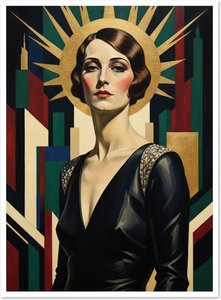
Tamara de Lempicka: Art Deco Iconoclasm & the Construction of Modern Femininity
Explore the captivating world of Tamara de Lempicka, Art Deco icon. Discover her life, groundbreaking paintings, and lasting influence on modern art. Expert insights for collectors.

Mastering Shadows: The 25 Most Powerful Artworks by Francisco Goya
Explore Goya's haunting masterpieces from courtly portraits to Black Paintings. Discover the full collection on OriginalUniqueArt.com.

The Gilded Age Revisited: Art Deco's Modernity & Luxury
Explore the captivating world of Art Deco paintings & the Gilded Age's enduring legacy. Discover iconic artists like Tamara de Lempicka & invest in museum-quality reproductions with OriginalUniqueArt.