Menu

() ·

A painting made for you, by hand

Prison An oil painting, painted by hand for you alone

Hand Made Oil Reproduction

Hand-painted oil on canvas in your size and frame, made to order by our artists. ( Switch to Print Switch to Digital Image)

Collectible Description

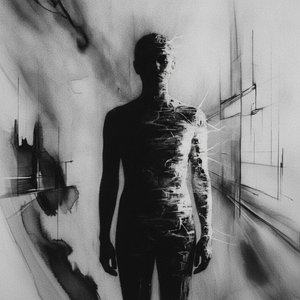
A stark and unsettling black and white oil painting titled Prison by Suleiman Mansour captures the somber essence of anonymity and confinement through its powerful expressionist style, inviting you to explore this profound work.

Artist Biography

Palestinian artist Suleiman Mansour creates powerful realist paintings & sculptures reflecting sumud – resilience & daily life in Palestine. Explore his work at OriginalUniqueArt.com.

from ·

Chapter 1

How large should it be?

Slide to change the size; the picture on the left shows the frame at its real width. The proportions of the original are kept.

Standard
custom
CM
INCH

Pick from our preset sizes that match the artwork's original proportions.

width
height

Type the width and the height you need, to fit your frame or your wall. This is hand-painted, so for a size with a different shape the artist can paint a bit more around the picture, or cut a bit — you choose. We send you a digital mockup to approve before the painting starts. The picture shown on this page does not show the real result — only the mockup does.

Chapter 2

How should it arrive?

Choose the edges of the stretched canvas

Choose your frame

Corner sample of the WhiteWrap canvas edge finish, stretched on solid wood bars
White $1
Corner sample of the BlurSideWrap canvas edge finish, stretched on solid wood bars
Blurside $1
Corner sample of the ExtendedWrap canvas edge finish, stretched on solid wood bars
Extended $1
Corner sample of the P118B picture frame: moulded polystyrene, 5 cm wide and 3 cm thick
P118B $10
Corner sample of the P118H picture frame: moulded polystyrene, 5 cm wide and 3 cm thick
P118H $10
Corner sample of the P118W picture frame: moulded polystyrene, 5 cm wide and 3 cm thick
P118W $10
Corner sample of the P438Z picture frame: moulded polystyrene, 5.5 cm wide and 3.5 cm thick
P438Z $10
Corner sample of the P508JH picture frame: moulded polystyrene, 7 cm wide and 3.5 cm thick
P508JH $12
Corner sample of the P508YH picture frame: moulded polystyrene, 7 cm wide and 3.5 cm thick
P508YH $12
Corner sample of the P805H picture frame: moulded polystyrene, 5 cm wide and 3.5 cm thick
P805H $10
Corner sample of the P805Z picture frame: moulded polystyrene, 5 cm wide and 3.5 cm thick
P805Z $10
Corner sample of the P919BZ picture frame: moulded polystyrene, 7 cm wide and 3.5 cm thick
P919BZ $10
Corner sample of the P919G picture frame: moulded polystyrene, 7 cm wide and 3.5 cm thick
P919G $10
Corner sample of the P919XJ picture frame: moulded polystyrene, 7 cm wide and 3.5 cm thick
P919XJ $10
Corner sample of the P959ZH picture frame: moulded polystyrene, 5 cm wide and 3 cm thick
P959ZH $10
Corner sample of the P968JZ picture frame: moulded polystyrene, 6 cm wide and 4 cm thick
P968JZ $12
Corner sample of the W106C picture frame: solid wood, 5 cm wide and 3 cm thick
W106C $8
Corner sample of the W218G picture frame: solid wood, 5 cm wide and 3 cm thick
W218G $10
Corner sample of the W218JH picture frame: solid wood, 5 cm wide and 3 cm thick
W218JH $8
Corner sample of the W218Y picture frame: solid wood, 5 cm wide and 3 cm thick
W218Y $10
Corner sample of the W307PJ picture frame: solid wood, 6 cm wide and 3 cm thick
W307PJ $10
Corner sample of the W316G picture frame: solid wood, 6 cm wide and 3 cm thick
W316G $10
Corner sample of the W316PJ picture frame: solid wood, 6 cm wide and 3 cm thick
W316PJ $8
Corner sample of the W316Y picture frame: solid wood, 6 cm wide and 3 cm thick
W316Y $10
Corner sample of the W398PJ picture frame: solid wood, 5 cm wide and 3 cm thick
W398PJ $8
Corner sample of the W4111J picture frame: solid wood, 6.5 cm wide and 3.5 cm thick
W4111J $10
Corner sample of the W500HY picture frame: solid wood, 7 cm wide and 5 cm thick
W500HY $15
Corner sample of the W500JH picture frame: solid wood, 7 cm wide and 5 cm thick
W500JH $15
Corner sample of the W692G picture frame: solid wood, 8 cm wide and 4 cm thick
W692G $12
Corner sample of the W849H picture frame: solid wood, 5 cm wide and 3 cm thick
W849H $8
Corner sample of the W940BG picture frame: solid wood, 7.5 cm wide and 4.5 cm thick
W940BG $15
Corner sample of the W953PJ picture frame: solid wood, 6 cm wide and 3.5 cm thick
W953PJ $8
Corner sample of the H24-GOLD picture frame: carved wood with gesso, 10 cm wide and 6 cm thick
H24-GOLD $30
Corner sample of the H24-SILVER picture frame: carved wood with gesso, 10 cm wide and 6 cm thick
H24-SILVER $30
Corner sample of the H36-GOLD picture frame: carved wood with gesso, 15 cm wide and 6.5 cm thick
H36-GOLD $45
Corner sample of the H36-SILVER picture frame: carved wood with gesso, 15 cm wide and 6.5 cm thick
H36-SILVER $45
Frame preview
Framed

Moulding: . Overall size with the frame: .

Chapter 3

Who paints it, and should anything change?

Examples of what can be changed: Replace face with customer photo; Add pet (e.g., replace cat with dog); Include hidden message in background; Change background landscape or elements.
After order, OriginalUniqueArt.com team will email client for instructions and provide a mockup preview

Worldwide Delivery () in 3/4 weeks instead of standard 5 weeks. (29 October). No compromise on quality.

Chapter 4

The finishing touches

A nameplate, as in a museum?

Engraved Bronze Plaque Details

This elegant plaque features the artist's name and the title of the artwork, finely engraved for a timeless presentation.

It is made from bronze with a refined, elegant finish. The text is precisely laser-engraved for a sharp and permanent result. Measuring 9x2 cm, the plaque is compact yet easy to read. It's built to be durable and scratch-resistant, offering a professional, museum-quality look. Mounting is simple thanks to the included adhesive backing.

Transparent Acrylic Plaque Details

The plaque includes essential engraved details such as the artist's name, the title of the artwork, the date it was created, the type of media used-like oil on canvas or watercolor-a brief description of the piece, and a QR code that links to the complete artwork information.

It is crafted from clear acrylic, offering a sleek, modern appearance. The text is UV-engraved in black to ensure strong visual contrast. With a size of 10x15 cm, it ensures optimal readability. It comes equipped with two metal hooks for secure wall mounting. The plaque is designed to be weather-resistant, making it suitable for various environments, and it includes interactive features that work seamlessly with smartphone scanning.

Black Acrylic Plaque Details

This elegant plaque includes engraved information such as the artist's name, the title of the artwork, the date it was created, the type of media used (like oil on canvas or watercolor), a short description of the artwork, and a QR code for quick access to more information.

The plaque itself is made from refined black acrylic with a premium finish. The text is laser-engraved in white for high contrast and readability. Its size is 10x15 cm, designed to be easy to read. It comes with two metal hooks for professional mounting. The design is sleek and fits any interior style. It is also weather-resistant and durable, with built-in digital integration for mobile compatibility.

A protective varnish?

When do you need it?

Chapter 5

Your painting, as you ordered it

Prison

Reproduction Medium

Reproduction Size

-

Elite Senior Artist

More detail, finesse, and extra production time

-

Reproduction Frame

-

-

For artworks or reproductions larger than 105 cm (approximately 41 inches) on any side, the frame will be shipped as a kit, disassembled. This method ensures safe delivery and prevents damage during transport.

Professional assembly required - this is not a DIY product.
The kit must be assembled and the canvas stretched by an experienced professional framer, using wood glue (not supplied), a canvas stretching plier and clamps to hold the bars square while the glue dries. Incorrect assembly or uneven canvas tension can permanently damage the artwork and is not covered by our warranty.

  • All solid wood bars are included, precisely cut to size.

  • Assembled with the screws provided, plus wood glue for the corner joints, which is not supplied and must be sourced by your framer.

  • Professional tools are required and not included: a canvas stretching plier (tensioner) and clamps to hold the bars square while the glue dries.

Important:
The corner joints require wood glue, the bars must be held with clamps until the glue is fully dry, and tightening the canvas on the assembled frame requires a canvas stretching plier. None of these are included in the kit. Please arrange an experienced professional framer before ordering this size.

Nameplate

-

-

Protective Varnish

Glossy Varnish (enhances colors, protects against light/moisture)

-

Customize My Artwork

Examples of what can be changed: Replace face with customer photo; Add pet (e.g., replace cat with dog); Include hidden message in background; Change background landscape or elements.

-

Urgent

Worldwide Delivery () in 3/4 weeks instead of standard 5 weeks. (29 October). No compromise on quality.

-

Express Shipping

Worldwide Delivery () in 5 weeks. (5 November).

Included

Total Price

$ 300

Total Price $ 300

Glass option is only available in size under 110 CM

Included with every order

  • Free Worldwide Express Shipping
  • High-Quality Linen Canvas
  • Full Shipping Insurance
  • Customs Tax Refund Guarantee
  • True Color Matching Guarantee
  • 100-Day Return Policy (Defects Only)
  • 100% Money-Back Guarantee
  • Bulk Discount Offer

The Weight of Silence: An Encounter with Suleiman Mansour’s Prison

In the somber, monochromatic expanse of "Prison," created in 1982, the viewer is immediately confronted by a profound sense of stillness and confinement. The artist, Suleiman Mansour, masterfully employs a limited palette of blacks, whites, and varying shades of gray to construct a world that feels both physically claustrophobic and emotionally heavy. This is not merely a depiction of a physical cell, but a haunting meditation on the loss of identity and the crushing weight of systemic oppression. The composition is anchored by five figures arranged in a stark, linear formation, their backs turned toward the observer. By obscuring their faces with cloth, Mansour strips them of their individuality, transforming them into symbols of a collective, anonymous struggle. This deliberate choice forces the eye to focus on the rhythm of their forms and the rigid architecture that surrounds them, creating an atmosphere where every shadow feels thick with unspoken history.

The technical execution of this oil on canvas piece reveals a sophisticated command over texture and light. While the overall mood is bleak, there is a subtle, tactile richness found in the way Mansour renders the different surfaces. The soft, heavy drapes of the cloths covering the figures' heads contrast sharply with the cold, unyielding verticality of the walls. These strong architectural lines act as a visual cage, reinforcing the theme of entrapment. Through delicate variations in tone and masterful shading, the artist suggests a diffused, even light that offers no warmth or escape, contributing to the painting’s characteristic sense of flatness and inescapable reality. The brushwork, though controlled, retains an expressive quality that breathes life into the inanimate stone, making the very walls feel as though they are pressing inward upon the subjects.

A Legacy of Resilience and Sumud

To understand "Prison," one must look toward the heart of Mansour’s artistic mission: the concept of sumud, or steadfastness. Born in Birzeit, Palestine, Mansour has spent his career acting as a visual chronicler of his people's endurance. In this particular work, the symbolism of the covered heads and the uniform movement of the figures speaks directly to the suppression of the Palestinian identity under occupation. The painting captures a moment of shared fate, where the individual is subsumed by a larger, more painful narrative of resistance and survival. For the collector or the lover of fine art, this piece offers much more than aesthetic value; it serves as a powerful historical document that captures the emotional landscape of a nation's struggle.

For interior designers and curators seeking to introduce a piece with profound intellectual and emotional depth, "Prison" stands as a monumental choice. Its monochromatic elegance allows it to integrate seamlessly into modern, minimalist, or contemporary settings, where its starkness can serve as a focal point of contemplation. As a high-quality reproduction, this artwork brings the gravity of Mansour’s vision into any space, inviting viewers to reflect on themes of justice, memory, and the indomitable human spirit that persists even in the darkest of enclosures.

Questions & Answers

Do the colors of "Prison" appear strong or soft?

The colors in "Prison" by Suleiman Mansour have a monochromatic intensity.

How can I get a digital file of "Prison" by Suleiman Mansour?

To get a digital file of "Prison" by Suleiman Mansour, order a high-resolution digital image download on its Digital Image page.

What technique was used for "Prison" by Suleiman Mansour?

The medium of "Prison" by Suleiman Mansour is oil on canvas. Reproductions aim to render the appearance of this technique.

In numbers

  • 1982the year it was painted
  • 29frames to choose from
  • standard sizes, in its own proportions
  • 5weeks to paint and deliver it

About the original

Suleiman Mansour

Suleiman Mansour

1947 - , Palestine

Quick facts about Suleiman Mansour

  • Full Name: Suleiman Mansour
  • Nationality: Palestinian
  • Date Of Birth: 1947
  • Place Of Birth: Birzeit, Palestine
  • Notable Artworks:
    • Destroyed villages (1988)
    • Traditional clothing
    • Both Sides Peace
  • Artistic Movement Or Style: Realism, Sumud art

Artist Biography

Suleiman Mansour: A Chronicle of Resilience and Palestinian Identity

Born in 1947 in Birzeit, Palestine – a year before the devastating Nakba – Suleiman Mansour’s life has been inextricably linked to the ongoing narrative of his homeland. More than just an artist, he is a cultural chronicler, a visual storyteller deeply rooted in the concept of “sumud” – Arabic for steadfastness or resilience – which permeates every aspect of his work. His paintings and sculptures aren't merely depictions of landscapes; they are profound meditations on survival, memory, and the enduring spirit of the Palestinian people.

Mansour’s early artistic education at the Bezalel Academy of Arts and Design in Jerusalem initially steered him towards a realist style, a deliberate rejection of the prevailing abstract expressionism. He sought to capture the tangible realities of daily life within Palestine – the faces of its inhabitants, the textures of its environment, and the echoes of its history. This commitment to portraying authentic experience would become a defining characteristic of his oeuvre. However, it was his experiences during the First Intifada in 1987 that truly ignited his artistic purpose. Witnessing the struggles and resistance firsthand fueled a desire to use art as a tool for cultural preservation and political commentary.

The Birth of “New Visions” and the Politics of Materials

In 1987, Mansour co-founded the influential collective “New Visions,” alongside artists like Vera Tamari, Tayseer Barakat, and Nabil Anani. This group represented a radical shift in Palestinian art, moving away from traditional gallery spaces and embracing a deeply political stance. Recognizing the limitations imposed by Israeli occupation – particularly the reliance on imported art supplies – they devised a brilliant strategy: to create their own materials using resources found within Palestine itself. Mud became a central element of their work, drawing inspiration from Mansour’s childhood memories of his grandmother crafting beehives and ovens with this humble yet versatile substance.

This deliberate choice of material was profoundly symbolic. The cracks and imperfections inherent in mud mirrored the fissures of Palestinian society, the scars of displacement, and the fragility of existence under occupation. It represented a rejection of external influences and an assertion of self-sufficiency – a powerful visual statement against the imposed limitations of the conflict. As Mansour himself eloquently stated, “After a while, once I started making figures, I realized that the mud also reflects the human fate with the cracks, people waiting to disappear, fall down and go away.”

Landscapes of Loss and Remembrance

Mansour’s most iconic works often depict destroyed Palestinian villages – Yibna, Yalo, Imwas, and Bayt Dajan – rendered in a hauntingly beautiful series created in 1988. These paintings are not celebratory monuments; rather, they serve as poignant memorials to lost communities and the displacement inflicted by conflict. The stark landscapes, often dominated by barren earth and crumbling ruins, evoke a sense of profound loss and enduring sorrow. Yet, within these scenes of devastation, there’s also an undeniable strength – a testament to the spirit of those who remain and their determination to preserve their heritage.

Beyond these monumental works, Mansour's paintings frequently feature women in traditional Palestinian clothing, capturing the dignity and resilience of Palestinian femininity. He also masterfully portrays the Levantine landscape—olive groves, terraced hillsides, and ancient trees—creating a visual tapestry that celebrates the beauty and enduring connection to the land. His work is deeply informed by his cultural heritage and reflects the complexities of life in Palestine.

Legacy and Recognition

Suleiman Mansour’s impact extends far beyond the canvas. He has been a dedicated educator, teaching at numerous institutions including Al-Quds University, shaping generations of Palestinian artists. He served as the head of the League of Palestinian Artists from 1986 to 1990 and played a crucial role in establishing an infrastructure for fine arts within Palestine. His contributions were recognized internationally, with exhibitions held at prestigious venues like the Tel Aviv Museum of Art.

His work has been documented extensively, including co-authoring “Both Sides of Peace: Israeli and Palestinian Political Poster Art,” showcasing his engagement with political discourse through art. Mansour’s legacy is one of unwavering commitment to documenting the Palestinian experience, using his artistic voice to bear witness to a complex and often painful history. He remains an active artist today, continuing to explore themes of sumud and cultural identity.

Further Exploration

  • Key Works: “Destroyed Palestinian Villages” series, “Jamal Al Mahamel III (The Camel/Carrier of Hardships)”
  • Notable Collective: New Visions
  • Themes: Sumud, Resilience, Displacement, Cultural Heritage, Palestinian Identity

To delve deeper into Suleiman Mansour’s work and artistic journey, explore the resources available on OriginalUniqueArt.com: Jamal Al Mahamel III and Suleiman Mansour’s Artist Page.

Quick Facts

  • Medium: Oil paint on canvas
  • Artistic style: Representational, Expressionism
  • Artist: Suleiman Mansour
  • Dimensions: 71 x 60 cm

More about this painting

Preview AR preview Switch to Print Switch to Digital Image Send
Details Guide Add to favorites Download Similars X-Ray Diaporama Q&A Stats