Preview
 Send
Send Share
Share
 Details

 Download
 Similars
 X-Ray
X-Ray Diaporama
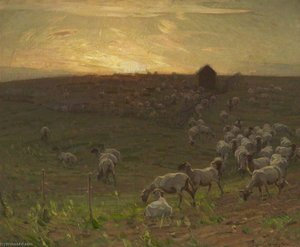
Haymaking


 Read More
Giclée / Art Print
Museum-quality giclée or canvas print with fast production and flexible finish options. ( Switch to hand made Painting Switch to Image)




































Pick from our preset sizes that match the artwork's original proportions.

You may enter your own dimensions to fit a specific frame or space. If your selected size does not match the original image's proportions, we will either crop the artwork or extend the image with a mirrored or solid-fill edge. A digital mockup will be sent for your approval before production begins.
Please note that the on-screen preview does not reflect the actual cropping or extension. Only the mockup will accurately show the final composition.
While custom sizes are available, we recommend selecting a dimension from the predefined list to preserve the original proportions.
Worldwide Delivery () in 2 weeks instead of standard 4/5 weeks. (8 August)

Free Worldwide Express Shipping

High-Quality Linen Canvas

Full Shipping Insurance

Customs Tax Refund Guarantee

True Color Matching Guarantee

60-Day Return Policy (Defects Only)

100% Money-Back Guarantee

Bulk Discount Offer
 Glass option is only available in size under 110 CM

Haymaking
Giclée / Art Print
Reproduction Size
-


Total Price
$ 81
Artist Biography
Wassily Kandinsky: Pioneer of Abstraction
Wassily Wassilyevich Kandinsky, born December 4th (Old Style) in 1866 in Moscow, Russia, wasn’t simply a painter; he was a revolutionary. He stands as one of the foundational figures in the history of art, not just for his vibrant canvases but crucially, for his radical assertion that art could transcend representation and speak directly to the soul. His journey from a young man studying law and economics to a leading voice in the burgeoning world of modern abstraction is a testament to an unwavering belief in the power of color and form to evoke emotion and spiritual experience. His life was deeply intertwined with travel, exposure to diverse cultures – from Venice’s Renaissance splendor to the exotic landscapes of Siberia – all contributing to his unique artistic vision.
Early Life and Artistic Foundations
Kandinsky's childhood in Odessa provided a rich tapestry of influences. His family’s background, blending European sophistication with Siberian roots, instilled in him a deep appreciation for both tradition and the unfamiliar. He initially pursued a conventional path, studying law at Moscow University, but his true passion lay elsewhere. He began to seriously engage with art at the age of thirty, enrolling in life-drawing classes and exploring various artistic techniques – sketching, anatomy, and ultimately, color theory. This early training was supplemented by private instruction and a growing fascination with the works of Impressionism and Post-Impressionism, particularly the expressive use of color by artists like Van Gogh and Gauguin. Crucially, he developed a profound interest in music, recognizing parallels between its structure and emotional impact and the potential of visual art to achieve similar effects.
The Rise of Abstraction: Munich and the Blue Rider
A pivotal moment arrived in 1906 when Kandinsky moved to Munich, a city at the heart of artistic innovation. Here, he encountered Gabriele Münter, with whom he established a close creative partnership that would last for nearly two decades. Together, they formed part of a group known as “The Blue Rider” (Der Blaue Reiter), which included artists like Franz Marc and August Macke. This collective was driven by a shared desire to explore the spiritual dimension of art, rejecting traditional subject matter in favor of abstract forms and colors intended to convey inner feelings and experiences. Kandinsky’s early works during this period – paintings like *Composition VII* (1913) – demonstrate his increasing experimentation with non-representational imagery, utilizing bold color combinations and dynamic shapes to create a sense of movement and emotional intensity. He began to believe that art could exist independently of the external world, communicating directly through its formal elements.
Bauhaus and Beyond: Formalizing Abstraction
The outbreak of World War I dramatically altered Kandinsky’s life and artistic trajectory. He returned to Russia in 1914, briefly serving as the director of the Museums of Painterly Culture. Following the Russian Revolution, he became involved in the new state-sponsored cultural administration, but his spiritual outlook clashed with the prevailing materialism. In 1922, he accepted a position at the Bauhaus school in Weimar, Germany, where he taught color theory and helped to formalize the principles of abstraction. His influence extended beyond painting, impacting design and architecture as well. After the Nazis closed the Bauhaus, Kandinsky relocated to France in 1933, continuing to produce his most iconic works until his death in Neuilly-sur-Seine in 1944. During this period, he refined his approach, employing increasingly geometric forms – circles, squares, triangles – and exploring the psychological effects of color with meticulous precision.
Legacy and Influence
Wassily Kandinsky’s legacy is immense. He is widely considered one of the pioneers of abstract art, profoundly influencing generations of artists who followed. His writings, particularly *Concerning the Spiritual in Art* (1911), provided a theoretical framework for abstraction, arguing that color and form could evoke emotions and spiritual experiences independent of representation. His work continues to inspire artists today, demonstrating the enduring power of art to transcend the limitations of language and connect with the deepest recesses of the human psyche. His exploration of synesthesia – the blending of senses – remains a fascinating area of study, offering insights into how our minds perceive and interpret the world around us. Kandinsky’s insistence on the primacy of feeling in artistic creation cemented his place as a visionary artist who fundamentally reshaped the course of modern art.

sir john alfred arnesby brown
1866 - 1955
Quick Facts
- Artistic Movement Or Style:
- Abstraction
- Blaue Reiter
- Bauhaus
- Artists Or Movements Influenced By This Artist:
- Herbert Bayer
- Sonia Delaunay
- Artists Who Influenced This Artist:
- Anton Ažbe
- Gabriele Münter
- Date Of Birth: December 4, 1866
- Date Of Death: December 13, 1944
- Full Name: Wassily Wassilyevich Kandinsky
- Nationality: Russian, French
- Notable Artworks:
- Concerning the Spiritual in Art
- Komposition V
- Improvisation
- Place Of Birth: Moscow, Russia