Preview
 Send
Send Share
Share
 Details
 Guide
Guide

 Download
 Similars
 X-Ray
X-Ray Diaporama
 Stats
StatsDuncan Gray


 Read More
Giclée / Art Print
Museum-quality giclée or canvas print with fast production and flexible finish options. ( Buy Hand Made Painting Switch to Digital Image)




P118B $10

P118H $10

P118W $10

P438Z $10

P508JH $12

P508YH $12

P805H $10

P805Z $10

P919BZ $10

P919G $10

P919XJ $10

P959ZH $10

P968JZ $12

W106C $8

W218G $10

W218JH $8

W218Y $10

W307PJ $10

W316G $10

W316PJ $8

W316Y $10

W398PJ $8

W4111J $10

W500HY $15

W500JH $15

W692G $12

W849H $8

W940BG $15

W953PJ $8




Pick from our preset sizes that match the artwork's original proportions.

Type the width and the height you need, to fit your frame or your wall. A print can only be cut, never made bigger than the picture, so a size with a different shape loses a part of the image. We send you a digital mockup to approve before we print anything. The picture shown on this page does not show the real cut — only the mockup does.
Worldwide Delivery () in 2 weeks instead of standard 4/5 weeks. (24 October)

Free Worldwide Express Shipping

High-Quality Linen Canvas

Full Shipping Insurance

Customs Tax Refund Guarantee

True Color Matching Guarantee

100-Day Return Policy (Defects Only)

100% Money-Back Guarantee

Bulk Discount Offer
 Glass option is only available in size under 110 CM

Duncan Gray
Giclée / Art Print
Reproduction Size
-


Total Price
$ 81
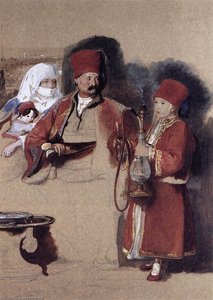
A Symphony of Domestic Serenity
In the quiet corners of art history, few works capture the tender pulse of everyday existence as masterfully as Sir David Wilkie’s Duncan Gray. Executed in 1819, this captivating oil painting serves as a profound window into the heart of Victorian domesticity, offering much more than a mere portrait of a family. It is an intimate study of connection, where the boundaries between individuals blur into a singular atmosphere of warmth and companionship. As one gazes upon the scene, there is an immediate sense of being invited into a private sanctuary, a comfortable dining room where time seems to slow, allowing the viewer to breathe in the stillness of a shared moment.
The composition is anchored by a central group that radiates quiet affection. At the heart of this domestic tableau stands Duncan Gray, his presence both protective and gentle as he rests a hand upon the shoulder of his seated wife. This subtle gesture, a hallmark of Wilkie’s emotive genius, speaks volumes of the unspoken bonds of love and stability. Surrounding them, the presence of a young boy at the table and another gentleman nearby adds layers of narrative depth, suggesting a lineage of shared stories and traditions. Even the silent observer in the background—a dog resting peacefully—serves to anchor the scene in a sense of profound peace, reinforcing the idyllic nature of this family gathering.
Mastery of Light and Romantic Detail
Technically, Duncan Gray is a triumph of the Romantic movement’s emphasis on emotional resonance through meticulous precision. Wilkie was a master of tonal gradation, a technique he employs here to breathe life into the very air of the room. By gradually shifting hues and managing the delicate interplay of light and shadow, he creates a luminous surface that feels almost tactile. One can almost feel the weight of the mahogany dining table or the smooth skin of the fruit resting in its bowl—a classic motif of the era reflecting an appreciation for natural beauty and refined, earthly delights.
Every brushstroke is imbued with purpose, from the intricate folds of the figures' drapery to the soft, atmospheric light filtering through the space. This attention to detail does not merely serve a decorative function; it builds a world that feels lived-in and authentic. For the collector or interior designer, this painting offers an unparalleled opportunity to introduce a sense of historical weight and soulful elegance into a contemporary setting. The rich textures and deep, warm tones provide a sophisticated focal point that can anchor a room, lending an air of timelessness and cultured tranquility to any curated space.
An Enduring Legacy for the Modern Collector
Beyond its aesthetic brilliance, the painting carries a significant historical weight, drawing inspiration from the cultural zeitgeist of 19th-century Scotland. As a "people’s painter," Wilkie had an uncanny ability to elevate the mundane to the monumental. In Duncan Gray, he captures the essence of a period transitioning into the Victorian age, where the sanctity of the home became a central pillar of social identity. The painting is not just a depiction of people; it is a depiction of values—stability, affection, and the quiet dignity of domestic life.
For those seeking to adorn their homes with art that evokes emotion rather than mere decoration, this work stands as a premier choice. A high-quality reproduction of this masterpiece allows the spirit of Wilkie’s vision to reside within modern interiors, bridging the gap between the romanticized past and the present day. It is an investment in atmosphere, providing a constant source of inspiration and a window into a world where beauty is found in the simplest, most heartfelt interactions.
Questions & Answers
How is the mood of "Duncan Gray" by Sir David Wilkie described?
The overall mood of "Duncan Gray" by Sir David Wilkie is romantic. The mood describes the general atmosphere of the work.
How do I preview a reproduction of "Duncan Gray" by Sir David Wilkie?
A preview of "Duncan Gray" by Sir David Wilkie is available on the artwork's Preview page.
What is "Duncan Gray" about?
"Duncan Gray" by Sir David Wilkie depicts: family gathering, domestic scene, portraiture, interior composition, dog presence, dining table, warm atmosphere.
Artist Biography
The People’s Painter: The Soul of Scottish Genre
In the grand tapestry of nineteenth-century British art, few threads shine with as much warmth and human empathy as those woven by Sir David Wilkie. Born in the humble village of Pitlessie, Fife, Wilkie emerged from a background steeped in the quiet dignity of rural Scotland. As the son of a parish minister, his path toward the canvas was not initially destined by tradition, yet his burgeoning passion for art proved an undeniable force. His early education at the Trustees’ Academy in Edinburgh, under the guidance of John Graham, provided him with a rigorous foundation, but it was his habit of haunting fairs and marketplaces that truly defined his vision. By capturing the fleeting, characteristic moments of everyday life, he developed a profound ability to transfer the spirit of a scene into his sketchbook, finding extraordinary beauty in the most ordinary subjects.
Wilkie’s artistic journey was marked by an indomitable perseverance and a unique ability to elevate the mundane to the level of high art. While many of his contemporaries sought glory in grand historical narratives or mythological allegories, Wilkie turned his gaze toward the common man. He became a master of genre painting, creating vibrant microcosms of society through works that were teeming with character and anecdotal detail. His early studies were deeply influenced by the likes of Alexander Carse and David Allan, whose focus on scenes from humble life resonated with his own sensibilities. This dedication to realism allowed him to capture the nuances of human experience—the subtle expressions of emotion, the intimate interactions between individuals, and the atmospheric details that breathed life into every canvas.
A Legacy of Light and Narrative Detail
As his reputation expanded from Scotland to the bustling art scene of London, Wilkie’s style underwent a magnificent evolution. His early work possessed a sharp, precise, and spirited touch, often characterized by subdued coloring and a silvery grey tone reminiscent of Dutch genre painters like Teniers and Ostade. However, as he matured, his brushwork grew broader and his palette more luminous, embracing a richness of tone and a powerful use of color that reflected the burgeoning Romantic movement. This transition allowed him to tackle even more monumental subjects without losing the psychological depth that was his hallmark. His appointment as Principal Painter in Ordinary to King William IV and Queen Victoria stands as a testament to this unparalleled skill, securing him prestigious commissions for royal portraits and historical scenes.
<The breadth of Wilkie’s oeuvre is truly remarkable, spanning from the intimate to the epic. His masterpiece, The Chelsea Pensioners Reading the Waterloo Dispatch, remains one of his most celebrated achievements, offering an immersive portrayal of camaraderie and shared anxiety that continues to captivate audiences at Apsley House. Beyond these narrative triumphs, he excelled in historical paintings such as Sir David Baird Discovering the Body of Sultan Tipoo Sahib, and even captured the scholarly atmosphere of intellectual pursuits in works like Washington Irving in the Archives of Seville. Whether depicting a bustling village festival or a formal royal figure, Wilkie’s work remains anchored by a distinctly Scottish sensibility and an unwavering commitment to capturing the essence of life as it is lived.

Sir David Wilkie
1785 - 1841 , Scotland
Quick Facts
- Artistic Movement Or Style: Romanticism
- Artists Who Influenced This Artist:
- Caravaggio
- Rembrandt
- Full Name: Sir David Wilkie
- Nationality: Scottish
- Notable Artworks:
- The Chelsea Pensioners Reading the Waterloo Dispatch
- The Shepherdess Returning from Watering
- A Bookcase
- Place Of Birth: Scotland
- Date Of Birth: 1785
- Date Of Death: 1841
Related Articles
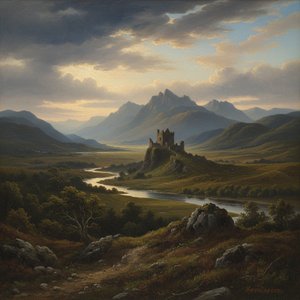
Alexander Nasmyth: Picturing Scotland's Romantic Landscape – Innovation & Identity
Explore the life & art of Alexander Nasmyth, a pivotal figure in Scottish Romantic landscape painting. Discover his iconic works, including portraits of Robert Burns, and learn about his lasting influence on national identity. Fine art reproductions available.

Romantic Realism's Finest: 10 Masterpieces for Your Home | OriginalUniqueArt
Explore 10 defining masterpieces of Romantic Realism! Discover Courbet, Millet & Daumier's powerful paintings—capturing emotion and social realities. Find museum-quality reproductions for your home at OriginalUniqueArt.com.

Sir David Wilkie: Narrative Detail & the Rise of Victorian Genre Painting
Explore the life & work of Sir David Wilkie, a pivotal figure in Victorian genre painting. Discover his narrative detail, social commentary, and lasting influence on 19th-century British art. Learn more at OriginalUniqueArt.
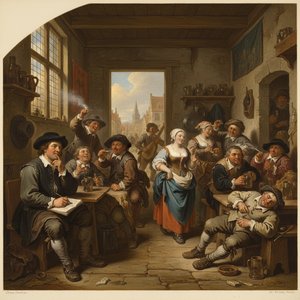
David Teniers the Younger: Genre Painting & Social Commentary in Baroque Flanders
Explore the captivating world of David Teniers the Younger, a leading Flemish Baroque painter. Discover his genre scenes, social commentary, and lasting influence on 17th-century art. Learn about his life, techniques & legacy.

Romantic Landscapes: 10 Masterpieces for Your Home | OriginalUniqueArt
Journey through 10 Romantic landscape masterpieces by Friedrich, Turner & Cole. Explore emotional art, sublime nature scenes & iconic 19th-century paintings. Find museum-quality reproductions for your home at OriginalUniqueArt.com – discover the full collection online!