Preview
 Send
Send Share
Share
 Details

 Download
 Similars
 X-Ray
X-Ray Diaporama
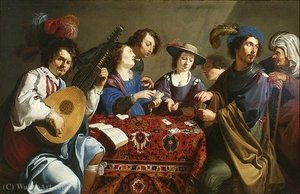
The Lute Player
 Oil On Canvas
- WallArt
- Baroque
 1620
1620 111.0 x 98.0 cm
 Museum of Art
 Read More
Hand Made Oil Reproduction
Hand-painted oil on canvas in your size and frame, made to order by our artists. ( Switch to Print Switch to Image)




P118B $10

P118H $10

P118W $10

P438Z $10

P508JH $12

P508YH $12

P805H $10

P805Z $10

P919BZ $10

P919G $10

P919XJ $10

P959ZH $10

P968JZ $12

W106C $8

W218G $10

W218JH $8

W218Y $10

W307PJ $10

W316G $10

W316PJ $8

W316Y $10

W398PJ $8

W4111J $10

W500HY $15

W500JH $15

W692G $12

W849H $8

W940BG $15

W953PJ $8




Pick from our preset sizes that match the artwork's original proportions.

You may enter your own dimensions to fit a specific frame or space. If your selected size does not match the original image's proportions, we will either crop the artwork or extend the painting with additional hand-painted elements. A digital mockup will be sent for your approval before production begins.
Please note that the on-screen preview does not reflect the actual cropping or extension. Only the mockup will accurately show the final composition.
While custom sizes are available, we recommend selecting a dimension from the predefined list to preserve the original proportions.
After order, OriginalUniqueArt.com team will email client for instructions and provide a mockup preview
Worldwide Delivery () in 3/4 weeks instead of standard 5 weeks. (5 August). No compromise on quality.

Free Worldwide Express Shipping

High-Quality Linen Canvas

Full Shipping Insurance

Customs Tax Refund Guarantee

True Color Matching Guarantee

60-Day Return Policy (Defects Only)

100% Money-Back Guarantee

Bulk Discount Offer
 Glass option is only available in size under 110 CM

The Lute Player
Reproduction Medium
Reproduction Size
-


Total Price
$ 300
Artwork Description
The Lute Player by Theodor Rombouts: A Baroque Portrait of Skill and Reflection
Theodoor Rombouts’ “The Lute Player,” completed around 1620, stands as a cornerstone of Flemish Caravaggism—a movement that irrevocably altered the course of European painting. More than just a depiction of an instrumentalist, this monumental canvas embodies the spirit of its era: intellectual curiosity intertwined with dramatic visual impact.
- Subject Matter & Context: The portrait captures a solitary lute player in mid-performance, bathed in stark chiaroscuro lighting—a technique championed by Caravaggio himself. This deliberate contrast between light and shadow wasn’t merely stylistic; it served to heighten the emotional intensity of the scene and draw the viewer's gaze directly to the figure’s face and hands.
- Stylistic Influences: Rombouts’ style is undeniably indebted to Caravaggio’s dramatic realism. However, unlike Caravaggio’s often emotionally charged depictions of saints or biblical narratives, “The Lute Player” presents a more contemplative subject—a musician absorbed in his craft. This subtle shift reflects the humanist sensibilities prevalent during the Baroque period.
- Technique & Materials: Executed in oil paints on canvas, Rombouts employed meticulous brushwork to achieve remarkable textural detail. Layers of pigment were painstakingly applied to create a rich surface finish that captures the nuances of skin tone, fabric folds, and lute ornamentation. The artist’s mastery is evident in every stroke—a testament to his dedication to capturing both form and feeling.
- Symbolism & Interpretation: Beyond its immediate visual appeal, “The Lute Player” carries symbolic weight. The lute itself represents musical skill and creativity – an emblem of intellectual pursuits alongside artistic expression. Simultaneously, the book held by the musician hints at a broader engagement with knowledge and contemplation—suggesting that Rombouts sought to convey not just beauty but also deeper philosophical ideas.
- Emotional Impact: Viewing “The Lute Player” evokes a sense of quiet drama and focused concentration. The artist’s gaze is unwavering, conveying both determination and introspection. This portrait transcends mere representation; it invites the viewer to contemplate the complexities of human experience—a timeless achievement that continues to resonate with audiences today.
This artwork resides in the Museum of Art, Philadelphia, where its original dimensions are 44″ x 39″ (111 cm x 98 cm). Its enduring legacy stems from Rombouts’ ability to fuse Caravaggio’s dramatic style with humanist ideals—resulting in a masterpiece that captures both artistic virtuosity and profound psychological insight.
Artist Biography
early life and training
theodoor rombouts, a prominent flemish painter, was born in antwerp in 1597. he was the son of bartholomeus rombouts, a wealthy tailor, and barbara de greve. rombouts' early training as an artist began under frans (franchois) van lanckvelt in 1608, followed by studies under abraham janssens and possibly nicolas régnier in antwerp.italian influence and caravaggesque style
in 1616, rombouts traveled to rome, where he was exposed to the works of caravaggio and his followers. this experience significantly influenced his style, leading him to become a key figure in the flemish caravaggism movement. theodoor rombouts is considered the primary and most original representative of this artistic movement.notable works and style
upon returning to antwerp in 1625, rombouts became a master of the guild of st. luke. his works during this period are characterized by:- musical company with bacchus (c. 1630), showcasing his use of vibrant colors and strong contrasts, typical of the caravaggesque style.
- card and backgammon players. fight over cards (c. 1620-1630), demonstrating his ability to capture dramatic moments with intense lighting.
- the lute player (c. 1620), a prime example of his single musician portraits, influenced by the works of manfredi and valentin de boulogne.
museums and collections
rombouts' works can be found in various museums, including:- the royal museums of fine arts of belgium (brussels, belgium), featuring an extensive collection of his paintings.
- the kremer collection (amsterdam, netherlands), housing several of his notable works, such as musical company with bacchus.
legacy and influence
theodoor rombouts played a significant role in shaping the flemish caravaggism movement. his influence can be seen in the works of later artists, such as jacob jordaens, gonzales coques, jan cossiers, and gillis remeeus.- view more of rombouts' works on OriginalUniqueArt.
- learn more about flemish painters and their influence on the art world at OriginalUniqueArt.
- discover rombouts' biography and notable works on wikipedia.

theodoor rombouts
1597 - 1637 , Belgium
Quick Facts
- Artistic Movement Or Style: Caravaggism
- Artists Or Movements Influenced By This Artist: Jacob Jordaens, Gonzalo Coques
- Artists Who Influenced This Artist: Caravaggio
- Date Of Birth: 1597 Antwerp Belgium
- Date Of Death: 1637
- Full Name: Theodoor Rombouts
- Nationality: Flemish
- Notable Artworks:
- Musical Company with Bacchus
- Card and Backgammon Players
- Fight Over Cards
- The Lute Player
- Place Of Birth: Antwerp Belgium
Related Articles

The Dramatic Flourish: Exploring the Baroque Movement's Enduring Legacy in Art History
Explore the dramatic world of Baroque art! Discover iconic artists like Caravaggio & Rubens, defining techniques, and its lasting impact on art history. Expert insights for collectors & enthusiasts at OriginalUniqueArt.

Baroque Drama: Bringing Opulence & Emotion into Contemporary Interiors
Explore the opulent world of Baroque interior design! Discover key elements, modern applications & how to bring dramatic elegance into your home with 's authentic reproductions.
Baroque Classicism: Reconciling Drama & Order in 17th-Century Art
Explore the captivating world of Baroque Classicism! Discover its history, key artists like Caravaggio & Rubens, and defining characteristics. Expert insights & high-quality reproductions at OriginalUniqueArt.

Baroque Masterpieces: 10 Paintings That Defined an Era |
Journey through the drama & grandeur of Baroque art! Explore 10 masterpieces by Caravaggio, Rembrandt, Rubens & more. Discover stunning oil paintings, rich colors & timeless stories. Find museum-quality reproductions at .

The Visceral Stage: Exploring Dramatic Narratives & Emotional Intensity in Baroque Art
Explore the dramatic world of Baroque art! Discover iconic masters like Caravaggio & Rembrandt, their techniques, and the movement's lasting impact. Expert insights for collectors & enthusiasts at OriginalUniqueArt.