Preview
 Send
Send Share
Share
 Details
 Guide
Guide

 Download
 Similars
 X-Ray
X-Ray Diaporama
 Q&A
Q&A Stats
StatsPrimavera - (8)

 Read More
Giclée / Art Print
Museum-quality giclée or canvas print with fast production and flexible finish options. ( Buy Hand Made Painting Switch to Digital Image)




P118B $10

P118H $10

P118W $10

P438Z $10

P508JH $12

P508YH $12

P805H $10

P805Z $10

P919BZ $10

P919G $10

P919XJ $10

P959ZH $10

P968JZ $12

W106C $8

W218G $10

W218JH $8

W218Y $10

W307PJ $10

W316G $10

W316PJ $8

W316Y $10

W398PJ $8

W4111J $10

W500HY $15

W500JH $15

W692G $12

W849H $8

W940BG $15

W953PJ $8




Pick from our preset sizes that match the artwork's original proportions.

Type the width and the height you need, to fit your frame or your wall. A print can only be cut, never made bigger than the picture, so a size with a different shape loses a part of the image. We send you a digital mockup to approve before we print anything. The picture shown on this page does not show the real cut — only the mockup does.
Worldwide Delivery () in 2 weeks instead of standard 4/5 weeks. (10 November)

Free Worldwide Express Shipping

High-Quality Linen Canvas

Full Shipping Insurance

Customs Tax Refund Guarantee

True Color Matching Guarantee

100-Day Return Policy (Defects Only)

100% Money-Back Guarantee

Bulk Discount Offer
 Glass option is only available in size under 110 CM

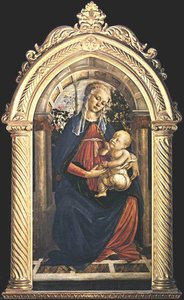
Primavera - (8)
Giclée / Art Print
Reproduction Size
-


Total Price
$ 81
A Celebration of Spring: Unveiling Botticelli’s *Primavera*
Sandro Botticelli's *Primavera* (c. 1482) is arguably one of the most celebrated and enigmatic paintings of the Early Renaissance. This large-scale work, painted on panel, transcends a simple depiction of mythological figures; it’s an allegorical exploration of love, fertility, and the flourishing of spring – both literal and metaphorical. The painting presents a lush garden setting populated by graceful nude and semi-nude figures drawn from classical mythology. At its center stands Venus, goddess of love, subtly set apart beneath an arch of foliage, acting as a benevolent overseer of the scene.Decoding the Mythological Narrative
The composition unfolds from right to left. To the right, Zephyrus, the west wind, violently pursues and captures the nymph Chloris, who transforms into Flora, goddess of spring, scattering flowers across the meadow. Moving towards the center, we encounter Venus, with her son Cupid aiming his arrow above. Three Graces – Castitas (chastity), Pudicitia (modesty), and Venustas (beauty) – dance in a circle, their intertwined hands symbolizing reciprocal affection. On the far left stands Mercury, messenger of the gods, dispersing clouds with his caduceus. The two dogs at Venus’s feet are often interpreted as symbols of fidelity.Botticelli's Distinctive Style and Technique
Botticelli’s style is immediately recognizable for its elegant linearity. He prioritizes flowing contours and delicate details over strict anatomical accuracy or dramatic perspective – a characteristic that bridges the gap between the late Gothic period and the burgeoning Renaissance. His use of tempera paint on panel allows for precise detailing, creating a surface with a distinctive matte finish. The vibrant yet subtly muted color palette contributes to the painting’s ethereal quality. Botticelli's figures aren't grounded in reality; they seem to float within the landscape, enhancing the dreamlike atmosphere.Historical Context and Patronage
*Primavera* was likely commissioned by a member of the powerful Medici family – possibly Lorenzo di Pierfrancesco de’ Medici – for his wedding or as part of a broader decorative scheme for his villa. Florence in the late 15th century was a hotbed of Neoplatonic thought, which sought to reconcile classical philosophy with Christian theology. This intellectual climate profoundly influenced Botticelli's work, imbuing it with layers of symbolic meaning. The painting isn’t merely a beautiful image; it’s a visual embodiment of Neoplatonic ideals about divine love and spiritual awakening.Symbolism and Interpretation
The symbolism within *Primavera* is rich and complex, inviting ongoing scholarly debate. Beyond the literal mythological figures, the painting can be interpreted as an allegory for various themes: courtly love, marital harmony, and the cyclical renewal of nature. The abundance of flowers – over 500 different species are depicted with botanical accuracy – symbolizes fertility and the blossoming of life. Venus herself represents not just physical beauty but also *humanitas*, the ideal of cultivated humanity.Emotional Impact and Enduring Legacy
*Primavera* evokes a sense of joyful serenity and contemplative wonder. The graceful figures, vibrant colors, and idyllic setting create an atmosphere of harmonious beauty. It’s a painting that invites prolonged viewing, rewarding the observer with new discoveries upon each encounter. Botticelli's *Primavera* remains a cornerstone of Renaissance art, inspiring artists, writers, and thinkers for centuries. Its enduring appeal lies in its ability to capture the timeless themes of love, beauty, and the transformative power of nature.Questions & Answers
Where can I buy a digital image of "Primavera - (8)" by Sandro Botticelli?
To get a digital file of "Primavera - (8)" by Sandro Botticelli, order a high-resolution digital image download on its Digital Image page.
Who created "Primavera - (8)" and what style is it in?
Sandro Botticelli created "Primavera - (8)" within the Early Renaissance movement.
What orientation does "Primavera - (8)" by Sandro Botticelli have?
"Primavera - (8)" by Sandro Botticelli has a landscape format. The format describes the proportions of the composition.
Artist Biography
The Life of Sandro Botticelli
Sandro Botticelli lived his life within the narrow, busy streets of Florence, Italy. Born Alessandro di Mariano di Vanni Filipepi around 1445, he was the son of a tanner. His family lived in the neighborhood of Ognissanti, a place he remained close to throughout his years. He eventually became known by the name Botticelli, a nickname taken from the word botticello, which refers to a small wine cask or little barrel.
His presence in the city was constant. He moved through the same Florentine air for decades, working from his early training until his death on May 17, 1510. His work emerged during the Early Renaissance, a time when the city was a center of intense creative activity. He was an Italian painter who focused his hands on the wood and plaster of his home city.
His life was tied to the local rhythms of trade and faith. He was a man of the Florentine streets, from his early days as an apprentice to his final years. His existence was defined by the light and the shadows of the Italian Renaissance.
Early Life, Family and Training
Born Alessandro di Mariano di Vanni Filipepi, he was the youngest of four surviving children. His father, Mariano Filipepi, worked as a goldsmith and later as a tanner. This background in craftsmanship likely shaped the way he approached the fine details of his later work. Before finding his way into painting, he was thought to have first trained with Maso Finiguerra, a goldsmith. This early exposure to the precision of metalwork provided a foundation for the meticulous lines that would define his hand.
Around 1460, he entered the studio of Fra Filippo Lippi. This apprenticeship was the most significant period of his formation, where he learned the specific techniques of the Florentine school. He studied the way to handle panel painting and the application of fresco. He remained under Lippi's guidance for several years, likely leaving the workshop by April 1467. During these years, he absorbed the ability to create intimate compositions and a certain way of rendering figures that felt both graceful and slightly melancholic.
Patrons, Workshop and Commissions
The circles of Florence provided much of the work that filled his studio. He worked closely with the Medici family, including Lorenzo de' Medici and Giuliano de' Medici, whose influence shaped much of his professional life. Beyond the Medici, the Vespucci family commissioned his fresco Saint Augustine in his Study. His reach extended to the religious and civic centers of Italy as well. In Rome, he was invited by Pope Sixtus IV to paint frescoes for the Sistine Chapel. Back in Florence, he completed the Adoration of the Magi for the altar in the funerary chapel of Gaspare di Zanobi del Lama.
His workshop functioned as a place of continuity and shared skill. He employed Filippino Lippi, the son of his former teacher, as an apprentice. This connection kept the traditions of his training alive within his own space. The studio was a place of steady production, where the demands of patrons dictated the rhythm of the day. He moved between the private commissions of wealthy families and the large-scale requirements of the church, often working within the established social structures of the city.
Artistic Technique and Style
His hand moved with a specific, rhythmic grace. There is a lyrical quality to the way he defines a shape, using elegant linearity and flowing contours to guide the eye across the panel. He often began his compositions with a silverpoint drawing, a method that required a steady, controlled touch to lay down the initial underpainting. This precision allowed him to build up layers of tempera paint, which provided a way to render fine details and maintain a clear, bright color palette. He did not rely on heavy shadows to create form; instead, he used the strength of the line itself to define the presence of his subjects.
The figures he painted possess an ethereal quality. They often feature elongated proportions and graceful, almost weightless poses that suggest a sense of movement without the need for heavy physical mass. He found a way to marry the decorative use of line with the classical traditions of his time, creating a visual language that felt both ancient and uniquely his own. This approach allowed him to depict complex mythological scenes with a sense of calm and poetic rhythm.
- The Birth of Venus (c. 1485)
- Primavera (c. 1482)
- Adoration of the Magi (1475-1476)
- Mystic Nativity (1501)
Key Works and Masterpieces
The Birth of Venus captures a goddess emerging from a seashell, a scene that embodies the Renaissance ideals of beauty. In Primavera, the subject turns to a complex and enigmatic celebration of spring and love, populated by figures from classical mythology. These works show a focus on the rhythmic movement of lines and the grace of the human form.
Earlier in his career, his brush moved toward different subjects. He painted Saint Sebastian before January 1474. Around 1475, he produced the Adoration of the Magi, which includes members of the Medici family and a self-portrait. As his interests shifted, his work took on a different tone. The Mystic Nativity, created in 1501, reflects this change in focus.
- The Birth of Venus
- Primavera
- Adoration of the Magi
- Mystic Nativity
- Saint Sebastian
Later Years and Spiritual Shift
The 1490s brought a change to the way he approached the panel. The ornamental charm that defined his earlier years began to fade. He moved away from the decorative grace of his youth, opting instead for a more simplistic approach. This shift was not merely a change in technique but a response to the changing atmosphere in Florence. He became a follower of the Dominican friar Savonarola, whose fervent preaching influenced the city's spiritual direction. This connection marked a departure from the humanist interests that had previously guided his brush.
His work during this period took on a different character. The figures lost some of their rhythmic, flowing quality, moving instead toward a more archaic or Gothic style. The compositions became more austere, reflecting a growing spiritual intensity. This period of his life shows a man turning inward, trading the lightness of mythological scenes for a more heavy-handed, religious focus. The paintings from these years carry a different weight, stripped of the previous elegance in favor of something more direct and emotionally charged.
- Mystic Nativity (1501)
Legacy and Artistic Rediscovery
After his death in 1510, the name Botticelli largely slipped from the public eye. For nearly three centuries, his paintings sat in quiet corners, overshadowed by the heavy presence of High Renaissance figures. The specific, rhythmic lines and the way he handled color were left to the dust of history, forgotten by a world moving toward different ideals of form and perspective.
This silence ended in the late 19th century. A group known as the Pre-Raphaelite Brotherhood began looking backward, seeking a different kind of clarity. They found it in his work. They were drawn to the way his figures moved with a certain linear grace and the specific, bright quality of his colors. This interest sparked a slow, steady reassessment of his place in history. What was once obscured began to emerge again, moving from the shadows of obscurity back into the light of the Florentine tradition.
Today, he is recognized as a central figure of the Early Renaissance. His ability to blend classical myth with a sense of spiritual longing remains a key part of his identity. His influence persists in the way later generations approached the intersection of beauty and emotion.
Where to See His Works Today
Walking through the halls of the Galleria degli Uffizi in Florence, one finds his most famous subjects. The Birth of Venus and Primavera occupy space here, alongside the Adoration of the Magi. These works show the way he handled color and the way figures move through a garden or across a sea shell.
His presence extends beyond the borders of Italy. In France, the Musée du Petit Palais in Avignon holds a Madonna and Child. The painting shows the Virgin Mary with the infant Jesus, a quiet scene that reflects his earlier training. In Berlin, the Gemäldegalerie houses his Saint Sebastian, a work that captures a sense of repose in the figure.
- The Birth of Venus (Uffizi, Florence)
- Primavera (Uffizi, Florence)
- Adoration of the Magi (Uffizi, Florence)
- Saint Sebastian (Gemäldegalerie, Berlin)
- Madonna and Child (Musée du Petit Palais, Avignon)
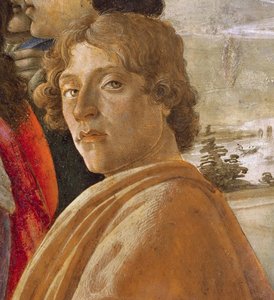
Sandro Botticelli
1445 - 1510 , Italy
Quick Facts
- Artistic Movement Or Style: Early Renaissance
- Artists Or Movements Influenced By This Artist: ['Pre-Raphaelite Brotherhood']
- Artists Who Influenced This Artist:
- Fra Filippo Lippi
- Fra Angelico
- Paolo Uccello
- Full Name: Alessandro di Mariano di Vanni Filipepi
- Nationality: Italian
- Notable Artworks:
- The Birth of Venus
- Primavera
- Adoration of the Magi
- Mystic Nativity
- Place Of Birth: Florence, Italy
- Date Of Birth: 1445
- Date Of Death: 1510
Related Articles

25 Masterpieces by Sandro Botticelli: The Ultimate Guide to the Renaissance Icon
Explore 25 iconic Sandro Botticelli masterpieces of the Renaissance. Discover the full collection online at OriginalUniqueArt.com.

Neo-Classicism's Greatest Hits: 10 Masterpieces for Your Home |
Journey through Neo-Classicism's finest! Explore 10 iconic masterpieces by David, Ingres & Canova. Discover art history, techniques & timeless beauty – perfect for inspiring your home decor. Find museum-quality reproductions at
Early Renaissance Masters: 10 Paintings That Changed Art History |
Journey through the Early Renaissance! Explore 10 iconic paintings by Botticelli, Leonardo da Vinci & Michelangelo. Discover their stories, techniques & lasting impact. Find museum-quality art reproductions and elevate your home decor with .

Giclée Prints: Archival Quality & Aesthetic Nuances for the Discerning Collector
Explore the world of giclée prints with OriginalUniqueArt. Learn about archival quality, aesthetic nuances & investment potential. Expert guidance for discerning art collectors seeking museum-quality reproductions and lasting value.

The Enduring Legacy of Fine Art Prints: Technique, History & Aesthetic Impact
Explore the rich history & techniques of fine art prints. Discover investment potential, assess authenticity, and learn how to preserve your collection with expert guidance. Trusted insights for discerning collectors.