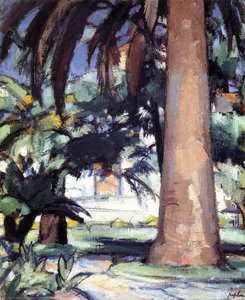
Preview
 Send
Send Share
Share
 Details
 Guide
Guide

 Download
 Similars
 X-Ray
X-Ray Diaporama
 Q&A
Q&A Stats
StatsTulips
 Oil On Canvas
- WallArt
- Post-Impressionism
 1912
1912- Modern
 47.0 x 55.0 cm
 Read More
Giclée / Art Print
Museum-quality giclée or canvas print with fast production and flexible finish options. ( Buy Hand Made Painting Switch to Digital Image)




P118B $10

P118H $10

P118W $10

P438Z $10

P508JH $12

P508YH $12

P805H $10

P805Z $10

P919BZ $10

P919G $10

P919XJ $10

P959ZH $10

P968JZ $12

W106C $8

W218G $10

W218JH $8

W218Y $10

W307PJ $10

W316G $10

W316PJ $8

W316Y $10

W398PJ $8

W4111J $10

W500HY $15

W500JH $15

W692G $12

W849H $8

W940BG $15

W953PJ $8




Pick from our preset sizes that match the artwork's original proportions.

Type the width and the height you need, to fit your frame or your wall. A print can only be cut, never made bigger than the picture, so a size with a different shape loses a part of the image. We send you a digital mockup to approve before we print anything. The picture shown on this page does not show the real cut — only the mockup does.
Worldwide Delivery () in 2 weeks instead of standard 4/5 weeks. (30 October)

Free Worldwide Express Shipping

High-Quality Linen Canvas

Full Shipping Insurance

Customs Tax Refund Guarantee

True Color Matching Guarantee

100-Day Return Policy (Defects Only)

100% Money-Back Guarantee

Bulk Discount Offer
 Glass option is only available in size under 110 CM

Tulips
Giclée / Art Print
Reproduction Size
-


Total Price
$ 81
A Symphony of Color: The Vibrant World of Peploe’s Tulips
In the quiet corners of the Hunterian Museum and Art Gallery, there exists a window into a more luminous era, captured through the masterful hands of Samuel John Peploe. His 1912 masterpiece, Tulips, is far more than a mere study of flora; it is a rhythmic dance of light and pigment that breathes life into the canvas. As a prominent figure among the Scottish Colourists, Peploe possessed an uncanny ability to transform the mundane—a simple vase, a handful of blooms, perhaps a stray piece of fruit—into a profound sensory experience. This particular work serves as a breathtaking testament to the Post-Impressionist spirit, where the subject matter acts as a vessel for pure, unadulterated color.
The composition is a dynamic arrangement that defies the stillness often associated with the still life genre. Upon first glance, the viewer is swept up in a sea of bold, saturated hues. Deep blues and fiery reds collide with the organic shapes of petals and foliage, creating a sense of movement that feels almost musical. Peplont’s technique is unapologetically expressive; he employs thick, impasto brushstrokes that lend a sculptural quality to the painting. These visible traces of the artist's hand create a rich texture, allowing light to catch on the ridges of the paint, much like sunlight filtering through a garden. The perspective is intentionally loose, prioritizing the emotional resonance of the arrangement over the rigid constraints of realism.
Beyond its visual splendor, Tulips carries an underlying emotional depth that resonates with the modern soul. In the language of art, flowers often serve as symbols of beauty, renewal, and the fleeting nature of life. Through his use of vibrant, energetic tones, Peploe evokes a sense of joy and exuberance, yet there is a sophisticated harmony in his balance of composition that suggests a deeper, more contemplative peace. For the collector or the interior designer, this piece offers a unique opportunity to introduce a focal point of vitality into a space. It is an artwork that does not merely sit upon a wall but actively engages with its surroundings, casting a glow of historical elegance and artistic passion.
To possess a high-quality reproduction of this work is to invite the legacy of the Scottish Colourists into one's home. Whether placed in a sun-drenched morning room or as a sophisticated accent in a contemporary gallery-style living space, Peploe’s Tulips serves as a constant reminder of the beauty found in the everyday. It is an investment in atmosphere, a celebration of the painterly tradition, and a timeless tribute to the enduring power of color.
Questions & Answers
Is a high-resolution download of "Tulips" available?
A digital image of "Tulips" by Samuel John Peploe can be purchased on its Digital Image page: a high-resolution digital image download.
What is the emotional tone of "Tulips" by Samuel John Peploe?
"Tulips" by Samuel John Peploe conveys a joyful emotional tone.
Where does "Tulips" fall in Samuel John Peploe's career?
"Tulips" belongs to the Mature Period of Samuel John Peploe's career. This classification relates the work to the artist's development.
Artist Biography
A Scottish Master of Colour and Light
Samuel John Peploe, born in Edinburgh in 1871, occupies a pivotal position within early 20th-century British art as one of the celebrated Scottish Colourists. His path to artistic renown was somewhat unconventional; initially destined for a legal career, he swiftly abandoned apprenticeship for the allure of paint and canvas. This decisive turn led him to formal study at the Edinburgh School of Art, but it was his time in Paris that proved truly transformative. The Parisian art scene, brimming with innovation and challenging established norms, ignited within Peploe a passion for exploring new artistic boundaries. He immersed himself in the Académie Julian and Colarossi, sharing studio space with fellow artist Robert Brough, absorbing the burgeoning Post-Impressionist movement. While initially drawn to the dramatic chiaroscuro of Dutch masters like Rembrandt and Frans Hals, it was the vibrant palette and expressive brushwork of French artists that ultimately shaped his artistic vision.The Formation of a Distinctive Style
Peploe’s artistic development wasn't immediate; he began by exploring traditional landscapes and portraits. However, a crucial shift occurred during painting trips to northern France with J.D. Fergusson, another future Scottish Colourist. These excursions exposed him to the intense sunlight of the French countryside, inspiring an experimentation with bold colour that would become his hallmark. He began distilling forms, simplifying compositions, and prioritizing the emotional impact of hue and tone over meticulous detail. This period saw a move towards still life as a favoured subject – a genre he elevated through masterful arrangements and a uniquely personal approach. His early still lifes often featured dark backgrounds against which objects seemed to glow, reminiscent of Spanish masters but infused with a distinctly modern sensibility. The influence of Édouard Manet is particularly evident in his fluid brushwork and the interplay of light and shadow, while Paul Cézanne’s structural approach to composition also began to subtly inform his work. Returning to Scotland in 1912, Peploe faced initial resistance from established dealers hesitant to embrace his evolving style, a challenge he met by organizing his own exhibition – a testament to his artistic conviction.Iona, Cassis and the Essence of Colour
The years following his return to Scotland solidified Peploe’s reputation as a leading figure in British art. Regular painting trips with Francis Cadell, another Scottish Colourist, to the remote island of Iona proved particularly fruitful. The stark beauty of Iona’s landscape and its intense light provided endless inspiration, refining his ability to capture atmosphere and emotion through colour. Later journeys to Cassis on the French Riviera introduced a Mediterranean vibrancy into his palette. These landscapes, often painted *en plein air*, are characterized by their bold simplicity and expressive brushstrokes. While he never fully embraced abstraction, Peploe’s work consistently pushed the boundaries of representation, prioritizing the subjective experience of colour and light over strict adherence to realism. His still lifes continued to evolve, becoming increasingly vibrant and dynamic, with compositions that were both carefully considered and seemingly spontaneous. He possessed a remarkable ability to imbue everyday objects – flowers, fruit, ceramics – with a sense of life and energy. Mrs. Peploe, painted in 1907, exemplifies this period, showcasing his post-impressionist style and vibrant use of colour in portraiture.Legacy and Lasting Influence
Samuel John Peploe’s impact on Scottish art is undeniable. As one of the Scottish Colourists, he helped liberate British painting from its conservative traditions, paving the way for future generations to explore new forms of expression. His work continues to captivate audiences with its vibrant colours, masterful compositions, and evocative atmosphere. Paintings like *Still Life with Pink and Red Roses in a Chinese Vase* demonstrate his mastery of still life, while works such as *The Green Blouse* showcase his ability to capture light and form. His paintings have achieved significant prices at auction – notably “Still Life with Coffee Pot” which sold for £937,250 in 2011 – demonstrating the enduring appeal and value of his art. Beyond financial recognition, Peploe’s influence extends into contemporary literature; his works are referenced in novels by Alexander McCall Smith and Rosamunde Pilcher, further cementing his place in Scottish cultural consciousness. The Kirkcaldy Museum and Art Gallery holds the largest public collection of his paintings outside the National Galleries of Scotland, ensuring that his legacy remains accessible to a wide audience. He died in Edinburgh in 1935, leaving behind a body of work that continues to inspire and delight art lovers worldwide – a testament to his enduring vision and mastery of colour and light. His son, Denis Peploe, also followed in his father’s footsteps as an artist, continuing the family tradition. Peploe's paintings are not merely representations; they are celebrations of life, beauty, and the power of colour to evoke emotion.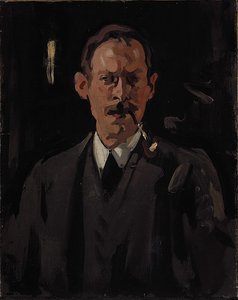
Samuel John Peploe
1871 - 1935 , United Kingdom
Quick Facts
- Full Name: Samuel John Peploe
- Nationality: Scottish
- Date Of Birth: 1871
- Date Of Death: 1935
- Place Of Birth: Edinburgh, United Kingdom
- Notable Artworks:
- Mrs. Peploe
- Still Life with Roses
- The Green Blouse
- Artistic Movement Or Style: Post-Impressionism, Colourist
- Artists Who Influenced This Artist:
- Rembrandt
- Frans Hals
- Manet
- Cézanne
- Artists Or Movements Influenced By This Artist: ['Scottish Colourists']
Related Articles

Mastering the English Landscape: The Top 25 John Constable Artworks
Experience the soul of English landscapes through John Constable's top 25 works. Explore the full collection online at OriginalUniqueArt.com.

Beyond Light & Color: Impressionism vs. Post-Impressionism for the Discerning Collector
Explore the nuances of Impressionism & Post-Impressionism with . Expert insights for collectors on style, investment, and acquiring museum-quality reproductions.

John Singer Sargent's 25 Masterpieces: Portraits & Beyond | OriginalUniqueArt
Explore 25 iconic John Singer Sargent paintings – from dazzling portraits to Impressionist landscapes. Discover the stories behind Madame X, El Jaleo & more! Find museum-quality art reproductions and elevate your home decor with OriginalUniqueArt.com.
Sir John Watson Gordon: A Study in Scottish Landscape Painting & Tonal Impressionism
Explore the captivating portraits of Sir John Watson Gordon, a leading Scottish master. Discover his evolution from neoclassical style to atmospheric Tonalism and influence on 19th-century British art. Learn about his iconic sitters & legacy.
John Duncan Fergusson: A Pioneer of Scottish Modernism & the Vibrant Colour of Post-Impressionist Influence
Explore the life & art of John Duncan Fergusson, a leading Scottish Colourist. Discover his vibrant Post-Impressionist paintings, influences, and legacy with expert insights from OriginalUniqueArt.