Preview
 Send
Send Share
Share
 Details

 Download
 Similars
 X-Ray
X-Ray Diaporama
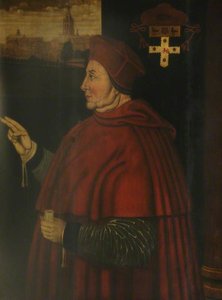
Edward VI (1537–1553)
 1607
1607 89.0 x 76.0 cm
 Christ's Hospital of Abingdon
 Read More
Giclée / Art Print
Museum-quality giclée or canvas print with fast production and flexible finish options. ( Buy Hand Made Painting Buy Image)




































Pick from our preset sizes that match the artwork's original proportions.

You may enter your own dimensions to fit a specific frame or space. If your selected size does not match the original image's proportions, we will either crop the artwork or extend the image with a mirrored or solid-fill edge. A digital mockup will be sent for your approval before production begins.
Please note that the on-screen preview does not reflect the actual cropping or extension. Only the mockup will accurately show the final composition.
While custom sizes are available, we recommend selecting a dimension from the predefined list to preserve the original proportions.
Worldwide Delivery () in 2 weeks instead of standard 4/5 weeks. (19 August)

Free Worldwide Express Shipping

High-Quality Linen Canvas

Full Shipping Insurance

Customs Tax Refund Guarantee

True Color Matching Guarantee

60-Day Return Policy (Defects Only)

100% Money-Back Guarantee

Bulk Discount Offer
 Glass option is only available in size under 110 CM

Edward VI (1537–1553)
Giclée / Art Print
Reproduction Size
-


Total Price
$ 81
Artist Biography
Sampson Strong: A Tudor Portraitist of Subtle Power
Sampson Strong (circa 1550 – 1611) wasn’t a name that immediately resonates through the halls of art history, yet his contribution to the visual landscape of Elizabethan and Jacobean England is quietly profound. He was a resident portrait painter at Oxford University, a position he held for decades, and more importantly, a master of capturing the nuanced power dynamics within the courtly circles of the time. Unlike the grand, theatrical portraits favored by some of his contemporaries, Strong’s work possesses an understated elegance—a careful observation of character, coupled with a masterful command of light, shadow, and texture that speaks volumes about the subjects he depicted. His legacy lies not in flamboyant displays of wealth or status, but in his ability to reveal the inner lives of those who held sway, offering glimpses into their personalities and ambitions through meticulously rendered faces and gestures.Early Life and Training – A Shadowy Beginning
The details surrounding Sampson Strong’s early life remain somewhat elusive, shrouded in the typical obscurity that often accompanies artists of his era. He was born around 1550, likely in East Anglia, though precise birth records are scarce. What is known is that he began his artistic training under Sir John Mason, a prominent diplomat and portraitist who served as ambassador to France and Spain during the reigns of Henry VIII and Edward VI. Mason’s influence on Strong was significant; he learned not just technical skills – the careful layering of oil paint, the precise rendering of fabrics and textures – but also an appreciation for observing human nature with keen insight. Strong's early career seems to have been marked by a period of relative anonymity, working as a retoucher for prints and possibly producing smaller commissions before securing his position at Oxford. This initial obscurity is perhaps not surprising; the 16th century was a time when artists often struggled to establish themselves, relying on patronage and word-of-mouth for their livelihood.Oxford Service and Patronage – A Quiet Reputation
Strong’s tenure at Oxford University proved remarkably long—spanning nearly three decades. He became a valued member of the university's artistic community, undertaking commissions from various colleges, including All Souls, New College, and Christ Church. His most notable work during this period involved painting founder’s portraits – images intended to honor those who established or supported the institutions. These weren’t mere likenesses; Strong imbued them with a sense of dignity and gravitas, reflecting the values of the colleges themselves. The portraits of figures like Cardinal Wolsey (a particularly striking example) demonstrate his ability to capture not just physical appearance but also the weight of ambition and the complexities of character. Crucially, he was employed by the governors of Christ’s Hospital, Abingdon, to decorate the hall with a series of portraits depicting founders, benefactors, and former students – a testament to his versatility and skill in adapting his style to different commissions.Style and Technique – The Language of Subtlety
Strong's artistic style is characterized by its restraint and psychological depth. He eschewed the overly dramatic poses and opulent settings favored by some of his contemporaries, opting instead for a more naturalistic approach. His portraits are often depicted in half-length or three-quarter views, allowing him to focus on the face—the key element of his art. He employed a subtle use of chiaroscuro – the interplay of light and shadow – to create a sense of volume and depth, highlighting the contours of the face and suggesting the inner life of the subject. His brushwork is meticulous yet fluid, conveying both precision and spontaneity. Notably, Strong was known for his ability to capture fleeting expressions—a flicker of amusement in an eye, a hint of melancholy in a smile – revealing the complexities of human emotion with remarkable sensitivity. He frequently worked on panel, utilizing tempera and oil paints to achieve rich colors and luminous effects.Legacy and Historical Significance – A Voice from the Court
Sampson Strong’s impact on English portraiture is often overlooked, yet his work offers a valuable window into the world of Tudor and Elizabethan court life. He wasn't simply recording appearances; he was interpreting character, revealing ambition, piety, and vulnerability within the confines of a painted surface. His portraits provide insights into the personalities of key figures—Cardinal Wolsey, Henry VI, and others – offering glimpses beyond their official roles to reveal their inner lives. While his name may not be as widely celebrated as those of Holbein or Hilliard, Sampson Strong’s quiet mastery of observation and subtle expression ensures that he remains a significant, if understated, figure in the history of English portraiture—a testament to the power of restraint and the enduring value of psychological insight. His work stands as a reminder that true artistry lies not always in grand gestures, but in the careful rendering of human truth.
sampson strong
1550 - 1611
Quick Facts
- Artistic Movement Or Style: Portraiture
- Date Of Birth: c.1550
- Date Of Death: 1611
- Full Name: Sampson Strong
- Nationality: Dutch
- Notable Artworks:
- Edward VI
- William of Wykeham
- Henry VI
- Place Of Birth: WahooArt, Netherlands