

 Send
Send Share
Share
 Details
 Guide
Guide

 Download
 Similars
 Diaporama
 Stats
StatsUntitled
 Other-None
- Abstract Expressionism
 1978
1978 121.0 x 121.0 cm
 de Young Museum
 Read More
The artwork displayed on this page is protected by copyright law, which means we cannot legally create or sell an identical reproduction. This protection is enforced under international agreements such as the Berne Convention and by national laws, including those outlined by the U.S. Copyright Law - Title 17.
As a respectful and legal alternative, we offer custom, hand-painted artworks inspired by the original. Our skilled and professional artists carefully study the original's style, mood, and artistic essence to create a new, unique piece that evokes the same feeling - while remaining an original creation in its own right.
This method fully complies with copyright regulations because it does not involve copying or duplicating the protected artwork. Instead, it is a creative reinterpretation - a new painting that is influenced by the original but not identical to it.
Hand Made Oil Reproduction
Hand-painted oil on canvas in your size and frame, made to order by our artists. ( Switch to Print Switch to Digital Image)




































Pick from our preset sizes that match the artwork's original proportions.

Type the width and the height you need, to fit your frame or your wall. This is hand-painted, so for a size with a different shape the artist can paint a bit more around the picture, or cut a bit — you choose. We send you a digital mockup to approve before the painting starts. The picture shown on this page does not show the real result — only the mockup does.
After order, OriginalUniqueArt.com team will email client for instructions and provide a mockup preview
Worldwide Delivery () in 3/4 weeks instead of standard 5 weeks. (27 October). No compromise on quality.

Free Worldwide Express Shipping

High-Quality Linen Canvas

Full Shipping Insurance

Customs Tax Refund Guarantee

True Color Matching Guarantee

100-Day Return Policy (Defects Only)

100% Money-Back Guarantee

Bulk Discount Offer
 Glass option is only available in size under 110 CM

Untitled
Reproduction Medium
Reproduction Size
-


Total Price
$ 300
Ruth Aiko Asawa’s “Untitled”: A Dance of Wire and Light
Ruth Aiko Asawa's "Untitled," created in 1978, isn’t merely a sculpture; it’s an invitation to lose oneself within a meticulously crafted universe of interwoven metal. This piece, born from the crucible of her challenging childhood – marked by wartime incarceration and subsequent resilience – embodies a profound exploration of form, space, and the very nature of perception. The work immediately draws the eye with its circularity, a deliberate echo of wholeness and cyclical processes, reflecting Asawa’s own journey through adversity and rebirth. The photograph captures a moment of intense light filtering through the delicate structure, highlighting the interplay between solidity and transparency that defines her signature style.
A Technique of Delicate Precision
Asawa's technique is both strikingly simple and remarkably complex. The sculpture is constructed entirely from meticulously woven wire – typically steel or aluminum – a material she favored for its malleability and ability to capture light. The process involved painstaking hand-weaving, creating an intricate network of radiating lines that converge at the center before branching outwards in a mesmerizing display. Notice how the individual wires, though seemingly fragile, collectively create a substantial form, demonstrating Asawa’s mastery of spatial relationships. The slight roughness of the wire's surface adds to the tactile quality of the piece, inviting viewers to imagine tracing its contours with their fingertips. The careful manipulation of light and shadow through this woven structure is key to the work’s visual impact.
Symbolism Woven into Form
Beyond its purely aesthetic qualities, “Untitled” resonates deeply with symbolic meaning. The circular design itself frequently represents wholeness, unity, or the cyclical nature of life – a powerful metaphor considering Asawa’s personal history and her commitment to social justice. The radiating lines can be interpreted as pathways of energy, expansion, or connection, mirroring the outward reach of her artistic vision. Some scholars suggest these lines evoke natural patterns found in organic forms, subtly referencing the landscapes of California where she grew up. The piece's inherent abstraction allows for multiple interpretations, inviting viewers to project their own experiences and emotions onto its surface.
A Legacy of Resilience and Innovation
Ruth Aiko Asawa’s life story is inextricably linked to her art. Born in 1926 on a California truck farm, she experienced the profound trauma of Japanese American internment during World War II, an event that profoundly shaped her artistic perspective. This experience fueled her lifelong dedication to social justice and her belief in the transformative power of art. Asawa’s work consistently explores themes of vulnerability, resilience, and the interconnectedness of all things. “Untitled,” created shortly after this formative period, stands as a testament to her ability to translate personal hardship into a uniquely beautiful and intellectually stimulating artistic expression. Her innovative use of wire – often considered an unconventional medium for sculpture – cemented her place as one of the most significant sculptors of the 20th century.
Bringing Asawa’s Vision Home
Reproductions of “Untitled” offer a remarkable opportunity to experience the artistry and emotional depth of this iconic work. The meticulous detail captured in high-quality reproductions allows you to appreciate the intricate weaving, the subtle variations in light and shadow, and the overall sense of dynamic equilibrium. Whether adorning a contemporary gallery or gracing a private residence, Asawa’s “Untitled” serves as a powerful reminder of the enduring legacy of resilience, innovation, and the transformative power of art.
Questions & Answers
How does "Untitled" by Ruth Aiko Asawa connect Abstract Expressionism to the artist's home country?
"Untitled" connects the Abstract Expressionism movement with United States of America through its creator's birthplace.
Are the colors of "Untitled" by Ruth Aiko Asawa vivid or muted?
"Untitled" by Ruth Aiko Asawa is recorded with a muted saturation and a monochromatic intensity.
What technique was used for "Untitled", and when was it created?
"Untitled" was made in 1978, in other.
Artist Biography
A Life Intertwined with Resilience and Art
Ruth Aiko Asawa, born in 1926 on a truck farm in Norwalk, California, emerged as one of the most innovative sculptors of the 20th century. Her story is not merely an artistic journey but a testament to resilience, shaped profoundly by the tumultuous events of her early life. The daughter of Japanese immigrants, Asawa experienced firsthand the injustice and pain of World War II when she and her family were forcibly removed from their home and incarcerated in Japanese American internment camps – first at Santa Anita racetrack, then Rohwer War Relocation Center in Arkansas. This experience, a deep wound inflicted by prejudice, would become an enduring undercurrent in her life and work, fueling a commitment to social justice and the belief that art should be accessible to all. Within the confines of the camp, amidst hardship and uncertainty, Asawa discovered a nascent artistic spark, receiving drawing lessons from fellow internees who were professional illustrators – a small act of defiance and creativity blossoming in the face of adversity.Formative Years and Artistic Awakening
Asawa’s path to becoming an artist was not straightforward. Initially intending to become a teacher, she enrolled at Milwaukee State Teachers College (now University of Wisconsin–Milwaukee) in 1943, only to encounter discrimination that prevented her from completing student teaching requirements due to her Japanese ancestry. This obstacle led her to Black Mountain College in North Carolina in 1946, an experimental and groundbreaking institution that proved pivotal in shaping her artistic vision. At Black Mountain, she found herself immersed in a vibrant community of artists and thinkers, including Josef Albers, whose teachings on color theory would deeply influence her work, and Buckminster Fuller, the visionary architect known for his geodesic domes. It was here, surrounded by intellectual curiosity and creative freedom, that Asawa began to explore sculpture. A transformative journey to Mexico in 1947 exposed her to traditional basket weaving techniques, a revelation that would become central to her artistic practice. She observed local artisans skillfully manipulating wire into intricate forms, sparking an idea that would define her signature style.The Dance of Wire and Light
Ruth Asawa is most celebrated for her mesmerizing looped-wire sculptures – delicate, ethereal creations that seem to defy gravity. These are not static objects but dynamic entities, capturing light and shadow in a constantly shifting interplay. She developed a unique technique of meticulously weaving wire into complex, floating structures resembling plants, marine life, or abstract forms. The process was intensely labor-intensive, requiring patience, precision, and an intuitive understanding of the material. Her early work also encompassed paintings and drawings, exploring abstraction and her deep connection to the natural world. The influence of Albers’ color theory is evident in how she utilized light and shadow within the wire sculptures, creating a sense of depth and movement. These weren't merely forms; they were explorations of space, transparency, and the very essence of line. They seemed to breathe with an organic life of their own.A Legacy of Public Art and Enduring Influence
Asawa’s artistic achievements extended beyond her studio practice. She was a passionate advocate for public art, believing that it should be accessible to everyone, enriching communities and fostering a sense of shared experience. This conviction led her to co-found the San Francisco School of the Arts in 1982, later renamed the Ruth Asawa San Francisco School of the Arts in 2010 – a testament to her dedication to arts education. Her work is now featured in prominent museum collections worldwide, including the Solomon R. Guggenheim Museum and the Whitney Museum of American Art. Fifteen of her wire sculptures are permanently displayed in the de Young Museum’s Hamon Observation Tower in San Francisco, offering visitors an immersive experience within her delicate creations. In 2020, the U.S. Postal Service honored Asawa with a series of ten stamps featuring her iconic wire sculptures, solidifying her place in American cultural history. Her impact resonates not only through her art but also through her unwavering commitment to making art an integral part of everyday life.A Lasting Impression
Ruth Asawa’s legacy extends far beyond the beauty and innovation of her sculptures. She challenged conventional notions of what sculpture could be, expanding the possibilities of materials and pushing the boundaries of artistic expression. Her story is one of overcoming adversity with grace and creativity, transforming personal trauma into a powerful force for positive change.- She demonstrated that art can be both deeply personal and universally accessible.
- Her commitment to arts education continues to inspire generations of artists and educators.
- Asawa’s work serves as a reminder of the importance of resilience, empathy, and the enduring power of the human spirit.

Ruth Aiko Asawa
1926 - 2013 , United States of America
Quick Facts
- Full Name: Ruth Aiko Asawa
- Nationality: American
- Date Of Birth: 1926
- Date Of Death: 2013
- Place Of Birth: Norwalk, United States of America
- Notable Artworks:
- Stem with Leaves
- Untitled
- Artistic Movement Or Style: Modernism, Sculpture
- Artists Who Influenced This Artist:
- Josef Albers
- Buckminster Fuller
Related Articles

Bronze Sculptures That Defined Art History | OriginalUniqueArt
Journey through art history with our Top 10 bronze sculptures! Explore masterpieces by Rodin, Michelangelo & more. Discover stories behind iconic statues and find museum-quality reproductions for your home decor at OriginalUniqueArt.com.
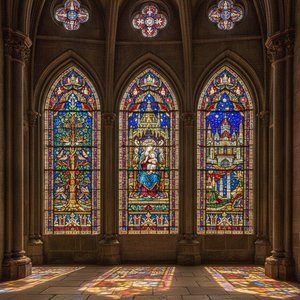
Luminous Masterpieces: The Captivating Beauty and Timeless Elegance of Stained Glass Artworks
Embark on a visual journey through the luminous world of stained glass art. Discover the exquisite craftsmanship, historical significance, and captivating beauty of masterworks from Art Nouveau to the Gothic era, curated for the discerning fine art enthusiast.

The Enduring Form: Exploring Themes & Techniques in Sculpture Across Historical Periods
Explore the rich history of sculpture from ancient masterpieces to contemporary innovations. Discover key techniques, influential artists & investment potential for discerning art collectors.

Bronze Age to Modern Masters: 10 Sculptures That Redefined Art | OriginalUniqueArt
Journey through art history with 10 legendary bronze sculptures – from Michelangelo's David to Rodin’s Thinker. Explore the stories, techniques & timeless beauty of these masterpieces. Find museum-quality reproductions & elevate your home decor on OriginalUniqueArt.com.

The Enduring Form: Sculpture Across History, Technique & Emotional Resonance
Explore the rich history of sculpture with OriginalUniqueArt. Discover key techniques, influential artists & investment potential for discerning collectors. Expert insights into valuing and collecting timeless masterpieces.


