Switch to Print
 Read More







































 For artworks or reproductions larger than 105 cm (approximately 41 inches) on any side, the frame will be shipped as a kit, disassembled. This method ensures safe delivery and prevents damage during transport.


A Vision of Serenity: The Soul of Provence
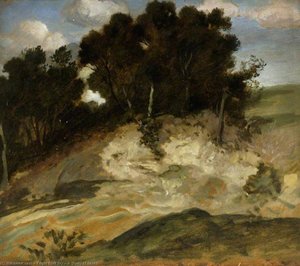
In the quietude of 1934, Roger Eliot Fry captured a moment of profound natural equilibrium in his masterpiece, Provençal Landscape. This evocative work transcends a mere depiction of geography, inviting the viewer into a sanctuary of light and texture. The scene unfolds across a rugged, mountainous terrain where the verdant vitality of green trees and dense bushes meets the ethereal weight of the heavens. As clouds drift heavily over the distant peaks, they cast a dramatic, shifting shadow across the landscape, creating a sense of movement that feels both fleeting and eternal. It is a painting that breathes with the rhythm of the earth, offering a window into a world where the boundaries between the terrestrial and the celestial are softly blurred.
The composition is a masterclass in depth and spatial harmony, designed to draw the eye on a contemplative journey through the French countryside. In the foreground, the meticulous detail of scattered foliage and textured bushes provides an anchor of intimacy, grounding the viewer in the immediate tactile reality of the terrain. As the gaze travels upward and inward, the middle ground reveals a rhythmic arrangement of trees that guide the perspective toward the monumental mountains in the distance. This layering technique creates a profound sense of scale, making the landscape feel expansive yet strangely accessible, a quality that makes this piece an extraordinary focal point for any sophisticated interior.
The Legacy of a Modern Visionary
To understand the technical brilliance of Provençal Landscape, one must consider the hand of Roger Eliot Fry, a man whose influence on British modernism was nothing short of revolutionary. As a central figure of the Bloomsbury Group and a tireless champion of Post-Impressionism, Fry possessed an unparalleled ability to look beyond the surface of a subject to find its formal essence. In this landscape, his training in the analytical observation of nature meets a poetic sensibility. The brushwork, while capturing the ruggedness of the mountains, maintains a fluid grace that speaks to his deep understanding of color relationships and structural form.
For the discerning collector or interior designer, this reproduction offers more than just aesthetic beauty; it offers a connection to an era of profound intellectual and artistic transformation. The painting’s palette—rich with organic greens, earthy tones, and the cool, atmospheric greys of the clouds—provides a versatile foundation for various decor styles, from classical elegance to contemporary minimalism. It serves as a silent, powerful presence in a room, evoking a sense of peace and historical depth. Owning such a piece is an invitation to experience the enduring majesty of Provence and the sophisticated legacy of one of the twentieth century's most vital artistic minds.
Questions & Answers
Is "Provençal Landscape" by Roger Eliot Fry in the public domain, and why?
The copyright status of "Provençal Landscape" - in the public domain - its copyright has expired - follows from the artist's death in 1934.
What technique was used for "Provençal Landscape" by Roger Eliot Fry?
The medium of "Provençal Landscape" by Roger Eliot Fry is oil. Reproductions aim to render the appearance of this technique.
What kind of colors does "Provençal Landscape" use?
"Provençal Landscape" by Roger Eliot Fry uses an earthy color palette. The palette summarizes the work's overall color character.
More about this painting
 Preview
 Send
Send Share
Share
 Details
 Guide
Guide

 Download
 Similars
 X-Ray
X-Ray Diaporama
 Q&A
Q&A Stats
Stats