Text size

() ·

A painting made for you, by hand

Showing at Tattersalls

Hand Made Oil Reproduction

Hand-painted oil on canvas in your size and frame, made to order by our artists. ( Switch to Print Switch to Digital Image)

Collectible Description

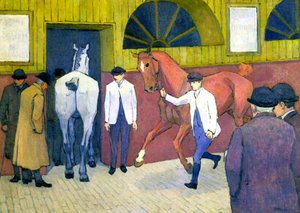
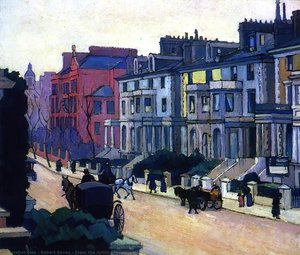
Robert Polhill Bevan's "Showing at Tattersalls" captures a vibrant horse race scene with dynamic figures and rich colors, reflecting the Camden Town Group’s innovative spirit.

Artist Biography

Robert Polhill Bevan (1865-1925): British painter & Camden Town Group founder. Pioneer of Fauvism, known for vibrant landscapes and scenes of everyday life.

from ·

Chapter 1

How large should it be?

Slide to change the size; the picture on the left shows the frame at its real width. The proportions of the original are kept.

Standard
custom
CM
INCH

Pick from our preset sizes that match the artwork's original proportions.

width
height

Type the width and the height you need, to fit your frame or your wall. This is hand-painted, so for a size with a different shape the artist can paint a bit more around the picture, or cut a bit — you choose. We send you a digital mockup to approve before the painting starts. The picture shown on this page does not show the real result — only the mockup does.

Chapter 2

How should it arrive?

Choose the edges of the stretched canvas

Choose your frame

Corner sample of the WhiteWrap canvas edge finish, stretched on solid wood bars
White $1
Corner sample of the BlurSideWrap canvas edge finish, stretched on solid wood bars
Blurside $1
Corner sample of the ExtendedWrap canvas edge finish, stretched on solid wood bars
Extended $1
Corner sample of the P118B picture frame: moulded polystyrene, 5 cm wide and 3 cm thick
P118B $10
Corner sample of the P118H picture frame: moulded polystyrene, 5 cm wide and 3 cm thick
P118H $10
Corner sample of the P118W picture frame: moulded polystyrene, 5 cm wide and 3 cm thick
P118W $10
Corner sample of the P438Z picture frame: moulded polystyrene, 5.5 cm wide and 3.5 cm thick
P438Z $10
Corner sample of the P508JH picture frame: moulded polystyrene, 7 cm wide and 3.5 cm thick
P508JH $12
Corner sample of the P508YH picture frame: moulded polystyrene, 7 cm wide and 3.5 cm thick
P508YH $12
Corner sample of the P805H picture frame: moulded polystyrene, 5 cm wide and 3.5 cm thick
P805H $10
Corner sample of the P805Z picture frame: moulded polystyrene, 5 cm wide and 3.5 cm thick
P805Z $10
Corner sample of the P919BZ picture frame: moulded polystyrene, 7 cm wide and 3.5 cm thick
P919BZ $10
Corner sample of the P919G picture frame: moulded polystyrene, 7 cm wide and 3.5 cm thick
P919G $10
Corner sample of the P919XJ picture frame: moulded polystyrene, 7 cm wide and 3.5 cm thick
P919XJ $10
Corner sample of the P959ZH picture frame: moulded polystyrene, 5 cm wide and 3 cm thick
P959ZH $10
Corner sample of the P968JZ picture frame: moulded polystyrene, 6 cm wide and 4 cm thick
P968JZ $12
Corner sample of the W106C picture frame: solid wood, 5 cm wide and 3 cm thick
W106C $8
Corner sample of the W218G picture frame: solid wood, 5 cm wide and 3 cm thick
W218G $10
Corner sample of the W218JH picture frame: solid wood, 5 cm wide and 3 cm thick
W218JH $8
Corner sample of the W218Y picture frame: solid wood, 5 cm wide and 3 cm thick
W218Y $10
Corner sample of the W307PJ picture frame: solid wood, 6 cm wide and 3 cm thick
W307PJ $10
Corner sample of the W316G picture frame: solid wood, 6 cm wide and 3 cm thick
W316G $10
Corner sample of the W316PJ picture frame: solid wood, 6 cm wide and 3 cm thick
W316PJ $8
Corner sample of the W316Y picture frame: solid wood, 6 cm wide and 3 cm thick
W316Y $10
Corner sample of the W398PJ picture frame: solid wood, 5 cm wide and 3 cm thick
W398PJ $8
Corner sample of the W4111J picture frame: solid wood, 6.5 cm wide and 3.5 cm thick
W4111J $10
Corner sample of the W500HY picture frame: solid wood, 7 cm wide and 5 cm thick
W500HY $15
Corner sample of the W500JH picture frame: solid wood, 7 cm wide and 5 cm thick
W500JH $15
Corner sample of the W692G picture frame: solid wood, 8 cm wide and 4 cm thick
W692G $12
Corner sample of the W849H picture frame: solid wood, 5 cm wide and 3 cm thick
W849H $8
Corner sample of the W940BG picture frame: solid wood, 7.5 cm wide and 4.5 cm thick
W940BG $15
Corner sample of the W953PJ picture frame: solid wood, 6 cm wide and 3.5 cm thick
W953PJ $8
Corner sample of the H24-GOLD picture frame: carved wood with gesso, 10 cm wide and 6 cm thick
H24-GOLD $30
Corner sample of the H24-SILVER picture frame: carved wood with gesso, 10 cm wide and 6 cm thick
H24-SILVER $30
Corner sample of the H36-GOLD picture frame: carved wood with gesso, 15 cm wide and 6.5 cm thick
H36-GOLD $45
Corner sample of the H36-SILVER picture frame: carved wood with gesso, 15 cm wide and 6.5 cm thick
H36-SILVER $45
Frame preview
Framed

Moulding: . Overall size with the frame: .

Chapter 3

Who paints it, and should anything change?

Examples of what can be changed: Replace face with customer photo; Add pet (e.g., replace cat with dog); Include hidden message in background; Change background landscape or elements.
After order, OriginalUniqueArt.com team will email client for instructions and provide a mockup preview

Worldwide Delivery () in 3/4 weeks instead of standard 5 weeks. (9 November). No compromise on quality.

Chapter 4

The finishing touches

A nameplate, as in a museum?

Engraved Bronze Plaque Details

This elegant plaque features the artist's name and the title of the artwork, finely engraved for a timeless presentation.

It is made from bronze with a refined, elegant finish. The text is precisely laser-engraved for a sharp and permanent result. Measuring 9x2 cm, the plaque is compact yet easy to read. It's built to be durable and scratch-resistant, offering a professional, museum-quality look. Mounting is simple thanks to the included adhesive backing.

Transparent Acrylic Plaque Details

The plaque includes essential engraved details such as the artist's name, the title of the artwork, the date it was created, the type of media used-like oil on canvas or watercolor-a brief description of the piece, and a QR code that links to the complete artwork information.

It is crafted from clear acrylic, offering a sleek, modern appearance. The text is UV-engraved in black to ensure strong visual contrast. With a size of 10x15 cm, it ensures optimal readability. It comes equipped with two metal hooks for secure wall mounting. The plaque is designed to be weather-resistant, making it suitable for various environments, and it includes interactive features that work seamlessly with smartphone scanning.

Black Acrylic Plaque Details

This elegant plaque includes engraved information such as the artist's name, the title of the artwork, the date it was created, the type of media used (like oil on canvas or watercolor), a short description of the artwork, and a QR code for quick access to more information.

The plaque itself is made from refined black acrylic with a premium finish. The text is laser-engraved in white for high contrast and readability. Its size is 10x15 cm, designed to be easy to read. It comes with two metal hooks for professional mounting. The design is sleek and fits any interior style. It is also weather-resistant and durable, with built-in digital integration for mobile compatibility.

A protective varnish?

When do you need it?

Chapter 5

Your painting, as you ordered it

Showing at Tattersalls

Reproduction Medium

Reproduction Size

-

Elite Senior Artist

More detail, finesse, and extra production time

-

Reproduction Frame

-

-

For artworks or reproductions larger than 105 cm (approximately 41 inches) on any side, the frame will be shipped as a kit, disassembled. This method ensures safe delivery and prevents damage during transport.

Professional assembly required - this is not a DIY product.
The kit must be assembled and the canvas stretched by an experienced professional framer, using wood glue (not supplied), a canvas stretching plier and clamps to hold the bars square while the glue dries. Incorrect assembly or uneven canvas tension can permanently damage the artwork and is not covered by our warranty.

  • All solid wood bars are included, precisely cut to size.

  • Assembled with the screws provided, plus wood glue for the corner joints, which is not supplied and must be sourced by your framer.

  • Professional tools are required and not included: a canvas stretching plier (tensioner) and clamps to hold the bars square while the glue dries.

Important:
The corner joints require wood glue, the bars must be held with clamps until the glue is fully dry, and tightening the canvas on the assembled frame requires a canvas stretching plier. None of these are included in the kit. Please arrange an experienced professional framer before ordering this size.

Nameplate

-

-

Protective Varnish

Glossy Varnish (enhances colors, protects against light/moisture)

-

Customize My Artwork

Examples of what can be changed: Replace face with customer photo; Add pet (e.g., replace cat with dog); Include hidden message in background; Change background landscape or elements.

-

Urgent

Worldwide Delivery () in 3/4 weeks instead of standard 5 weeks. (9 November). No compromise on quality.

-

Express Shipping

Worldwide Delivery () in 5 weeks. (16 November).

Included

Total Price

$ 300

Total Price $ 300

Glass option is only available in size under 110 CM

Included with every order

  • Free Worldwide Express Shipping
  • High-Quality Linen Canvas
  • Full Shipping Insurance
  • Customs Tax Refund Guarantee
  • True Color Matching Guarantee
  • 100-Day Return Policy (Defects Only)
  • 100% Money-Back Guarantee
  • Bulk Discount Offer

The Scene Unfolds: Robert Polhill Bevan’s Capturing of a Moment

Robert Polhill Bevan's "Showing at Tattersalls" isn’t merely a depiction of a horse race; it’s a meticulously crafted tableau vivant, a frozen moment brimming with the energy and social significance of Victorian England’s most prestigious racing event. Painted in 1919, during a period of significant artistic transition – moving away from the rigid formality of academic art towards the vibrant expressiveness of early modernism – the canvas offers a surprisingly intimate view of an elite world. The painting transports us to Tattersalls, not just as a venue for horse trading, but as a microcosm of Victorian society, a place where wealth, status, and tradition converged.

Bevan’s masterful use of light and shadow immediately draws the eye. A diffused daylight filters through the windows, casting long, dramatic shadows across the brick flooring, creating an atmospheric depth that anchors the scene. The figures are rendered with a remarkable degree of realism, yet imbued with a subtle sense of abstraction – their faces often obscured by hats or coats, suggesting a detachment and emphasizing the spectacle itself rather than individual personalities. This deliberate ambiguity invites the viewer to become part of the scene, observing from a slightly removed perspective.

A Camden Town Pioneer: Style and Technique

Bevan was a key figure in the Camden Town Group, a collective of artists who sought to capture the gritty realities of London life with bold colors and expressive brushstrokes. “Showing at Tattersalls” exemplifies this approach, though it’s arguably more restrained than some of his later works. The painting showcases Bevan's distinctive style – characterized by smooth planes of color, sharp outlines, and a deliberate flattening of perspective. He employs a technique reminiscent of Impressionism but pushes beyond mere representation, prioritizing the emotional impact of color and form.

  • Color Palette: A muted palette dominated by browns, grays, and ochres creates a sense of understated elegance and reflects the somber atmosphere of the scene.
  • Brushwork: Short, broken brushstrokes contribute to the painting’s dynamic energy, particularly in the depiction of the horses' musculature.
  • Composition: The carefully arranged figures and the receding perspective create a sense of depth and movement, guiding the viewer’s eye through the scene.

Historical Context & Symbolism

Tattersalls, established in 1763, held immense importance within British society. It was more than just a horse sales venue; it represented the pinnacle of equestrian achievement and a significant indicator of wealth and social standing. The presence of numerous spectators – gentlemen in top hats and coats, ladies elegantly dressed – underscores this status. The clock visible in the upper left corner subtly reinforces the importance of time and schedule within this world of racing and commerce.

Beyond the immediate depiction of a horse race, “Showing at Tattersalls” offers a glimpse into Victorian values: the emphasis on tradition, social hierarchy, and the pursuit of excellence. The meticulous detail given to the horses themselves – their powerful legs, flowing manes – speaks volumes about the value placed on these animals as symbols of status and prestige.

A Legacy of Modernism

Robert Polhill Bevan’s “Showing at Tattersalls” stands as a pivotal work in British art history. It represents a crucial bridge between Impressionism and modernism, demonstrating Bevan's willingness to experiment with color and form while retaining a strong sense of realism. His ability to capture the energy and atmosphere of a specific moment in time – a bustling scene within a world of privilege – solidifies his place as a pioneering figure in the development of British art at the turn of the 20th century. Reproductions of this painting offer a captivating window into a bygone era, inviting viewers to contemplate the enduring appeal of spectacle and social observation.

Questions & Answers

What is the overall mood of "Showing at Tattersalls" by Robert Polhill Bevan?

The overall mood of "Showing at Tattersalls" by Robert Polhill Bevan is calm. The mood describes the general atmosphere of the work.

What size and orientation are recommended for a print of "Showing at Tattersalls" by Robert Polhill Bevan?

For "Showing at Tattersalls", the recommended print setup is a medium size and a landscape orientation.

Is "Showing at Tattersalls" by Robert Polhill Bevan a light or a dark artwork?

The recorded values for "Showing at Tattersalls" by Robert Polhill Bevan are: balanced brightness, soft shadow luminance.

More about this painting

Preview AR preview Switch to Print Switch to Digital Image Send
Details Guide Add to favorites Download Similars X-Ray Diaporama Q&A Stats

In numbers

  • 1919the year it was painted
  • 29frames to choose from
  • standard sizes, in its own proportions
  • 5weeks to paint and deliver it
Robert Polhill Bevan

Robert Polhill Bevan

1865 - 1925, United Kingdom

Quick facts about Robert Polhill Bevan

  • Artistic Movement Or Style: Fauvism, Divisionism
  • Artists Or Movements Influenced By This Artist: ['Modern British Art']
  • Artists Who Influenced This Artist:
    • Paul Gauguin
    • Velázquez
    • Goya
    • Renoir
  • Date Of Birth: 1865
  • Date Of Death: 1925
  • Full Name: Robert Polhill Bevan
  • Nationality: British
  • Notable Artworks:
    • The Farmhouse
    • Ploughing on the Downs
    • Queen's Grove
    • The Cab Horse
  • Place Of Birth: Hove, United Kingdom

Artist Biography

A Pioneer of British Modernism: The Life and Art of Robert Polhill Bevan

Robert Polhill Bevan, born in Hove in 1865, occupies a pivotal yet often understated position within the narrative of early 20th-century British art. Emerging from a Quaker background steeped in banking connections – his parents were Richard Alexander Bevan and Laura Maria Polhill – he defied conventional expectations to become a daring innovator, a key figure in the transition from Impressionism towards more radical explorations of color and form. His journey was one of constant experimentation, absorbing influences from across Europe while forging a distinctly personal artistic vision that would profoundly impact the development of modern art in Britain. Bevan’s early education at Westminster School of Art under Fred Brown provided a solid foundation, but it was his subsequent studies at the Académie Julian in Paris that truly ignited his creative spark. There, he encountered a constellation of rising stars – Paul Sérusier, Pierre Bonnard, Édouard Vuillard, and Maurice Denis – artists who were challenging academic conventions and embracing new approaches to painting. These encounters proved formative, exposing Bevan to the principles of synthetism and laying the groundwork for his future explorations.

Brittany, Fauvism, and the Search for Pure Color

The impact of Brittany on Bevan’s artistic development cannot be overstated. Two significant journeys in 1890 and 1891 immersed him in the atmosphere of Pont-Aven, a small coastal town that had become a magnet for artists seeking an alternative to Parisian salon culture. The bold colors and simplified forms championed by artists like Gauguin resonated deeply with Bevan, influencing his early drawings and prints. However, it was around 1904 that Bevan truly began to distinguish himself, embarking on a path of experimentation with pure color that anticipated the emergence of Fauvism on the continent. His painting “Courtyard” stands as a remarkable example of this proto-Fauvist approach, demonstrating a willingness to abandon naturalistic representation in favor of expressive chromatic intensity – a boldness that set him apart from many of his British contemporaries. This exploration didn’t remain static; Bevan subsequently adopted a divisionist or pointillist technique, evident in works like “Ploughing on the Downs” and “The Turn-Rice Plough,” showcasing his commitment to exploring different methods of applying color and capturing light. Throughout this period, the influence of masters such as Velázquez and Goya remained palpable, alongside more immediate guidance from Renoir regarding the depiction of horses – a testament to Bevan’s broad artistic curiosity and willingness to learn from diverse sources.

Collective Visions: The Camden Town Group and Beyond

Bevan was not an artist who worked in isolation. He actively sought connection with like-minded individuals, playing a crucial role in the formation of several influential art groups. As a founding member of the Camden Town Group, he joined forces with artists determined to depict modern urban life and challenge established artistic norms. This collective spirit extended to his involvement with the London Group and the Cumberland Market Group, further demonstrating his commitment to progressive artistic movements. A particularly significant relationship was forged in 1908 when Bevan joined Walter Sickert’s Fitzroy Street group. Sickert's encouragement to focus on everyday subjects proved invaluable, steering Bevan towards a more grounded and socially engaged approach to art. The first Allied Artists’ Association exhibition in 1908 provided another important platform for Bevan, introducing him to the burgeoning world of international modernism – most notably, through his encounter with Wassily Kandinsky. These affiliations were not merely social; they fostered a dynamic exchange of ideas that shaped Bevan's artistic trajectory and contributed to the broader evolution of British art.

Landscapes, Urban Scenes, and Lasting Legacy

While Bevan’s subject matter was diverse, encompassing portraits – including notable depictions of his wife, Stanislawa de Karłowska – and urban scenes documenting the decline of the horse cab trade (“The Cab Horse”), he is perhaps best known for his landscapes. His paintings of Sussex and Brittany are imbued with a vibrant energy, capturing the essence of rural life through expressive brushwork and bold color palettes. Works like “In the Downs near Lewes,” “The Chestnut Tree,” and “Landscape in the Blackdown Hills, Devon” exemplify this mastery, showcasing his ability to convey both the physical beauty and emotional resonance of the natural world. Robert Polhill Bevan’s legacy extends far beyond his individual paintings. He is rightfully recognized as a pioneer of modern British art, particularly for his early adoption of Fauvist principles and his fearless experimentation with color. His influence on subsequent generations of painters is undeniable, and his contribution to the Camden Town Group was instrumental in shaping the development of modern art in Britain. A retrospective exhibition at Colnaghi’s in 1961 served as a crucial moment of recognition, solidifying his place in art history and ensuring that his innovative spirit continues to inspire artists today. He remains a vital figure for understanding the complex evolution of British painting in the early twentieth century.

Quick Facts

  • Artistic style: Fauvism, Camden Town Group
  • Notable elements or techniques: Angular style, pure color
  • Movement: Early 20th Century
  • Dimensions: 58 x 71 cm
  • Year: 1919
  • Influences:
    • Pissarro
    • Van Gogh

Art Quiz

There is only one correct answer for each question.

Question 1:
What is the primary subject matter depicted in ‘Showing at Tattersalls’?
Question 2:
Which art movement is most closely associated with Robert Polhill Bevan’s style, as evidenced by this painting?
Question 3:
In what year was ‘Showing at Tattersalls’ painted?
Question 4:
Robert Polhill Bevan was a member of which influential British art group?
Question 5:
What does the presence of a clock in the painting suggest?