Preview
 Send
Send Share
Share
 Details

 Download
 Similars
 X-Ray
X-Ray Diaporama
 Stats
StatsMallarme's Swan
 Acrylic On Canvas
- WallArt
- Abstract Expressionism
 1944
1944 111.0 x 90.0 cm
 Cleveland Museum of Art
 Read More
Hand Made Oil Reproduction
Hand-painted oil on canvas in your size and frame, made to order by our artists. ( Switch to Print Switch to Digital Image)




P118B $10

P118H $10

P118W $10

P438Z $10

P508JH $12

P508YH $12

P805H $10

P805Z $10

P919BZ $10

P919G $10

P919XJ $10

P959ZH $10

P968JZ $12

W106C $8

W218G $10

W218JH $8

W218Y $10

W307PJ $10

W316G $10

W316PJ $8

W316Y $10

W398PJ $8

W4111J $10

W500HY $15

W500JH $15

W692G $12

W849H $8

W940BG $15

W953PJ $8




Pick from our preset sizes that match the artwork's original proportions.

You may enter your own dimensions to fit a specific frame or space. If your selected size does not match the original image's proportions, we will either crop the artwork or extend the painting with additional hand-painted elements. A digital mockup will be sent for your approval before production begins.
Please note that the on-screen preview does not reflect the actual cropping or extension. Only the mockup will accurately show the final composition.
While custom sizes are available, we recommend selecting a dimension from the predefined list to preserve the original proportions.
After order, OriginalUniqueArt.com team will email client for instructions and provide a mockup preview
Worldwide Delivery () in 3/4 weeks instead of standard 5 weeks. (19 September). No compromise on quality.

Free Worldwide Express Shipping

High-Quality Linen Canvas

Full Shipping Insurance

Customs Tax Refund Guarantee

True Color Matching Guarantee

100-Day Return Policy (Defects Only)

100% Money-Back Guarantee

Bulk Discount Offer
 Glass option is only available in size under 110 CM

Mallarme's Swan
Reproduction Medium
Reproduction Size
-


Total Price
$ 300
A Dance of Grief and Light: Robert Motherwell’s “Mallarme's Swan”
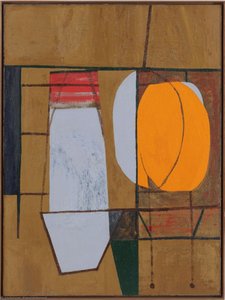
Robert Motherwell’s “Mallarme's Swan,” painted in 1944, isn’t merely a visual composition; it’s an embodiment of profound emotion rendered through the deliberate chaos of Abstract Expressionism. This large-scale work, currently residing within the esteemed collection of The Cleveland Museum of Art, offers a glimpse into the artist’s deeply personal engagement with literature and his exploration of themes surrounding loss, memory, and the ephemeral nature of existence. The painting immediately commands attention not through sharp lines or defined forms, but through an evocative interplay of color and texture—a swirling vortex of blues, yellows, oranges, and whites that feels both turbulent and strangely serene.
At its core, “Mallarme's Swan” is a tribute to the French poet Stéphane Mallarmé (1842–1898), a key figure in Symbolism. Motherwell, deeply influenced by Mallarmé’s poetic explorations of language, myth, and the subconscious, sought to translate the poet’s fragmented and evocative imagery into visual form. The swan itself—a recurring motif in Mallarmé's work—represents grace, beauty, and a fleeting, almost melancholic existence. Motherwell masterfully captures this duality through his technique: he employs collage elements – tearing and layering paper – to create a surface that is simultaneously raw and refined, suggesting the delicate balance between order and disintegration.
The Language of Color and Texture
Technically, “Mallarme's Swan” exemplifies Motherwell’s mature Abstract Expressionist style. He abandons traditional representational techniques, instead focusing on the expressive potential of color and texture. The dominant blues evoke a sense of sadness and contemplation, while the bursts of yellow and orange inject moments of vibrant energy and fleeting joy. The layering of paper creates a rich, tactile surface—a visual metaphor for memory itself: fragmented, layered, and constantly shifting as we recall the past. Notice how he uses circular forms – prominent in the central area – to represent cycles, both of life and death, mirroring Mallarmé’s cyclical imagery.
The inclusion of a bowl on the right side adds an intriguing layer of symbolism. Bowls are often associated with containment, nourishment, or even offering—suggesting a desire to hold onto memories or perhaps a recognition of the limitations of human understanding in the face of loss. It’s a subtle yet powerful element that deepens the painting's emotional resonance.
Historical Context and Artistic Influence
“Mallarme's Swan” was created during a period of immense upheaval—the Second World War cast a long shadow over Europe, and artists were grappling with themes of trauma, displacement, and uncertainty. Motherwell’s work reflects this broader cultural context, expressing a sense of grief and disillusionment while simultaneously pushing the boundaries of artistic expression. He was part of a generation of American artists who rejected European traditions and forged their own path in abstraction, profoundly influencing subsequent generations of artists.
The painting's connection to collage is particularly significant. Motherwell embraced this technique as a way to disrupt traditional notions of authorship and control, allowing for chance encounters between disparate materials—a process that mirrored the fragmented nature of memory and experience. His use of collage aligns him with other artists like Kurt Schwitters and Pablo Picasso, who similarly explored the possibilities of combining different media.
A Legacy of Emotion
“Mallarme's Swan” is more than just a painting; it’s an invitation to contemplate profound questions about life, loss, and the enduring power of art. Its evocative colors, textured surface, and subtle symbolism combine to create a deeply moving experience for the viewer. The work speaks to our shared human capacity for grief and remembrance, reminding us that even in the face of darkness, there is always room for beauty and grace—a sentiment perfectly embodied by the swan itself.
Artist Biography
Robert Motherwell: A Legacy of Grief and Bold Vision
Robert Motherwell (January 24, 1915 – July 16, 1991) stands as one of the most influential figures in American Abstract Expressionism, a movement that irrevocably altered the course of twentieth-century art. Born in Aberdeen, Washington—a town steeped in Scottish heritage—Motherwell’s early life was marked by asthma and a profound connection to the Pacific Northwest landscape, shaping his artistic sensibility from its inception. His father, Robert Burns Motherwell II, a banker with aspirations for California, instilled in him a determination that would propel him through academic pursuits and ultimately define his creative trajectory.- Early Education & Influences: Motherwell’s formative years were spent at Stanford University where he immersed himself in philosophy alongside fellow modernist Arthur Oncken Lovejoy and David Wite Prall. This intellectual grounding profoundly impacted his artistic vision, fostering a fascination with literature—particularly Mallarmé, Joyce, Poe, and Paz—that would permeate his oeuvre.
- The Surrealist Encounter: A pivotal moment arrived in 1940 when Motherwell relocated to New York City and enrolled at Columbia University under Meyer Shapiro’s guidance. Shapiro introduced him to the vibrant world of Parisian Surrealists – Max Ernst, André Breton, Wolfgang Paalen—and crucially, encouraged him to embrace “automatic” drawing as a method for accessing the subconscious.
The Elegies Series and Formal Innovation
Motherwell’s artistic breakthrough came in 1949 with the commencement of his iconic *Elegies to the Spanish Republic* series—a monumental undertaking comprising over one hundred oil paintings and numerous sketches. This series, born from a deep engagement with the political turmoil surrounding Francoist Spain, represents Motherwell's most enduring contribution to art history. The Elegies are characterized by their stark simplicity: densely packed black ink blots on white paper, meticulously crafted to convey profound emotional resonance. These canvases embody his mastery of formal innovation—a deliberate rejection of traditional perspective and a commitment to exploring the expressive potential of gesture and texture.- Technique & Composition: Motherwell’s technique involved layering ink blots onto paper, creating textured surfaces that seemed to pulsate with latent energy. The resulting compositions are deliberately ambiguous, inviting viewers to contemplate themes of loss, grief, and existential contemplation.
- Influence on Contemporaries: His work exerted considerable influence on fellow Abstract Expressionists like Helen Frankenthaler and Jackson Pollock, fostering a dialogue about the role of emotion in artistic expression.
Beyond Elegies: Exploring Landscape and Collage
While the Elegies series cemented Motherwell’s reputation as a master of emotive abstraction, his artistic exploration extended beyond this singular project. He consistently revisited themes of landscape—particularly the Californian hills—drawing inspiration from the expansive vistas that nurtured his childhood imagination. Furthermore, he experimented with collage techniques, incorporating found materials into his canvases to create layered textures and visual narratives. His sketchbook from Mexico—a collaborative effort with Roberto Matta—demonstrates a shift toward more spontaneous graphic cadences, reflecting Paalen’s influence on his artistic process.- Mexican Sketchbook: The sketchbook captures the essence of Paalen's studio environment and reflects Motherwell's evolving approach to drawing, moving away from analytical observation towards intuitive gesture.
- Collaborations & Artistic Dialogue: His collaborations with artists like Matta and Paalen fostered a dynamic artistic dialogue that enriched his oeuvre and broadened the scope of Abstract Expressionism.
Legacy and Historical Significance
Robert Motherwell’s legacy transcends mere stylistic innovation; he articulated a profound philosophical stance on art's capacity to confront mortality and grapple with complex emotional realities. His unwavering dedication to exploring these themes—coupled with his masterful command of formal language—established him as one of the foremost voices of his generation, securing his place among the titans of twentieth-century art. He died in Provincetown, Massachusetts in 1991, leaving behind a body of work that continues to inspire artists and scholars alike, ensuring his enduring influence on the history of modern art.
Robert Motherwell
1974 - 1991 , United States of America
Quick Facts
- Artistic Movement Or Style: Abstract Expressionism
- Artists Or Movements Influenced By This Artist:
- Jackson Pollock
- Helen Frankenthaler
- Artists Who Influenced This Artist:
- Mallarmé
- James Joyce
- Edgar Allan Poe
- Octavio Paz
- Date Of Birth: January 24, 1915
- Date Of Death: July 16, 1991
- Full Name: Robert Burns Motherwell
- Nationality: American
- Notable Artworks: ['Elegies to the Spanish Republic']
- Place Of Birth: Aberdeen, Washington
Related Articles

Kandinsky's Masterpieces: 25 Paintings That Define Abstract Art | OriginalUniqueArt
Journey through Wassily Kandinsky's 25 most iconic abstract paintings. Explore his revolutionary use of color, form & spiritual expressionism. Find museum-quality Kandinsky reproductions and elevate your home decor with OriginalUniqueArt.com. Discover all masterpieces on OriginalUniqueArt.com!

Abstract Expressionism's 10 Defining Masterpieces |
Explore 10 defining Abstract Expressionism masterpieces by Pollock, Rothko & de Kooning. Discover the stories behind these iconic paintings and find museum-quality art reproductions to elevate your home decor on .

Geometric Abstraction's 10 Defining Masterpieces | Art for Your Home - OriginalUniqueArt
Explore 10 defining masterpieces of Geometric Abstraction! Discover Kandinsky, Mondrian & Malevich’s iconic works. Find museum-quality art reproductions and curated decor ideas to elevate your home at OriginalUniqueArt.com.
Lyrical Abstraction: The Emotional Power of Color and Form in Modern Art History
Explore the profound emotional depth of Lyrical Abstraction. Discover how masters like Raymond Parker used color and form to bridge Impressionism and Abstract Expressionism. Learn about this pivotal movement through our expert-led art history guide.
Beyond Representation: Exploring the Emotional Landscape of Abstract Expressionism
Explore the profound emotional world of Abstract Expressionism with OriginalUniqueArt. Discover key artists like Pollock & Rothko, learn about collecting, and find museum-quality reproductions to inspire your space.