Text size

() ·

A painting made for you, by hand

Old Johnnie's Wife

Hand Made Oil Reproduction

Hand-painted oil on canvas in your size and frame, made to order by our artists. ( Switch to Print Switch to Digital Image)

Collectible Description

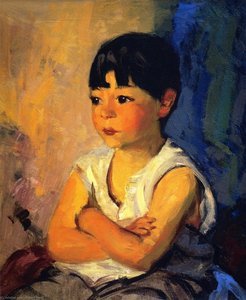
Robert Henri's 'Old Johnnie’s Wife' (1913) is a poignant portrait capturing an older woman's dignity & quiet strength, emblematic of the Ashcan School's realism.

Artist Biography

Robert Henri (1865-1929) was a pivotal figure of the Ashcan School, championing American Realism & capturing everyday life with striking honesty. Influenced artists like Edward Hopper.

from ·

Chapter 1

How large should it be?

Slide to change the size; the picture on the left shows the frame at its real width. The proportions of the original are kept.

Standard
custom
CM
INCH

Pick from our preset sizes that match the artwork's original proportions.

width
height

Type the width and the height you need, to fit your frame or your wall. This is hand-painted, so for a size with a different shape the artist can paint a bit more around the picture, or cut a bit — you choose. We send you a digital mockup to approve before the painting starts. The picture shown on this page does not show the real result — only the mockup does.

Chapter 2

How should it arrive?

Choose the edges of the stretched canvas

Choose your frame

Corner sample of the WhiteWrap canvas edge finish, stretched on solid wood bars
White $1
Corner sample of the BlurSideWrap canvas edge finish, stretched on solid wood bars
Blurside $1
Corner sample of the ExtendedWrap canvas edge finish, stretched on solid wood bars
Extended $1
Corner sample of the P118B picture frame: moulded polystyrene, 5 cm wide and 3 cm thick
P118B $10
Corner sample of the P118H picture frame: moulded polystyrene, 5 cm wide and 3 cm thick
P118H $10
Corner sample of the P118W picture frame: moulded polystyrene, 5 cm wide and 3 cm thick
P118W $10
Corner sample of the P438Z picture frame: moulded polystyrene, 5.5 cm wide and 3.5 cm thick
P438Z $10
Corner sample of the P508JH picture frame: moulded polystyrene, 7 cm wide and 3.5 cm thick
P508JH $12
Corner sample of the P508YH picture frame: moulded polystyrene, 7 cm wide and 3.5 cm thick
P508YH $12
Corner sample of the P805H picture frame: moulded polystyrene, 5 cm wide and 3.5 cm thick
P805H $10
Corner sample of the P805Z picture frame: moulded polystyrene, 5 cm wide and 3.5 cm thick
P805Z $10
Corner sample of the P919BZ picture frame: moulded polystyrene, 7 cm wide and 3.5 cm thick
P919BZ $10
Corner sample of the P919G picture frame: moulded polystyrene, 7 cm wide and 3.5 cm thick
P919G $10
Corner sample of the P919XJ picture frame: moulded polystyrene, 7 cm wide and 3.5 cm thick
P919XJ $10
Corner sample of the P959ZH picture frame: moulded polystyrene, 5 cm wide and 3 cm thick
P959ZH $10
Corner sample of the P968JZ picture frame: moulded polystyrene, 6 cm wide and 4 cm thick
P968JZ $12
Corner sample of the W106C picture frame: solid wood, 5 cm wide and 3 cm thick
W106C $8
Corner sample of the W218G picture frame: solid wood, 5 cm wide and 3 cm thick
W218G $10
Corner sample of the W218JH picture frame: solid wood, 5 cm wide and 3 cm thick
W218JH $8
Corner sample of the W218Y picture frame: solid wood, 5 cm wide and 3 cm thick
W218Y $10
Corner sample of the W307PJ picture frame: solid wood, 6 cm wide and 3 cm thick
W307PJ $10
Corner sample of the W316G picture frame: solid wood, 6 cm wide and 3 cm thick
W316G $10
Corner sample of the W316PJ picture frame: solid wood, 6 cm wide and 3 cm thick
W316PJ $8
Corner sample of the W316Y picture frame: solid wood, 6 cm wide and 3 cm thick
W316Y $10
Corner sample of the W398PJ picture frame: solid wood, 5 cm wide and 3 cm thick
W398PJ $8
Corner sample of the W4111J picture frame: solid wood, 6.5 cm wide and 3.5 cm thick
W4111J $10
Corner sample of the W500HY picture frame: solid wood, 7 cm wide and 5 cm thick
W500HY $15
Corner sample of the W500JH picture frame: solid wood, 7 cm wide and 5 cm thick
W500JH $15
Corner sample of the W692G picture frame: solid wood, 8 cm wide and 4 cm thick
W692G $12
Corner sample of the W849H picture frame: solid wood, 5 cm wide and 3 cm thick
W849H $8
Corner sample of the W940BG picture frame: solid wood, 7.5 cm wide and 4.5 cm thick
W940BG $15
Corner sample of the W953PJ picture frame: solid wood, 6 cm wide and 3.5 cm thick
W953PJ $8
Corner sample of the H24-GOLD picture frame: carved wood with gesso, 10 cm wide and 6 cm thick
H24-GOLD $30
Corner sample of the H24-SILVER picture frame: carved wood with gesso, 10 cm wide and 6 cm thick
H24-SILVER $30
Corner sample of the H36-GOLD picture frame: carved wood with gesso, 15 cm wide and 6.5 cm thick
H36-GOLD $45
Corner sample of the H36-SILVER picture frame: carved wood with gesso, 15 cm wide and 6.5 cm thick
H36-SILVER $45
Frame preview
Framed

Moulding: . Overall size with the frame: .

Chapter 3

Who paints it, and should anything change?

Examples of what can be changed: Replace face with customer photo; Add pet (e.g., replace cat with dog); Include hidden message in background; Change background landscape or elements.
After order, OriginalUniqueArt.com team will email client for instructions and provide a mockup preview

Worldwide Delivery () in 3/4 weeks instead of standard 5 weeks. (6 November). No compromise on quality.

Chapter 4

The finishing touches

A nameplate, as in a museum?

Engraved Bronze Plaque Details

This elegant plaque features the artist's name and the title of the artwork, finely engraved for a timeless presentation.

It is made from bronze with a refined, elegant finish. The text is precisely laser-engraved for a sharp and permanent result. Measuring 9x2 cm, the plaque is compact yet easy to read. It's built to be durable and scratch-resistant, offering a professional, museum-quality look. Mounting is simple thanks to the included adhesive backing.

Transparent Acrylic Plaque Details

The plaque includes essential engraved details such as the artist's name, the title of the artwork, the date it was created, the type of media used-like oil on canvas or watercolor-a brief description of the piece, and a QR code that links to the complete artwork information.

It is crafted from clear acrylic, offering a sleek, modern appearance. The text is UV-engraved in black to ensure strong visual contrast. With a size of 10x15 cm, it ensures optimal readability. It comes equipped with two metal hooks for secure wall mounting. The plaque is designed to be weather-resistant, making it suitable for various environments, and it includes interactive features that work seamlessly with smartphone scanning.

Black Acrylic Plaque Details

This elegant plaque includes engraved information such as the artist's name, the title of the artwork, the date it was created, the type of media used (like oil on canvas or watercolor), a short description of the artwork, and a QR code for quick access to more information.

The plaque itself is made from refined black acrylic with a premium finish. The text is laser-engraved in white for high contrast and readability. Its size is 10x15 cm, designed to be easy to read. It comes with two metal hooks for professional mounting. The design is sleek and fits any interior style. It is also weather-resistant and durable, with built-in digital integration for mobile compatibility.

A protective varnish?

When do you need it?

Chapter 5

Your painting, as you ordered it

Old Johnnie's Wife

Reproduction Medium

Reproduction Size

-

Elite Senior Artist

More detail, finesse, and extra production time

-

Reproduction Frame

-

-

For artworks or reproductions larger than 105 cm (approximately 41 inches) on any side, the frame will be shipped as a kit, disassembled. This method ensures safe delivery and prevents damage during transport.

Professional assembly required - this is not a DIY product.
The kit must be assembled and the canvas stretched by an experienced professional framer, using wood glue (not supplied), a canvas stretching plier and clamps to hold the bars square while the glue dries. Incorrect assembly or uneven canvas tension can permanently damage the artwork and is not covered by our warranty.

  • All solid wood bars are included, precisely cut to size.

  • Assembled with the screws provided, plus wood glue for the corner joints, which is not supplied and must be sourced by your framer.

  • Professional tools are required and not included: a canvas stretching plier (tensioner) and clamps to hold the bars square while the glue dries.

Important:
The corner joints require wood glue, the bars must be held with clamps until the glue is fully dry, and tightening the canvas on the assembled frame requires a canvas stretching plier. None of these are included in the kit. Please arrange an experienced professional framer before ordering this size.

Nameplate

-

-

Protective Varnish

Glossy Varnish (enhances colors, protects against light/moisture)

-

Customize My Artwork

Examples of what can be changed: Replace face with customer photo; Add pet (e.g., replace cat with dog); Include hidden message in background; Change background landscape or elements.

-

Urgent

Worldwide Delivery () in 3/4 weeks instead of standard 5 weeks. (6 November). No compromise on quality.

-

Express Shipping

Worldwide Delivery () in 5 weeks. (13 November).

Included

Total Price

$ 300

Total Price $ 300

Glass option is only available in size under 110 CM

Included with every order

  • Free Worldwide Express Shipping
  • High-Quality Linen Canvas
  • Full Shipping Insurance
  • Customs Tax Refund Guarantee
  • True Color Matching Guarantee
  • 100-Day Return Policy (Defects Only)
  • 100% Money-Back Guarantee
  • Bulk Discount Offer

A Portrait of Quiet Dignity: Robert Henri’s “Old Johnnie’s Wife”

Robert Henri's "Old Johnnie’s Wife," painted in 1913, isn’t merely a portrait; it’s a carefully constructed meditation on time, experience, and the quiet dignity of an ordinary life. Created during a pivotal moment in American art—the burgeoning Ashcan School movement—this oil painting offers a glimpse into Henri's commitment to depicting the realities of everyday existence with unflinching honesty and profound empathy. The work resides within the Indianapolis Museum of Art, a testament to its enduring artistic merit and historical significance.

Henri, a key figure in this realist school, rejected the idealized subjects and polished techniques favored by academic art institutions. Instead, he sought inspiration from the streets of New York City, capturing the lives of working-class individuals with remarkable sensitivity. “Old Johnnie’s Wife” embodies this ethos perfectly. The subject, identified as Biddy Commons—a woman connected to a fisherman on Ireland's rugged coast—is presented not as a glamorous icon but as a weathered and wise elder, her face etched with the stories of a life lived outdoors.

The Language of Color and Texture

Technically, the painting is a masterclass in observation. Henri’s brushwork is both energetic and deliberate; thick impasto strokes build up layers of color, creating a palpable sense of texture that invites the viewer to reach out and touch the fabric of her shawl or the warmth of her skin. The palette is rich and earthy—deep blues, reds, and browns—contrasting sharply with the dark background, which serves to isolate and elevate the subject. This strategic use of light and shadow not only defines the figure but also imbues it with a sense of depth and dimensionality.

Notice particularly the subtle play of color on her face – the rosy cheeks, the delicate highlights around her eyes. Henri doesn’t shy away from depicting the marks of age; instead, he celebrates them as evidence of a life well-lived. The blue scarf, draped gracefully around her neck, adds a touch of understated elegance and hints at a connection to her maritime heritage.

A Window into the Ashcan School

“Old Johnnie’s Wife” is deeply rooted in the context of the Ashcan School. This movement sought to break away from traditional artistic conventions and portray American life with a raw, unvarnished honesty. Henri's subjects were often marginalized figures—immigrants, laborers, and the poor—and his paintings captured their struggles and resilience with remarkable compassion. The painting reflects the broader themes explored by the Ashcan School: the dignity of labor, the beauty of everyday life, and the importance of social justice.

Interestingly, Henri’s interest in this particular subject stemmed from a personal connection to Ireland. He spent summers on Achill Island, immersing himself in the lives of its inhabitants and capturing their spirit on canvas. This intimate knowledge informs the painting's authenticity and emotional resonance.

Symbolism and Emotional Impact

Beyond its technical brilliance, “Old Johnnie’s Wife” is imbued with a quiet sense of melancholy and contemplation. The woman’s gaze—direct yet gentle—invites the viewer to share in her thoughts and feelings. There's an unspoken story behind her eyes, hinting at a life filled with both hardship and joy. The shawl, worn and slightly faded, symbolizes resilience and endurance – a tangible reminder of the passage of time.

Ultimately, Henri’s portrait transcends its subject matter to become a universal meditation on aging, memory, and the enduring beauty of the human spirit. It's a painting that rewards repeated viewing, revealing new layers of meaning with each encounter. A reproduction of this piece would bring a touch of timeless elegance and quiet contemplation to any space.

Questions & Answers

What level of contrast does "Old Johnnie's Wife" by Robert Henri show?

The light-dark contrast of "Old Johnnie's Wife" is recorded as gentle. Contrast describes how strongly light and dark areas differ.

What atmosphere does "Old Johnnie's Wife" have?

The overall mood of "Old Johnnie's Wife" by Robert Henri is calm. The mood describes the general atmosphere of the work.

Where does "Old Johnnie's Wife" stand among Robert Henri's recurring subjects?

"Old Johnnie's Wife" depicts portrait, elderly woman, american realism, dignity, simplicity, rural life, texture, composition, while Robert Henri's recorded themes are ashcan school realism, urban life, american social commentary, empathy, henri’s realist style, observation, irish subject matter, rural life. Comparing the two shows how the work relates to the artist's usual subjects.

More about this painting

Preview AR preview Switch to Print Switch to Digital Image Send
Details Guide Add to favorites Download Similars X-Ray Diaporama Q&A Stats

In numbers

  • 1913the year it was painted
  • 29frames to choose from
  • standard sizes, in its own proportions
  • 5weeks to paint and deliver it
Robert Henri

Robert Henri

1865 - 1929, United States of America

Quick facts about Robert Henri

  • Full Name: Robert Henri
  • Nationality: American
  • Date Of Birth: 1865
  • Date Of Death: 1929
  • Place Of Birth: Cincinnati, United States of America
  • Notable Artworks:
    • Woman in Manteau
    • La Neige (The Snow)
    • O in Black with Scarf
    • Sissy in Yellow
  • Artistic Movement Or Style: Ashcan School, Realism
  • Artists Who Influenced This Artist:
    • William Bouguereau
    • Francois Millet
  • Artists Or Movements Influenced By This Artist:
    • Edward Hopper
    • The Eight

Artist Biography

A Turbulent Genesis: The Early Life of Robert Henri

Robert Henri, born Robert Henry Cozad in Cincinnati, Ohio, in 1865, carried within him from the outset a sense of displacement and reinvention that would profoundly shape both his life and art. His childhood was far from idyllic; shadowed by the volatile relationship between his father, John Jackson Cozad—a man of ambition and risk as a gambler and real estate developer—and his mother, Theresa Gatewood Cozad. This instability culminated in a dramatic event in 1882: a fatal shooting over a land dispute that forced the family into flight, adopting new identities to escape retribution. Young Robert became Robert Henri, a deliberate severing from a past fraught with conflict and a symbolic rebirth as an artist. The westward journey through Nebraska and Colorado, culminating in a settling in New York City and then Atlantic City, instilled within him a deep empathy for those living on the fringes of society—an empathy that would become a defining characteristic of his artistic vision. This early experience of upheaval and reinvention fostered a spirit of independence and a commitment to portraying life as it truly was, unburdened by convention or societal expectation.

Forging a New Vision: Artistic Development and Influences

Henri’s formal artistic education began at the Pennsylvania Academy of the Fine Arts in Philadelphia under Thomas Anshutz, where he honed his technical skills. However, it was his subsequent journey to Paris in 1888 that truly ignited his artistic awakening. Initially drawn to the academic tradition at the Académie Julian and influenced by masters like William-Adolphe Bouguereau and François Millet, Henri gradually gravitated towards Impressionism. Yet, he wasn’t content with merely replicating what he saw; he sought a more profound engagement with reality—a way to capture not just the fleeting effects of light but also the raw emotion and vitality of modern life. This quest led him to embrace a bolder, more direct approach, influenced by the Dutch Realist Franz Hals, whose loose brushwork and psychological insight resonated deeply with Henri’s own artistic sensibilities. He began experimenting with *pochades*, small wood panels used for quick sketches, encouraging spontaneity and immediacy in his work. Returning to America, he became a dedicated teacher, imparting not just technique but also a philosophy of art rooted in observation, honesty, and individual expression.

Championing the Real: The Ashcan School and “The Eight”

Robert Henri’s impact on American art extended far beyond his own canvases; he became a catalyst for change, challenging the conservative norms of the established art world. He was a central figure in the emergence of the Ashcan School—a group of artists who dared to depict the gritty realities of urban life, from bustling city streets to crowded tenements. Henri’s commitment to realism and his rejection of academic pretension led him to organize “The Eight” in 1908—a collective of like-minded artists including William Glackens, George Luks, Everett Shinn, and John Sloan—who staged an independent exhibition as a direct protest against the restrictive policies of the National Academy of Design. This act of defiance was a watershed moment in American art history, signaling a shift away from European dominance and towards a uniquely American artistic voice. Henri’s paintings during this period, such as “Woman in Manteau” (1899) and his evocative portraits, captured the dignity and resilience of ordinary people, offering a powerful counterpoint to the idealized representations favored by the establishment.

Legacy and Enduring Influence

Robert Henri’s influence on subsequent generations of American artists is immeasurable. As a teacher, he mentored a remarkable roster of talent, including Joseph Stella, Edward Hopper, Rockwell Kent, George Bellows, Norman Raeben, Louis D. Fancher, and Stuart Davis—artists who would go on to shape the course of 20th-century art. His book, *The Art Spirit*, published posthumously in 1923, remains a seminal text for aspiring artists, offering timeless wisdom on observation, technique, and the importance of artistic integrity. Henri’s commitment to portraying life with honesty and empathy, his rejection of convention, and his unwavering belief in the power of art to connect with audiences continue to inspire artists today. His paintings are not merely representations of reality; they are windows into the human condition—testaments to the beauty, struggle, and resilience of the human spirit. He left an indelible mark on American Realism, paving the way for a more democratic and inclusive art world that celebrated the everyday experiences of ordinary people. His legacy endures not only through his own masterful works but also through the countless artists he inspired to find their own voices and tell their own stories.

Quick Facts

  • Subject or theme: Portraiture, Dignity
  • Dimensions: 31 x 25 in.
  • Artistic style: American Realism
  • Location: Indianapolis Museum of Art
  • Title: Old Johnnie's Wife
  • Year: 1913

Art Quiz

There is only one correct answer for each question.

Question 1:
What artistic movement is Robert Henri primarily associated with?
Question 2:
What is the primary subject of 'Old Johnnie's Wife'?
Question 3:
What is the significance of the dark background in 'Old Johnnie's Wife'?
Question 4:
In what year was 'Old Johnnie's Wife' painted?
Question 5:
Which of the following best describes Robert Henri's artistic approach?