Preview
 Send
Send Share
Share
 Details
 Guide
Guide

 Download
 Similars
 X-Ray
X-Ray Diaporama
 Q&A
Q&A Stats
StatsSeeded Plants
 Oil On Canvas
- WallArt
- Cubism
 1942
1942 56.0 x 66.0 cm
 Royal College of Art
 Read More
The artwork displayed on this page is protected by copyright law, which means we cannot legally create or sell an identical reproduction. This protection is enforced under international agreements such as the Berne Convention and by national laws, including those outlined by the U.S. Copyright Law - Title 17.
This method fully complies with copyright regulations because it does not involve copying or duplicating the protected artwork. Instead, it is a creative reinterpretation - a new painting that is influenced by the original but not identical to it.
Giclée / Art Print
Museum-quality giclée or canvas print with fast production and flexible finish options. ( Buy Hand Made Painting Switch to Digital Image)




P118B $10

P118H $10

P118W $10

P438Z $10

P508JH $12

P508YH $12

P805H $10

P805Z $10

P919BZ $10

P919G $10

P919XJ $10

P959ZH $10

P968JZ $12

W106C $8

W218G $10

W218JH $8

W218Y $10

W307PJ $10

W316G $10

W316PJ $8

W316Y $10

W398PJ $8

W4111J $10

W500HY $15

W500JH $15

W692G $12

W849H $8

W940BG $15

W953PJ $8




Pick from our preset sizes that match the artwork's original proportions.

Type the width and the height you need, to fit your frame or your wall. A print can only be cut, never made bigger than the picture, so a size with a different shape loses a part of the image. We send you a digital mockup to approve before we print anything. The picture shown on this page does not show the real cut — only the mockup does.
Worldwide Delivery () in 2 weeks instead of standard 4/5 weeks. (28 October)

Free Worldwide Express Shipping

High-Quality Linen Canvas

Full Shipping Insurance

Customs Tax Refund Guarantee

True Color Matching Guarantee

100-Day Return Policy (Defects Only)

100% Money-Back Guarantee

Bulk Discount Offer
 Glass option is only available in size under 110 CM

Seeded Plants
Giclée / Art Print
Reproduction Size
-


Total Price
$ 81
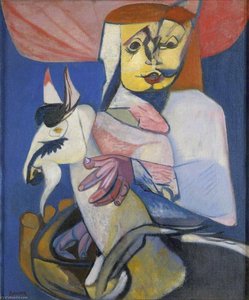
Robert Colquhoun’s Seeded Plants: A Landscape of Emotion
Robert Colquhoun (1914–1962) stands as a cornerstone of British art during the mid-century, celebrated for his distinctive expressionist style—characterized by stark contrasts of color, simplified forms, and an unflinching portrayal of human emotion. Born in Kilmarnock, Scotland, he possessed an innate artistic sensibility nurtured by early exposure to the landscapes of Ayrshire, which would profoundly inform his visual vocabulary. His formal education at Glasgow School of Art cemented a lifelong partnership with fellow artist Robert MacBryde, forging a creative alliance that shaped their careers and intellectual discourse.
Early Influences & Artistic Formation: Colquhoun’s formative years were imbued with the spirit of rural Ayrshire—its vibrant hues and textures—a connection that translated into his initial paintings depicting agricultural laborers and workmen with remarkable sensitivity. These early works demonstrate a profound understanding of human experience rendered through abstracted shapes and bold color palettes, establishing a foundation for his later explorations of psychological landscapes.
- Style: Colquhoun’s signature style is undeniably Expressionist, prioritizing emotional resonance over precise representation. He eschewed academic conventions in favor of a visceral approach that sought to convey inner turmoil and contemplation through distorted forms and flattened perspectives.
- Technique: Primarily employing oil paint on canvas, Colquhoun utilized thick impasto brushstrokes—creating a tactile surface—to imbue his canvases with palpable energy and texture. This technique allowed him to capture the dynamism of movement and the materiality of the landscape itself.
- Historical Context: Created in 1942 during the Second World War, “Seeded Plants” reflects the anxieties and uncertainties of the era while simultaneously embodying a humanist impulse—a desire to depict human figures amidst the grandeur of nature. The painting speaks to themes of resilience and contemplation in times of crisis.
- Composition: The artwork’s unbalanced composition draws the viewer's gaze across its surface, fostering a sense of controlled chaos that mirrors the psychological complexities explored within the piece. Lines are predominantly curvilinear and angular, generating an interplay between fluidity and rigidity—a visual metaphor for confronting internal contradictions.
Symbolism & Emotional Impact: “Seeded Plants” transcends mere depiction; it operates as a conduit for conveying profound emotional states. The dominant browns, oranges, and reds evoke feelings of warmth and earthiness, yet are juxtaposed with splashes of blue and green—creating visual tension that underscores the painting’s underlying melancholy. Colquhoun's masterful use of color and form invites contemplation on themes of solitude, vulnerability, and the enduring beauty of the natural world.
The artwork’s overall impression is one of quiet introspection—a testament to Colquhoun’s ability to distill complex emotions into simplified visual language. “Seeded Plants” remains a compelling example of Expressionist art's capacity to communicate profound psychological truths through evocative imagery and textural richness, continuing to inspire viewers with its timeless beauty.
Questions & Answers
Is there a factsheet about "Seeded Plants" by Robert Colquhoun for students?
A Guide page is available for "Seeded Plants" by Robert Colquhoun: a printable factsheet about the artwork, designed for students and classroom use.
Can I order an oil reproduction of "Seeded Plants"?
"Seeded Plants" is available as a hand-painted oil reproduction on linen canvas. The order can be placed on its Hand-Painted Reproduction page, with a choice of sizes.
What is the recommended print size for "Seeded Plants" by Robert Colquhoun?
A large reproduction is suggested for "Seeded Plants" by Robert Colquhoun. Size can be adjusted while keeping the proportions.
Artist Biography
Robert Colquhoun: A Visionary Painter of Isolation and Expression
Robert Colquhoun (1914–1962) stands as a pivotal figure in British art of the mid-century, recognized for his distinctive expressionist style—characterized by stark contrasts of color, simplified forms, and an unflinching portrayal of human emotion. Born in Kilmarnock, Scotland, he possessed an innate artistic sensibility nurtured by early exposure to the landscapes of Ayrshire, which would profoundly inform his visual vocabulary. His formal education at Glasgow School of Art cemented a lifelong partnership with fellow artist Robert MacBryde, forging a creative alliance that shaped their careers and intellectual discourse.- Early Influences & Artistic Formation: Colquhoun’s formative years were marked by an immersion in rural Ayrshire's vibrant hues and textures—a connection that translated into his initial paintings depicting agricultural laborers and workmen with remarkable sensitivity. These early works demonstrated a nascent understanding of color theory and compositional balance, foreshadowing the stylistic developments to come.
- The MacBryde Collaboration & Parisian Exploration: The meeting at Glasgow School of Art initiated a symbiotic relationship with MacBryde that extended beyond artistic collaboration into personal companionship. Together they embarked on a transformative journey to France and Italy in 1937–39, absorbing the influence of Picasso’s cubism and experimenting with innovative techniques. This period solidified their commitment to abstraction and established them as artists deeply attuned to the intellectual currents of their time.
World War II Service & London Studio Life
- Military Engagement: During World War II, Colquhoun served as an ambulance driver in the Royal Army Medical Corps, experiencing firsthand the anxieties and hardships of wartime. This experience undoubtedly deepened his understanding of human vulnerability and contributed to the melancholic tone that permeates much of his oeuvre.
- Collaborative Studio Space & Artistic Circle: Following the war, Colquhoun relocated to London and shared studio space with MacBryde, Jankel Adler, and John Minton—forming a vibrant artistic community centered around Bedford Gardens. This environment fostered intellectual exchange and fueled their creative output, attracting influential figures like Michael Ayrton, Francis Bacon, Lucian Freud, Dylan Thomas, and George Barker.
Theatre Design & Artistic Recognition
- Stagecraft Contributions: Colquhoun’s artistic talents extended beyond painting into theatre design. He collaborated extensively with MacBryde on productions of Macbeth and King Lear at Stratford-upon-Avon, as well as Donald of the Burthens for Sadler's Wells Ballet, demonstrating his versatility and commitment to visual storytelling.
- Critical Acclaim & Galerie Lefevre: Throughout the 1940s and early 1950s, Colquhoun achieved considerable acclaim within the British art world. His work was regularly showcased at Galerie Lefevre in London, securing his reputation as one of the foremost artists of his generation.
Mature Style & Legacy
- Expressionist Vision: Colquhoun’s mature style embraced a powerfully expressive aesthetic—characterized by bold color palettes and simplified geometric forms. He relentlessly pursued themes of isolation, anguish, and psychological complexity, reflecting the anxieties of postwar Europe.
- Printmaking & Continuing Influence: Colquhoun was a prolific printmaker, producing numerous lithographs and monotypes that further explored his artistic ideas. His work continues to resonate with contemporary artists and scholars alike, serving as an enduring testament to his singular vision and contribution to British art history.
His oeuvre remains a poignant reflection of the human condition—a haunting exploration of emotion conveyed through masterful technique and imbued with the indelible mark of Ayrshire’s landscape. Robert Colquhoun's legacy endures not merely as an artist but as a symbol of artistic integrity and unwavering dedication to conveying profound psychological truths.

Robert Colquhoun
1914 - 1962 , United Kingdom
Quick Facts
- Artistic Movement Or Style: Expressionism
- Artists Or Movements Influenced By This Artist: ['MacBryde']
- Artists Who Influenced This Artist: ['Picasso']
- Date Of Birth: 1914
- Date Of Death: 1962
- Full Name: Robert Colquhoun
- Nationality: Scottish
- Notable Artworks:
- Seated Figure
- The Lock Gate
- Place Of Birth: Kilmarnock, United Kingdom
Related Articles

Fragmented Beauty: Exploring the Soul and Geometric Depth of Cubist Landscapes
Embark on a cultural journey through the soul of Cubist landscapes. Discover how masters like Braque and Rivera redefined nature through geometric beauty, fragmented forms, and profound abstraction in this expert art-history exploration.
The Soul of Color: A Journey into the Emotional Resonance of Lyrical Abstraction
Embark on a cultural journey through Lyrical Abstraction. Explore how masters like Kandinsky used color and motion to translate emotion into visual poetry. Discover the profound beauty of abstract expressionism and learn to curate emotional resonance in your own art collection.

Abstract Expressionism's 10 Defining Masterpieces |
Explore 10 defining Abstract Expressionism masterpieces by Pollock, Rothko & de Kooning. Discover the stories behind these iconic paintings and find museum-quality art reproductions to elevate your home decor on .

Geometric Abstraction's 10 Defining Masterpieces | Art for Your Home - OriginalUniqueArt
Explore 10 defining masterpieces of Geometric Abstraction! Discover Kandinsky, Mondrian & Malevich’s iconic works. Find museum-quality art reproductions and curated decor ideas to elevate your home at OriginalUniqueArt.com.

Kandinsky's Masterpieces: 25 Paintings That Define Abstract Art | OriginalUniqueArt
Journey through Wassily Kandinsky's 25 most iconic abstract paintings. Explore his revolutionary use of color, form & spiritual expressionism. Find museum-quality Kandinsky reproductions and elevate your home decor with OriginalUniqueArt.com. Discover all masterpieces on OriginalUniqueArt.com!