- Home

- Oil Painting Reproduction
- richard hamilton
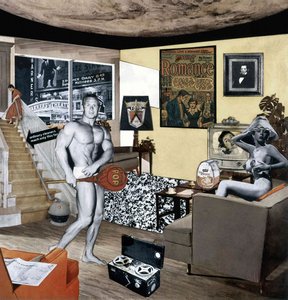
- Just what is it that makes today’s homes so different, so appealing.

 Buy print
 Send
Send Share
Share
 Details

 Download
 Similars
 X-Ray
X-Ray Diaporama
Just what is it that makes today’s homes so different, so appealing.


 Read More
Hand Made Oil Reproduction
Hand-painted oil on canvas in your size and frame, made to order by our artists.




P118B $10

P118H $10

P118W $10

P438Z $10

P508JH $12

P508YH $12

P805H $10

P805Z $10

P919BZ $10

P919G $10

P919XJ $10

P959ZH $10

P968JZ $12

W106C $8

W218G $10

W218JH $8

W218Y $10

W307PJ $10

W316G $10

W316PJ $8

W316Y $10

W398PJ $8

W4111J $10

W500HY $15

W500JH $15

W692G $12

W849H $8

W940BG $15

W953PJ $8




Pick from our preset sizes that match the artwork's original proportions.

You may enter your own dimensions to fit a specific frame or space. If your selected size does not match the original image's proportions, we will either crop the artwork or extend the painting with additional hand-painted elements. A digital mockup will be sent for your approval before production begins.
Please note that the on-screen preview does not reflect the actual cropping or extension. Only the mockup will accurately show the final composition.
While custom sizes are available, we recommend selecting a dimension from the predefined list to preserve the original proportions.
After order, OriginalUniqueArt.com team will email client for instructions and provide a mockup preview
Worldwide Delivery () in 3/4 weeks instead of standard 5 weeks. (16 July). No compromise on quality.

Free Worldwide Express Shipping

High-Quality Linen Canvas

Full Shipping Insurance

Customs Tax Refund Guarantee

True Color Matching Guarantee

60-Day Return Policy (Defects Only)

100% Money-Back Guarantee

Bulk Discount Offer
 Glass option is only available in size under 110 CM

Just what is it that makes today’s homes so different, so appealing.
Reproduction Medium
Reproduction Size
-


Total Price
-
Artwork Description
Subject and Composition
This captivating artwork presents a surreal, collage-inspired interior scene that vividly captures the essence of mid-20th-century consumer culture. The scene is densely packed with vintage and modern elements, including eclectic furniture, pop culture references, and everyday objects, creating a layered tableau that invites viewers to explore its intricate details. The central figures—a muscular man holding a flag and a reclining woman—evoke themes of masculinity, sexuality, and nostalgia, while the surrounding imagery offers a playful commentary on domestic life and societal values of the era.Style and Technique
Blending photorealism with collage techniques, this piece exemplifies the pioneering spirit of Pop Art. It employs a hybrid aesthetic, combining photographic realism with illustrated and painted elements, assembled through cut-outs from magazines, advertisements, and comic books. The precise lines, varied shapes, and contrasting textures create a dynamic visual rhythm that is both engaging and provocative. The muted monochromatic palette, punctuated by strategic splashes of color, enhances the layered complexity and emphasizes focal points within the composition.Historical Context and Artistic Significance
Created in 1956 by Richard Hamilton, this artwork is widely regarded as one of the first pieces of Pop Art, marking a revolutionary shift in contemporary art. It originated as a response to post-war consumerism, media influence, and the rapidly changing domestic landscape. The collage was initially produced for the "This Is Tomorrow" exhibition in London, where it gained iconic status. Its innovative use of mass media imagery and cultural symbols challenged traditional notions of fine art, positioning it as a groundbreaking commentary on modern life.Symbolism and Cultural Commentary
Every element within this collage is carefully chosen to evoke deeper meanings. The juxtaposition of vintage advertisements, comic book imagery, and everyday objects reflects the pervasive influence of media and consumer culture. The muscular figure and reclining woman symbolize gender roles and societal expectations, while references to entertainment and technology highlight the era’s fascination with progress and modernity. The artwork’s layered symbolism invites viewers to reflect on how media shapes perceptions of identity, desire, and domesticity.Emotional Impact and Interior Design Inspiration
This piece resonates with a sense of nostalgia and curiosity, evoking both the optimism and chaos of the 1950s. Its bold visual language and layered complexity make it an ideal focal point for contemporary interiors seeking a touch of cultural sophistication and artistic innovation. Art lovers and collectors will appreciate its historical significance and technical mastery, while interior designers can leverage its vibrant narrative to create stimulating, conversation-starting spaces. Owning a high-quality reproduction of this work offers an inspiring glimpse into the origins of Pop Art and a timeless reflection on modern life.Artist Biography
Early Life and Artistic Foundations
Richard Hamilton, born in Pimlico, London, in 1922, emerged from a working-class background with an innate artistic sensibility. From a young age, drawing captivated him, serving as an early outlet for his burgeoning creativity. His formal training began at the Royal Academy School of Art, where he encountered fellow students who shared his growing fascination with popular culture—a nascent interest that would define his career trajectory. This initial period was crucial in shaping Hamilton’s artistic vocabulary and introducing him to a network of like-minded individuals. He later refined his skills at the Slade School of Art under the tutelage of William Coldstream, solidifying his technical foundation while simultaneously challenging conventional artistic boundaries. These formative years instilled in him not only mastery of traditional techniques but also a critical perspective on the established art world and its relationship to the rapidly changing social landscape of post-war Britain.The Birth of Pop Art: ‘Just What Is It That Makes Today’s Homes So Different, So Appealing?’
Hamilton is rightfully considered one of the pioneers of the Pop Art movement, a revolutionary force that burst onto the art scene in the 1950s. While the American iteration often receives greater attention, Hamilton's contribution was foundational. His most iconic work, ‘Just What Is It That Makes Today’s Homes So Different, So Appealing?’, created in 1956 for the ‘This is Tomorrow’ exhibition at the Whitechapel Gallery, stands as a watershed moment in art history. This large-scale collage wasn't merely an artwork; it was a declaration—a bold and provocative response to the burgeoning consumer culture of post-war America and its increasing influence on British society. The work is a dazzling assemblage of images sourced from magazines, advertisements, and popular media, meticulously arranged within the confines of a domestic interior. Pin-ups, food products, furniture, and everyday objects are juxtaposed with symbols of modernity—a television set, a tape recorder, and even a lollipop—creating a vibrant, chaotic, and undeniably compelling visual statement. The collage’s very title is a rhetorical question, inviting viewers to contemplate the allure and anxieties of modern life. It wasn't simply about depicting consumer goods; it was about dissecting their psychological impact and exploring the seductive power of advertising.Experimentation and Evolution: Collage as a Language
Hamilton didn’t confine himself to a single style or subject matter. Throughout his career, he relentlessly experimented with various techniques and materials, but collage remained central to his artistic practice. He elevated collage from a mere technique to a sophisticated language capable of conveying complex ideas about perception, memory, and the relationship between art and reality. His work often involved intricate layering, fragmentation, and juxtaposition of images, creating dynamic compositions that challenged traditional notions of representation. My Marilyn (Paste Up), for example, demonstrates his fascination with celebrity culture and the manipulation of imagery in mass media. He wasn’t simply reproducing existing images; he was deconstructing them, recontextualizing them, and exposing their underlying structures. This commitment to experimentation extended beyond collage, encompassing printmaking, painting, and even computer-assisted design.Legacy and Influence: A Lasting Impact on Art History
Richard Hamilton's influence extends far beyond the confines of Pop Art. His groundbreaking work paved the way for generations of artists who sought to engage with popular culture, consumerism, and the complexities of modern life. He challenged the boundaries between high art and low culture, blurring the lines between artistic expression and everyday experience. His willingness to embrace new technologies and explore unconventional materials pushed the limits of artistic practice. Notably, his design for the album cover of The Beatles’ ‘The White Album’, a limited-edition print with a unique serial number on each copy, exemplifies his ability to seamlessly integrate art into popular culture. Hamilton's work has been exhibited in prestigious museums and galleries worldwide, including the Kunsthalle Tübingen in Germany, solidifying his position as a major figure in 20th-century art. He passed away on September 13, 2011, but his legacy continues to inspire artists and scholars alike. His pioneering spirit, intellectual rigor, and unwavering commitment to experimentation ensure that his work will remain relevant for generations to come.Further Exploration

richard hamilton
1922 - 2011 , United Kingdom
Quick Facts
- Artistic Movement Or Style: Pop Art
- Artists Or Movements Influenced By This Artist:
- Andy Warhol
- Pop Art movement
- Date Of Birth: 1922
- Date Of Death: 2011
- Full Name: Richard Hamilton
- Nationality: British
- Notable Artworks:
- Just What Is It?
- My Marilyn (paste up)
- The White Album cover
- Place Of Birth: London, UK
Related Articles
Echoes of a Turning Century: Art & Symbolism at the Dawn of Modernity
Explore the artistic responses to the turning of the 19th century – Symbolism & Post-Impressionism. Discover Munch, Toulouse-Lautrec, and more with OriginalUniqueArt's expert insights.

Raja Ravi Varma: Bridging Tradition & Modernity in 19th-Century Indian Art
Explore the life & art of Raja Ravi Varma, a pioneer who fused European techniques with Indian iconography. Discover his iconic paintings, lasting legacy, and influence on modern Indian art at OriginalUniqueArt.

Echoes of Modernity: Exploring Themes & Innovations in 20th Century Art
Explore the pivotal themes & innovations of 20th Century Art. Discover key movements like Cubism & Expressionism with OriginalUniqueArt – handmade oil paintings and expert art insights for collectors.

Deconstructing Modernity: Key Themes & Techniques in 20th/21st Century Art
Explore the key themes & techniques of 20th/21st-century art with OriginalUniqueArt. Discover abstract expressionism, avant-garde masters like Filonov, and expert collecting insights. Invest in museum-quality reproductions today.

Richard Lindner: Pop Art's Intimate Narratives of Modern Alienation & Desire
Explore the captivating world of Richard Lindner, a pivotal Pop Art figure. Discover his unique style, symbolic depth, collecting insights & lasting influence on contemporary art. Expert analysis for collectors.