Preview
 Send
Send Share
Share
 Details
 Guide
Guide

 Download
 Similars
 X-Ray
X-Ray Diaporama
 Stats
StatsPerpetual motion
 Acrylic On Canvas
- WallArt
- Surrealism
 1935
1935 54.0 x 73.0 cm
 Read More
The artwork displayed on this page is protected by copyright law, which means we cannot legally create or sell an identical reproduction. This protection is enforced under international agreements such as the Berne Convention and by national laws, including those outlined by the U.S. Copyright Law - Title 17.
This method fully complies with copyright regulations because it does not involve copying or duplicating the protected artwork. Instead, it is a creative reinterpretation - a new painting that is influenced by the original but not identical to it.
Giclée / Art Print
Museum-quality giclée or canvas print with fast production and flexible finish options. ( Buy Hand Made Painting Switch to Digital Image)




P118B $10

P118H $10

P118W $10

P438Z $10

P508JH $12

P508YH $12

P805H $10

P805Z $10

P919BZ $10

P919G $10

P919XJ $10

P959ZH $10

P968JZ $12

W106C $8

W218G $10

W218JH $8

W218Y $10

W307PJ $10

W316G $10

W316PJ $8

W316Y $10

W398PJ $8

W4111J $10

W500HY $15

W500JH $15

W692G $12

W849H $8

W940BG $15

W953PJ $8




Pick from our preset sizes that match the artwork's original proportions.

Type the width and the height you need, to fit your frame or your wall. A print can only be cut, never made bigger than the picture, so a size with a different shape loses a part of the image. We send you a digital mockup to approve before we print anything. The picture shown on this page does not show the real cut — only the mockup does.
Worldwide Delivery () in 2 weeks instead of standard 4/5 weeks. (28 October)

Free Worldwide Express Shipping

High-Quality Linen Canvas

Full Shipping Insurance

Customs Tax Refund Guarantee

True Color Matching Guarantee

100-Day Return Policy (Defects Only)

100% Money-Back Guarantee

Bulk Discount Offer
 Glass option is only available in size under 110 CM

Perpetual motion
Giclée / Art Print
Reproduction Size
-


Total Price
$ 81
A Paradox of Strength: René Magritte’s ‘Perpetual Motion’
René Magritte’s “Perpetual Motion,” completed in 1935, is more than just a depiction of physical exercise; it's a masterful exploration of illusion and the elusive nature of reality—a cornerstone of Surrealist thought that continues to resonate with audiences today. Painted during Magritte’s peak creative period, this striking artwork embodies the anxieties and intellectual curiosity characteristic of the era.
- Subject Matter: The painting centers around a man performing a weightlifting routine, positioned against a backdrop of muted blues and greens. However, what immediately grabs the viewer's attention is not the exertion of muscle but rather the incongruous presence of two large weights suspended above his head.
- Style & Technique: Magritte’s signature Surrealist style—characterized by meticulous realism juxtaposed with dreamlike distortions—is evident in every brushstroke. The artist employs a precise technique, meticulously rendering textures and contours to create an unsettlingly familiar scene that defies logical comprehension.
The Symbolism of Repetition & Absence
Beyond its visual appeal lies a profound symbolic layer. The repetition of the weights—a symbol of effort and resistance—suggests an unending cycle, hinting at the futility of striving for permanence in a world governed by change. Yet, crucially, Magritte renders the weights as if they were floating in mid-air, defying gravity and disrupting our ingrained understanding of physics. This deliberate omission underscores the artwork’s central theme: the impossibility of capturing reality perfectly.
- Floating Weights: The absence of visible supports for the weights is particularly significant. Magritte deliberately challenges conventional representation, forcing us to confront the limitations of perception and questioning whether what we see truly exists.
- Color Palette: The subdued blues and greens contribute to the painting’s melancholic atmosphere, mirroring the pervasive sense of unease that permeates Surrealist art—a desire to unsettle viewers and provoke contemplation about hidden truths.
Historical Context & Magritte's Vision
“Perpetual Motion” emerged from the fertile intellectual landscape of Surrealism, fueled by thinkers like Freud and Jung who explored the subconscious mind and questioned accepted notions of consciousness. Magritte’s aim wasn’t to depict a literal representation of physical activity but rather to distill the essence of existential anxiety—the awareness that our perceptions are unreliable and that we inhabit a world where appearances can deceive.
- Influence of Surrealism: Magritte's work aligns perfectly with the Surrealist movement’s preoccupation with automatism, chance operations, and exploring irrational thought.
- Magritte’s Philosophical Concerns: Like many Surrealists, Magritte wrestled with questions about identity, illusion, and the relationship between mind and matter—themes that continue to inspire artists and thinkers today.
Emotional Impact & Artistic Legacy
"Perpetual Motion" captivates viewers not through triumphant physicality but through its unsettling stillness. It invites us to consider what is hidden beneath the surface of our everyday experience, prompting a meditative response about the nature of reality itself. Magritte’s masterpiece remains an enduring testament to the power of art to provoke thought and challenge assumptions—a timeless exploration of paradox and illusion that secures its place as one of Surrealism's most unforgettable images.
Questions & Answers
At what age did René Magritte make "Perpetual motion"?
René Magritte made "Perpetual motion" at the age of 37. The artist was born in 1898 and the work is dated 1935.
What is the format of "Perpetual motion"?
"Perpetual motion" by René Magritte has a landscape format. The format describes the proportions of the composition.
What is the dominant color of "Perpetual motion" by René Magritte?
celadon (#a8cbcd) is the leading color of "Perpetual motion" by René Magritte.
Artist Biography
Early Life and the Seeds of Surrealism
René Magritte, born René François Ghislain Magritte on November 21, 1898, in Lessines, Belgium, emerged into a world that would profoundly shape his enigmatic artistic vision. His early years were marked by an unsettling event – the suicide of his mother when he was just thirteen. The image of her body being recovered from the River Sambre, with her dress obscuring her face, became a haunting motif that would subtly permeate his later work, manifesting in veiled figures and a persistent exploration of hidden realities. This early trauma instilled within him a fascination with mystery, loss, and the unsettling power of what remains unseen. While details of his childhood remain somewhat elusive, it’s clear this formative experience laid the groundwork for his lifelong questioning of perception and representation. He began drawing lessons at age ten, revealing an innate inclination towards visual expression, but initially explored Impressionism before embarking on a path that would lead him to become one of the most significant figures in Surrealist art.
Artistic Development and Influences
Magritte’s artistic journey was not immediate or straightforward. He studied at the Académie Royale des Beaux-Arts in Brussels, yet found its traditional methods stifling. His early work experimented with Futurism and Cubism, absorbing elements of these avant-garde movements but ultimately rejecting their purely formal concerns. It wasn't until encountering Giorgio de Chirico’s painting *The Song of Love* in 1922 that Magritte discovered a resonance that would irrevocably alter his artistic course. De Chirico’s dreamlike landscapes and unsettling juxtapositions unlocked within Magritte a new way of seeing – a world where the familiar could be rendered strange, and the ordinary imbued with profound mystery. This encounter sparked his commitment to Surrealism, though he often maintained a unique distance from its more overtly psychological or automatic approaches. He preferred a meticulous, almost clinical precision in his painting, using realistic techniques to depict illogical scenarios.
The Heart of Surrealism: Challenging Reality
By 1926, Magritte had fully embraced the tenets of Surrealism, producing *Le Jockey Perdu (The Lost Jockey)*, widely considered his first truly surrealist work. However, his brand of Surrealism was distinct. He wasn’t interested in exploring the subconscious through free association or dream imagery in the manner of some of his contemporaries. Instead, Magritte sought to challenge viewers' perceptions of reality by presenting ordinary objects in unexpected contexts, forcing them to question their assumptions about the world around them. Iconic works like *The Treachery of Images (This is not a pipe)* (1929) brilliantly deconstructs the relationship between image and object, reminding us that a representation is never the thing itself. *Les Amants (The Lovers)* (1927-1928), with its shrouded figures, echoes the trauma of his mother’s death while simultaneously exploring themes of concealment and intimacy. *Time Transfixed* (1938) presents a locomotive bursting through a brick wall, disrupting our sense of space and time. And *The Human Condition* (1933), a canvas within a canvas, blurs the boundaries between representation and reality, prompting us to consider how we perceive and interpret the world.
Later Life, Recognition, and Enduring Legacy
Despite initial struggles for recognition, Magritte’s work gradually gained prominence, particularly in the United States with exhibitions in 1936 and later retrospective shows at the Museum of Modern Art (1965) and the Metropolitan Museum of Art (1992). He remained politically engaged throughout his life, advocating for artistic autonomy. He continued to refine his signature style, exploring themes of repetition, illusion, and the power of language in paintings that are both intellectually stimulating and visually arresting. Magritte died on August 15, 1967, leaving behind a body of work that continues to captivate and challenge audiences worldwide. His influence extends far beyond the realm of painting, impacting pop art, minimalist art, conceptual art, and even advertising and film. Today, his paintings are held in major museum collections around the globe, including the Musées royaux des beaux-arts de Belgique in Brussels, which houses the Magritte Museum – dedicated entirely to his work and boasting the world’s largest collection of his creations.
- Museum Collections: Musées royaux des beaux-arts de Belgique, Brussels; Magritte Museum.
Magritte's enduring legacy lies in his ability to make us see the familiar anew, to question our assumptions about reality, and to appreciate the power of art to provoke thought and inspire wonder. He wasn’t simply painting images; he was crafting visual paradoxes that continue to resonate with viewers decades after their creation, solidifying his position as a true master of Surrealism and a pivotal figure in 20th-century art.
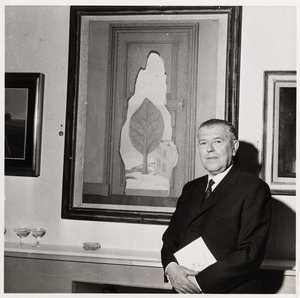
René Magritte
1898 - 1967 , Belgium
Quick Facts
- Artistic Movement Or Style: Surrealism
- Artists Or Movements Influenced By This Artist:
- Pop art
- Minimalist art
- Conceptual art
- Artists Who Influenced This Artist:
- Giorgio de Chirico
- Claude Monet
- Vincent van Gogh
- Paul Cézanne
- Full Name: René François Ghislain Magritte
- Nationality: Belgian
- Notable Artworks:
- The Treachery of Images
- The Lovers
- Time Transfixed
- The Human Condition
- Golconda
- Place Of Birth: Lesennes, Belgium
- Date Of Birth: 1898
- Date Of Death: 1967
Related Articles

The Enduring Form: Exploring Themes & Techniques in Sculpture Across Historical Periods
Explore the rich history of sculpture from ancient masterpieces to contemporary innovations. Discover key techniques, influential artists & investment potential for discerning art collectors.

Bronze Age to Modern Masters: 10 Sculptures That Redefined Art | OriginalUniqueArt
Journey through art history with 10 legendary bronze sculptures – from Michelangelo's David to Rodin’s Thinker. Explore the stories, techniques & timeless beauty of these masterpieces. Find museum-quality reproductions & elevate your home decor on OriginalUniqueArt.com.

The Enduring Form: Sculpture Across History, Technique & Emotional Resonance
Explore the rich history of sculpture with OriginalUniqueArt. Discover key techniques, influential artists & investment potential for discerning collectors. Expert insights into valuing and collecting timeless masterpieces.

Bronze Sculptures That Defined Art History | OriginalUniqueArt
Journey through art history with our Top 10 bronze sculptures! Explore masterpieces by Rodin, Michelangelo & more. Discover stories behind iconic statues and find museum-quality reproductions for your home decor at OriginalUniqueArt.com.
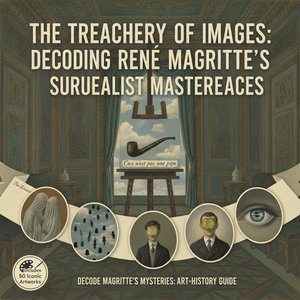
The Treachery of Images: Decoding René Magritte’s Surrealist Philosophy and the Paradox of Representation
Explore the profound mystery of René Magritte’s 'The Treachery of Images.' Dive into an expert analysis of his Surrealist philosophy, the paradox of representation, and how he challenged reality through the interplay of language and visual perception.