
 Preview
 Send
Send Share
Share
 Details
 Guide
Guide

 Download
 Similars
 X-Ray
X-Ray Diaporama
 Q&A
Q&A Stats
StatsAndromeda

- 34.0 x 24.0 cm


 Read More
Giclée / Art Print
Museum-quality giclée or canvas print with fast production and flexible finish options. ( Buy Hand Made Painting Switch to Digital Image)




P118B $10

P118H $10

P118W $10

P438Z $10

P508JH $12

P508YH $12

P805H $10

P805Z $10

P919BZ $10

P919G $10

P919XJ $10

P959ZH $10

P968JZ $12

W106C $8

W218G $10

W218JH $8

W218Y $10

W307PJ $10

W316G $10

W316PJ $8

W316Y $10

W398PJ $8

W4111J $10

W500HY $15

W500JH $15

W692G $12

W849H $8

W940BG $15

W953PJ $8




Pick from our preset sizes that match the artwork's original proportions.

Type the width and the height you need, to fit your frame or your wall. A print can only be cut, never made bigger than the picture, so a size with a different shape loses a part of the image. We send you a digital mockup to approve before we print anything. The picture shown on this page does not show the real cut — only the mockup does.
Worldwide Delivery () in 2 weeks instead of standard 4/5 weeks. (1 November)

Free Worldwide Express Shipping

High-Quality Linen Canvas

Full Shipping Insurance

Customs Tax Refund Guarantee

True Color Matching Guarantee

100-Day Return Policy (Defects Only)

100% Money-Back Guarantee

Bulk Discount Offer
 Glass option is only available in size under 110 CM

Andromeda
Giclée / Art Print
Reproduction Size
-


Total Price
$ 81
The Humanity Within the Myth
In this evocative work from 1630, Rembrandt van Rijn transcends the epic scale of Greek legend to focus on a singular, piercing emotion. While the myth of Andromeda typically centers on the heroic intervention of Perseus and the terror of the sea monster, Rembrandt strips away the external spectacle. Instead, he presents us with the vulnerability of the princess herself. Chained to the cold, unforated rocks, her presence is defined not by her royal status, but by her profound terror. By isolating Andromeda from the broader narrative, the artist invites the viewer into a private moment of psychological intensity, making the painting less about a legendary battle and more about the universal experience of facing an inescapable fate.A Symphony of Light and Shadow
The technical brilliance of this piece lies in Rembrandt's early mastery of chiaroscuro. The composition is anchored by the striking contrast between the luminous, white fabric of Andromeda’s attire and the deep, swallowing shadows of the nocturnal landscape. This dramatic lighting does more than illuminate the subject; it sculpts her form with a startling naturalism that was revolutionary for its time. Eschewing the polished, idealized beauty prevalent in classical traditions, Rembrandt embraces the raw textures of skin and stone. The way light catches the edges of the cliffs and the subtle details of the background—such as the distant, watchful birds—creates an atmosphere that is both heavy with dread and breathtakingly beautiful.An Essential Piece for the Discerning Collector
For interior designers and art enthusiasts alike, Andromeda offers a profound sense of drama and depth. The painting’s dark, moody tonality makes it an exquisite choice for creating a focal point in sophisticated, contemporary spaces, where its historical weight can provide a striking counterpoint to modern minimalism. It is more than a mere reproduction; it is an invitation to contemplate the mastery of the Dutch Golden Age through a lens of raw, human emotion.- Artistic Era: Dutch Golden Age
- Key Technique: Chiaroscuro and Naturalism
- Visual Impact: High-contrast, atmospheric, and emotive
Questions & Answers
What size and orientation are recommended for a print of "Andromeda" by Rembrandt van Rijn?
A print of "Andromeda" by Rembrandt van Rijn is recommended at a medium size in portrait orientation.
At what size is "Andromeda" suggested for a living room?
The recommended pairing for "Andromeda" by Rembrandt van Rijn: a medium print in a living room.
Who created "Andromeda"?
"Andromeda" was created by Rembrandt van Rijn. The information on this page describes Rembrandt van Rijn's original work.
Artist Biography
The Light of Leiden
In the quiet streets of Leiden, Netherlands, a boy named Rembrandt Harmenszoon van Rijn grew up in a house filled with the scent of flour and grain. His father, Harmen, ran a mill, while his mother, Neeltgen, came from a family of bakers. This middle-class stability provided enough for a seat at the Leiden Latin School, where he spent seven years studying classical texts. He later sat in classrooms at the University of Leiden, though his eyes often drifted toward the brush and the plate.
His hands learned their trade through apprenticeships. First, there was Jacob van Swanenburg in Leiden, followed by a short, intense period under Pieter Lastman in Amsterdam. It was from Lastman that he learned to use shadow to create weight. He returned to Leiden to share a studio with Jan Lievens, working alongside a peer who understood the same pull of the dark and the light. By 1631, the pull of Amsterdam, a city of growing trade and heavy commerce, led him to relocate permanently.
Shadow and Substance
The way he applied paint changed as the years passed. In his early years, there was a focus on fine detail and clear lines, much like the style of his teachers. As he matured, the brushwork grew thicker and more textured. He began to use chiaroscuro, not merely as a trick of lighting, but as a way to sculpt faces out of the darkness. He used thick, textured paint to catch the light on a forehead or a cheek, while thin, transparent layers allowed the shadows to recede into deep, velvety blacks.
His subjects were as varied as the people he encountered in the Dutch Republic. He painted:
- Group portraits of civic militias, such as the 1642 work known as The Night Watch.
- Intimate self-portraits that tracked the physical changes in his own face over decades.
- Biblical scenes that used dramatic lighting to highlight human emotion.
- Etchings where he mastered the use of line and tone to create depth on paper.
A Life of Change
Personal shifts often dictated the mood of his canvases. His marriage to Saskia van Uylenburgh in 1634 brought a period of social connection and initial stability, yet it was also marked by the loss of several children. The death of Saskia in 1642 left a visible mark on his later work, which turned toward more somber, introspective themes. He lived through financial highs and the heavy reality of bankruptcy in 1656, a period that forced him to move from fashionable houses to more modest lodgings.
Despite the loss of wealth, his output remained steady. He continued to find models among the people of Amsterdam, including his son Titus and later Hendrickje Stoffels. His ability to capture the weight of an expression or the texture of a weathered hand ensured that his work remained a central part of the Dutch Golden Age. He died in 1669, leaving behind hundreds of paintings, etchings, and drawings that remain fixed in their study of the human condition.
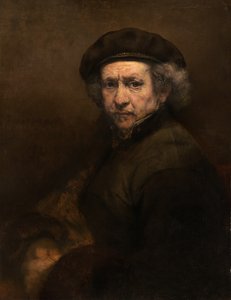
Rembrandt van Rijn
1606 - 1669 , Netherlands
Quick Facts
- Artistic Movement Or Style: Dutch Golden Age, Baroque
- Artists Or Movements Influenced By This Artist: Generations of artists
- Artists Who Influenced This Artist:
- Pieter Lastman
- Jacob van Swanenburg
- Full Name: Rembrandt Harmenszoon van Rijn
- Nationality: Dutch
- Notable Artworks:
- The Night Watch
- Anatomy Lesson of Dr. Nicolaes Tulp
- Belshazzar's Feast
- Place Of Birth: Leiden, Netherlands
- Date Of Birth: 1606
- Date Of Death: 1669
Related Articles

Mastering Light and Shadow: The 25 Greatest Artworks by Rembrandt van Rijn
Explore Rembrandt's greatest Baroque masterpieces through light and shadow. Discover the full collection online at OriginalUniqueArt.com.

Golden Light & Dutch Skies: The Timeless Magic of Dutch Golden Age Landscapes
Discover the breathtaking beauty of Dutch Golden Age landscapes. Explore the mastery of light, chiaroscuro, and 17th-century realism through an expert art history lens, celebrating the enduring legacy of the Dutch Masters for discerning collectors and art lovers.

Golden Age Reflections: Dutch Baroque Painting & Cultural Innovation
Explore the Dutch Golden Age of painting! Discover key artists like Vermeer & ter Borch, their innovative techniques, and the rich cultural context behind these Baroque masterpieces. Learn about collecting & appreciating this iconic art period.

Dutch Masters: 10 Golden Age Paintings That Still Inspire |
Journey into the Dutch Golden Age! Explore 10 iconic paintings by Rembrandt, Vermeer & Hals. Discover the stories behind these Baroque masterpieces and find museum-quality art reproductions to elevate your home decor on .

Dutch Baroque Masters: 10 Paintings That Shaped an Era | OriginalUniqueArt
Journey through the Golden Age with our guide to the Top 10 Dutch Baroque masterpieces! Explore iconic paintings by Rembrandt, Vermeer & Frans Hals. Find museum-quality art reproductions and elevate your home decor at OriginalUniqueArt.com.

![The Anatomy Lecture of Dr. Nicolaes Tulp [1632]](/media/artworks/images-thumb/e5/fc/e5fcb33447eac6b24ab049b22effa1a3.jpg)


