Text size

() ·

A painting made for you, by hand

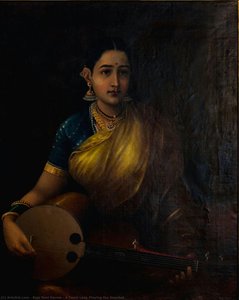
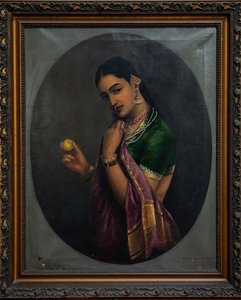
Untitled (Tilottama)

Hand Made Oil Reproduction

Hand-painted oil on canvas in your size and frame, made to order by our artists. ( Switch to Print Switch to Digital Image)

Collectible Description

Experience the vibrant grace of a dancing figure in this 1896 oil on canvas by Raja Ravi Varma; discover timeless Indian artistry today.

Artist Biography

Explore the art of Raja Ravi Varma (1848-1906), India’s pioneering painter! He blended European techniques with Hindu mythology, creating iconic & accessible art through affordable lithographs that shaped modern Indian identity.

from ·

Chapter 1

How large should it be?

Slide to change the size; the picture on the left shows the frame at its real width. The proportions of the original are kept.

Standard
custom
CM
INCH

Pick from our preset sizes that match the artwork's original proportions.

width
height

Type the width and the height you need, to fit your frame or your wall. This is hand-painted, so for a size with a different shape the artist can paint a bit more around the picture, or cut a bit — you choose. We send you a digital mockup to approve before the painting starts. The picture shown on this page does not show the real result — only the mockup does.

Chapter 2

How should it arrive?

Choose the edges of the stretched canvas

Choose your frame

Corner sample of the WhiteWrap canvas edge finish, stretched on solid wood bars
White $1
Corner sample of the BlurSideWrap canvas edge finish, stretched on solid wood bars
Blurside $1
Corner sample of the ExtendedWrap canvas edge finish, stretched on solid wood bars
Extended $1
Corner sample of the P118B picture frame: moulded polystyrene, 5 cm wide and 3 cm thick
P118B $10
Corner sample of the P118H picture frame: moulded polystyrene, 5 cm wide and 3 cm thick
P118H $10
Corner sample of the P118W picture frame: moulded polystyrene, 5 cm wide and 3 cm thick
P118W $10
Corner sample of the P438Z picture frame: moulded polystyrene, 5.5 cm wide and 3.5 cm thick
P438Z $10
Corner sample of the P508JH picture frame: moulded polystyrene, 7 cm wide and 3.5 cm thick
P508JH $12
Corner sample of the P508YH picture frame: moulded polystyrene, 7 cm wide and 3.5 cm thick
P508YH $12
Corner sample of the P805H picture frame: moulded polystyrene, 5 cm wide and 3.5 cm thick
P805H $10
Corner sample of the P805Z picture frame: moulded polystyrene, 5 cm wide and 3.5 cm thick
P805Z $10
Corner sample of the P919BZ picture frame: moulded polystyrene, 7 cm wide and 3.5 cm thick
P919BZ $10
Corner sample of the P919G picture frame: moulded polystyrene, 7 cm wide and 3.5 cm thick
P919G $10
Corner sample of the P919XJ picture frame: moulded polystyrene, 7 cm wide and 3.5 cm thick
P919XJ $10
Corner sample of the P959ZH picture frame: moulded polystyrene, 5 cm wide and 3 cm thick
P959ZH $10
Corner sample of the P968JZ picture frame: moulded polystyrene, 6 cm wide and 4 cm thick
P968JZ $12
Corner sample of the W106C picture frame: solid wood, 5 cm wide and 3 cm thick
W106C $8
Corner sample of the W218G picture frame: solid wood, 5 cm wide and 3 cm thick
W218G $10
Corner sample of the W218JH picture frame: solid wood, 5 cm wide and 3 cm thick
W218JH $8
Corner sample of the W218Y picture frame: solid wood, 5 cm wide and 3 cm thick
W218Y $10
Corner sample of the W307PJ picture frame: solid wood, 6 cm wide and 3 cm thick
W307PJ $10
Corner sample of the W316G picture frame: solid wood, 6 cm wide and 3 cm thick
W316G $10
Corner sample of the W316PJ picture frame: solid wood, 6 cm wide and 3 cm thick
W316PJ $8
Corner sample of the W316Y picture frame: solid wood, 6 cm wide and 3 cm thick
W316Y $10
Corner sample of the W398PJ picture frame: solid wood, 5 cm wide and 3 cm thick
W398PJ $8
Corner sample of the W4111J picture frame: solid wood, 6.5 cm wide and 3.5 cm thick
W4111J $10
Corner sample of the W500HY picture frame: solid wood, 7 cm wide and 5 cm thick
W500HY $15
Corner sample of the W500JH picture frame: solid wood, 7 cm wide and 5 cm thick
W500JH $15
Corner sample of the W692G picture frame: solid wood, 8 cm wide and 4 cm thick
W692G $12
Corner sample of the W849H picture frame: solid wood, 5 cm wide and 3 cm thick
W849H $8
Corner sample of the W940BG picture frame: solid wood, 7.5 cm wide and 4.5 cm thick
W940BG $15
Corner sample of the W953PJ picture frame: solid wood, 6 cm wide and 3.5 cm thick
W953PJ $8
Corner sample of the H24-GOLD picture frame: carved wood with gesso, 10 cm wide and 6 cm thick
H24-GOLD $30
Corner sample of the H24-SILVER picture frame: carved wood with gesso, 10 cm wide and 6 cm thick
H24-SILVER $30
Corner sample of the H36-GOLD picture frame: carved wood with gesso, 15 cm wide and 6.5 cm thick
H36-GOLD $45
Corner sample of the H36-SILVER picture frame: carved wood with gesso, 15 cm wide and 6.5 cm thick
H36-SILVER $45
Frame preview
Framed

Moulding: . Overall size with the frame: .

Chapter 3

Who paints it, and should anything change?

Examples of what can be changed: Replace face with customer photo; Add pet (e.g., replace cat with dog); Include hidden message in background; Change background landscape or elements.
After order, OriginalUniqueArt.com team will email client for instructions and provide a mockup preview

Worldwide Delivery () in 3/4 weeks instead of standard 5 weeks. (1 November). No compromise on quality.

Chapter 4

The finishing touches

A nameplate, as in a museum?

Engraved Bronze Plaque Details

This elegant plaque features the artist's name and the title of the artwork, finely engraved for a timeless presentation.

It is made from bronze with a refined, elegant finish. The text is precisely laser-engraved for a sharp and permanent result. Measuring 9x2 cm, the plaque is compact yet easy to read. It's built to be durable and scratch-resistant, offering a professional, museum-quality look. Mounting is simple thanks to the included adhesive backing.

Transparent Acrylic Plaque Details

The plaque includes essential engraved details such as the artist's name, the title of the artwork, the date it was created, the type of media used-like oil on canvas or watercolor-a brief description of the piece, and a QR code that links to the complete artwork information.

It is crafted from clear acrylic, offering a sleek, modern appearance. The text is UV-engraved in black to ensure strong visual contrast. With a size of 10x15 cm, it ensures optimal readability. It comes equipped with two metal hooks for secure wall mounting. The plaque is designed to be weather-resistant, making it suitable for various environments, and it includes interactive features that work seamlessly with smartphone scanning.

Black Acrylic Plaque Details

This elegant plaque includes engraved information such as the artist's name, the title of the artwork, the date it was created, the type of media used (like oil on canvas or watercolor), a short description of the artwork, and a QR code for quick access to more information.

The plaque itself is made from refined black acrylic with a premium finish. The text is laser-engraved in white for high contrast and readability. Its size is 10x15 cm, designed to be easy to read. It comes with two metal hooks for professional mounting. The design is sleek and fits any interior style. It is also weather-resistant and durable, with built-in digital integration for mobile compatibility.

A protective varnish?

When do you need it?

Chapter 5

Your painting, as you ordered it

Untitled (Tilottama)

Reproduction Medium

Reproduction Size

-

Elite Senior Artist

More detail, finesse, and extra production time

-

Reproduction Frame

-

-

For artworks or reproductions larger than 105 cm (approximately 41 inches) on any side, the frame will be shipped as a kit, disassembled. This method ensures safe delivery and prevents damage during transport.

Professional assembly required - this is not a DIY product.
The kit must be assembled and the canvas stretched by an experienced professional framer, using wood glue (not supplied), a canvas stretching plier and clamps to hold the bars square while the glue dries. Incorrect assembly or uneven canvas tension can permanently damage the artwork and is not covered by our warranty.

  • All solid wood bars are included, precisely cut to size.

  • Assembled with the screws provided, plus wood glue for the corner joints, which is not supplied and must be sourced by your framer.

  • Professional tools are required and not included: a canvas stretching plier (tensioner) and clamps to hold the bars square while the glue dries.

Important:
The corner joints require wood glue, the bars must be held with clamps until the glue is fully dry, and tightening the canvas on the assembled frame requires a canvas stretching plier. None of these are included in the kit. Please arrange an experienced professional framer before ordering this size.

Nameplate

-

-

Protective Varnish

Glossy Varnish (enhances colors, protects against light/moisture)

-

Customize My Artwork

Examples of what can be changed: Replace face with customer photo; Add pet (e.g., replace cat with dog); Include hidden message in background; Change background landscape or elements.

-

Urgent

Worldwide Delivery () in 3/4 weeks instead of standard 5 weeks. (1 November). No compromise on quality.

-

Express Shipping

Worldwide Delivery () in 5 weeks. (8 November).

Included

Total Price

$ 300

Total Price $ 300

Glass option is only available in size under 110 CM

Included with every order

  • Free Worldwide Express Shipping
  • High-Quality Linen Canvas
  • Full Shipping Insurance
  • Customs Tax Refund Guarantee
  • True Color Matching Guarantee
  • 100-Day Return Policy (Defects Only)
  • 100% Money-Back Guarantee
  • Bulk Discount Offer

The Ethereal Grace of Tilottama

To gaze upon "Untitled (Tilottama)" by Raja Ravi Varma is to step directly into a moment suspended between earthly performance and divine rapture. This magnificent oil on canvas, painted in 1896, captures the essence of movement—a figure caught mid-gesture, seemingly lifted by an unseen current of music or devotion. The subject, radiating an almost incandescent beauty, is depicted in a vibrant red ensemble that speaks of passion and celebration. Her raised hand, reaching toward the heavens, is not merely a pose; it is a gesture laden with narrative weight, suggesting either ecstatic dance or profound invocation. Ravi Varma masterfully imbues this scene with a palpable sense of life, making the viewer feel the very rhythm emanating from the canvas.

A Synthesis of Cultures: Technique and Vision

Raja Ravi Varma’s genius lay in his unparalleled ability to act as a cultural conduit. While his roots were deeply embedded in the rich traditions of Indian mythology and aesthetics, his technique shows a sophisticated mastery of European academic painting methods. The oil on canvas medium allows for a luminosity that seems almost photographic, yet it is infused with an unmistakable Indian soul. Observe the handling of the drapery; the folds of her red garment are rendered with such convincing weight and fluidity that they seem capable of catching the light from the surrounding air. This technical brilliance—the seamless marriage of Western realism with indigenous storytelling—is what makes this piece so enduringly captivating.

Symbolism in Scarlet and Sky

The symbolism within "Untitled (Tilottama)" is rich for contemplation. The color red, dominating her attire, has long been associated in Indian art with vitality, marriage, and divine energy. Contrasting this vibrant earthly hue against the implied vastness of the sky above creates a powerful visual dialogue between the mortal realm and the spiritual plane. Her posture suggests a narrative arc—perhaps the moment before revelation, or the peak of an ecstatic performance. The title itself, referencing Tilottama, anchors the piece within a specific cultural mythology, inviting the collector to delve into tales of divine feminine power and grace.

Bringing Sacred Artistry Home

For those who wish to incorporate such profound artistry into their personal sanctuary or grand drawing-room, owning a reproduction of this work is acquiring more than just decoration; it is curating an atmosphere. The scale of 50 x 33 cm allows the drama and detail to be appreciated intimately without overwhelming a space. A hand-painted reproduction ensures that the meticulous brushwork and the emotional resonance intended by Ravi Varma are preserved, offering modern admirers a tangible connection to the zenith of Indian academic painting. It is an heirloom piece designed not just for viewing, but for feeling.

Questions & Answers

How was "Untitled (Tilottama)" made, and how big is it?

The medium of "Untitled (Tilottama)" by Raja Ravi Varma is oil on canvas, and its recorded dimensions are 50 x 33 cm.

What is the color identity of "Untitled (Tilottama)" by Raja Ravi Varma?

The color identity of "Untitled (Tilottama)" by Raja Ravi Varma: an earthy palette, dominated by driftwood (#957b62).

What is the recommended print size for "Untitled (Tilottama)" by Raja Ravi Varma?

The recommended print size for "Untitled (Tilottama)" by Raja Ravi Varma is medium.

More about this painting

Preview AR preview Switch to Print Switch to Digital Image Send
Details Guide Add to favorites Download Similars X-Ray Diaporama Q&A Stats

In numbers

  • 1896the year it was painted
  • 29frames to choose from
  • standard sizes, in its own proportions
  • 5weeks to paint and deliver it
Raja Ravi Varma

Raja Ravi Varma

1848 - 1906, India

Quick facts about Raja Ravi Varma

  • Full Name: Raja Ravi Varma
  • Nationality: Indian
  • Date Of Birth: 1848
  • Date Of Death: 1906
  • Place Of Birth: Kilimanjaro, India
  • Notable Artworks:
    • Hansa Damayanthi
    • Maharani of Travancore

    • Shakuntala
    • Portrait of a Gentleman
  • Artistic Movement Or Style: Academic & Indian fusion
  • Artists Who Influenced This Artist: ['European masters']
  • Artists Or Movements Influenced By This Artist: ['Modern Indian art']

Artist Biography

The Princely Brush: Raja Ravi Varma and the Dawn of Modern Indian Painting

Raja Ravi Varma, a name that resonates with artistic innovation in India, emerged from the royal lineage of Kilimanoor Palace in Kerala during the mid-19th century. Born on April 29, 1848, his life was steeped in both aristocratic tradition and an innate creative spirit. He wasn’t merely a painter; he was a cultural bridge, skillfully blending European academic techniques with the rich tapestry of Indian mythology and aesthetics. His family's long-standing connection to the Travancore royal house – indeed, two of his daughters were later adopted into that very family – provided both privilege and a deep understanding of Indian courtly life, which would profoundly influence his artistic vision. From an early age, Ravi Varma displayed a remarkable aptitude for art, nurtured by his uncle Raja Raja Varma, who initiated him into the world of drawing and painting, primarily within the Tanjore School tradition. However, young Ravi’s ambition extended beyond imitation; he sought to master techniques that would allow him to capture not just likeness but also emotion and narrative depth.

A Fusion of Worlds: Technique and Inspiration

Varma's artistic journey took a pivotal turn when he encountered the works of European masters, particularly during his travels and through interactions with British officials stationed in India. He was captivated by the realism and technical precision of academic painting, diligently studying its principles – perspective, anatomy, light, and shadow. Yet, unlike many of his contemporaries who simply mimicked Western styles, Varma ingeniously adapted these techniques to serve distinctly Indian subjects. His canvases became vibrant stages for scenes from the Ramayana, the Mahabharata, and the Puranas, populated by gods and goddesses rendered with a newfound naturalism. He didn’t merely illustrate religious stories; he imbued them with human emotion and psychological complexity. This was revolutionary. Before Varma, depictions of deities often adhered to rigid iconographic conventions. He dared to portray them as relatable figures, beautiful and powerful yet accessible to the common viewer. His mastery of oil painting – a relatively new medium in India at the time – allowed him to achieve an unprecedented level of detail and luminosity, further enhancing the emotional impact of his work. Consider, for example, his iconic portrayal of *Shakuntala*, where the heroine’s longing gaze and delicate posture convey a depth of feeling rarely seen in Indian art before. The Maharani of Travancore, with its regal composure and intricate detailing, exemplifies Varma's ability to capture both outward appearance and inner character.

Democratizing Art: Lithographs and Public Appeal

Raja Ravi Varma’s influence extended far beyond the elite circles of royalty and art connoisseurs. Recognizing that original paintings were inaccessible to most Indians, he established the Raja Ravi Varma Fine Arts Lithographic Press in 1894. This groundbreaking venture allowed for the mass production of affordable lithographs based on his paintings. Suddenly, images of Hindu deities and mythological scenes were no longer confined to temples or palaces; they adorned homes across India, becoming objects of worship and cultural pride. The lithographs weren’t simply reproductions; they were carefully crafted interpretations that captured the essence of Varma's originals. This act of “democratizing art” had a profound impact on Indian society, fostering a wider appreciation for visual culture and shaping popular perceptions of religious iconography. It also established Varma as a true public figure, his images becoming ubiquitous symbols of Indian identity. Hansa Damayanthi, perhaps one of his most beloved works, found its way into countless homes through these lithographs, transforming the aesthetic landscape of India.

Legacy and Enduring Influence

Raja Ravi Varma passed away in 1906, leaving behind a legacy that continues to resonate today. His work not only transformed the landscape of Indian painting but also laid the foundation for modern Indian art. He challenged conventional norms, embraced innovation, and skillfully blended tradition with modernity. His influence can be seen in the works of subsequent generations of Indian artists who sought to create a distinctly national artistic identity. Museums like The Raja Ravi Varma Heritage Foundation in Bangalore and The Ganesh Shivaswamy Foundation continue to preserve and celebrate his art, ensuring that his vision endures for future generations. His paintings remain powerful testaments to his genius – masterpieces that capture the beauty, spirituality, and cultural richness of India. His ability to connect with audiences on both an aesthetic and emotional level cemented his place as a true pioneer, forever changing the way Indians perceived art and their own cultural heritage.

Exploring Varma’s World Today

For those seeking to delve deeper into the world of Raja Ravi Varma, numerous resources are available. The Kiran Nadar Museum of Art in New Delhi houses a selection of his works alongside other modern and contemporary Indian artists. Online platforms like OriginalUniqueArt offer high-quality reproductions of his iconic paintings, allowing art enthusiasts worldwide to experience his artistry firsthand. Furthermore, scholarly articles and books continue to shed light on his life, techniques, and lasting impact. The Wikipedia page dedicated to Raja Ravi Varma provides a comprehensive overview of his biography and artistic achievements, while Google Arts & Culture offers insightful stories about his life and work, including contributions from his great-great granddaughter.
  • Explore artworks: Discover masterpieces like "Portrait of a Gentleman," "Hansa Damayanthi," and "The Maharani of Travancore" through online databases.
  • Visit museums: Immerse yourself in Varma’s legacy at The Raja Ravi Varma Heritage Foundation, The Ganesh Shivaswamy Foundation, and the Kiran Nadar Museum of Art.
  • Further research: Consult Wikipedia and Google Arts & Culture for detailed biographical information and scholarly insights.
Raja Ravi Varma’s story is a testament to the power of art to transcend cultural boundaries, inspire generations, and shape national identity.

Quick Facts

  • Year: 1896
  • Location: Ravi Varma Heritage Foundation
  • Dimensions: 50 x 33 cm
  • Subject or theme: Woman dancing/performing

Art Quiz

There is only one correct answer for each question.

Question 1:
Who is the artist of the painting titled "Untitled (Tilottama)?"
Question 2:
What is the approximate date of creation for "Untitled (Tilottama)?"
Question 3:
In what medium was "Untitled (Tilottama)?" created?
Question 4:
The subject matter of the painting primarily depicts:
Question 5:
Where is the painting "Untitled (Tilottama)?" currently located?