Preview
 Send
Send Share
Share
 Details
 Guide
Guide

 Download
 Similars
 X-Ray
X-Ray Diaporama
 Stats
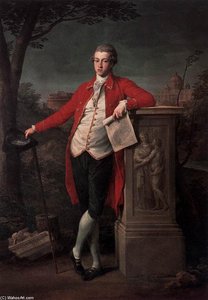
StatsSir Charles Watson
 Oil On Canvas
- WallArt
- Neoclassicism
 75.0 x 99.0 cm
 Fondazione Cariplo
 Read More
Giclée / Art Print
Museum-quality giclée or canvas print with fast production and flexible finish options. ( Buy Hand Made Painting Switch to Digital Image)




P118B $10

P118H $10

P118W $10

P438Z $10

P508JH $12

P508YH $12

P805H $10

P805Z $10

P919BZ $10

P919G $10

P919XJ $10

P959ZH $10

P968JZ $12

W106C $8

W218G $10

W218JH $8

W218Y $10

W307PJ $10

W316G $10

W316PJ $8

W316Y $10

W398PJ $8

W4111J $10

W500HY $15

W500JH $15

W692G $12

W849H $8

W940BG $15

W953PJ $8




Pick from our preset sizes that match the artwork's original proportions.

Type the width and the height you need, to fit your frame or your wall. A print can only be cut, never made bigger than the picture, so a size with a different shape loses a part of the image. We send you a digital mockup to approve before we print anything. The picture shown on this page does not show the real cut — only the mockup does.
Worldwide Delivery () in 2 weeks instead of standard 4/5 weeks. (26 October)

Free Worldwide Express Shipping

High-Quality Linen Canvas

Full Shipping Insurance

Customs Tax Refund Guarantee

True Color Matching Guarantee

100-Day Return Policy (Defects Only)

100% Money-Back Guarantee

Bulk Discount Offer
 Glass option is only available in size under 110 CM

Sir Charles Watson
Giclée / Art Print
Reproduction Size
-


Total Price
$ 81
A Glimpse into Aristocratic Grandeur: Pompeo Batoni's Portrait of Sir Charles Watson
To stand before this portrait is to step directly into the gilded salons of eighteenth-century Rome, a place where culture, ambition, and artistry converged. Pompeo Batoni, master chronicler of the privileged elite, has captured not merely a likeness, but an entire moment in aristocratic life. The subject, Sir Charles Watson, gazes out with a composed intensity that speaks volumes of his station and the era's expectations for gentlemen of means. His bearing is one of assured refinement; the crisp lines of his ruffled collar contrast beautifully with the deep tones of his brown coat, anchoring the composition against the stark, dramatic backdrop.
The Allure of Fashion and Historical Echoes
What immediately draws the eye, beyond the sitter's steady gaze, is the costume itself. Batoni has dressed Sir Charles in what is described as the Van Dyck dress—a fashion choice that transports us back to the opulent courts of the early seventeenth century. The golden mantle and buttons evoke the grandeur associated with Antoon Van Dyck’s time at the court of Charles I, a style that held immense sway among the British aristocracy during this period. This deliberate nod to historical costume suggests more than mere vanity; it is a sophisticated cultural citation, a visual language understood only by those who navigated the intellectual currents of the Grand Tour. The feather held delicately in his hand serves as both an accessory and a subtle emblem of status.
Mastery of Technique and Atmosphere
Technically, this oil on canvas exemplifies Batoni's genius for portraiture. His ability to render texture—the soft sweep of the white beard against the dark fabric, the sheen of the gold trim—is breathtaking. The contrast between the richly detailed foreground and the almost monolithic black background is a masterful stroke. This simplicity forces the viewer’s entire attention onto the sitter's face and gesture. Batoni, whose style drew from Bolognese Classicism and Raphael, achieves here a balance: the formality of classical portraiture infused with the vibrant immediacy of contemporary life. It is art that feels both timelessly grand and intimately personal.
A Statement for the Modern Collector
For the discerning collector or designer seeking to infuse a space with historical depth and undeniable elegance, this piece offers profound resonance. Reproducing such an artwork allows one to own a tangible piece of cultural history. It speaks to themes of lineage, worldly success, and enduring style. Imagine this portrait gracing a library or drawing-room; it does not merely decorate—it narrates the story of those who shaped the world from within its most cultured circles. It is an object that commands conversation, whispering tales of Oxford graduations, naval supremacy, and the dazzling allure of Italian artistic patronage.
Questions & Answers
How can I view "Sir Charles Watson" by Pompeo Batoni as a slideshow?
"Sir Charles Watson" by Pompeo Batoni can be viewed as a slideshow on the artwork's Diaporama page.
Where do the visitors of "Sir Charles Watson" by Pompeo Batoni come from?
The Stats page of "Sir Charles Watson" by Pompeo Batoni presents public visit statistics: monthly visits of this artwork, a comparison with the artist's most viewed works, and where its visitors come from.
What colors dominate "Sir Charles Watson" by Pompeo Batoni?
"Sir Charles Watson" by Pompeo Batoni uses an earthy palette, with black (#151512) as the dominant color.
Artist Biography
Early Life and Training
- Born: Lucca, Italy (1708)
- Died: 1787
- Pompeo Batoni moved to Rome in 1727.
- He apprenticed with Agostino Masucci, Sebastiano Conca, and/or Francesco Imperiali.
- His first independent commission came as a result of rains that struck Rome in April 1732.
- The painting "The Ecstasy of Saint Catherine of Siena" illustrates his academic refinement of the late-Baroque style.
Artistic Style and Influences
- Batoni's style drew inspiration from classical antiquity, French Rococo, Bolognese Classicism, and artists such as Nicolas Poussin, Claude Lorrain, and especially Raphael.
- He is considered a precursor of Neoclassicism.
- His work can be found in various museums, including the Pinacoteca di Brera in Milan, Italy.
Notable Works and Commissions
- Virgin and Child with Saints
- A Knight in Rome: Charles Cecil Roberts – A celebrated portrait of a British traveler set against Roman ruins.
- The Triumph of Venice
- Numerous altarpieces for churches in Italy, such as the Museum Duomo in Siena.
- He was in high demand for portraits, particularly by British travelers on the Grand Tour who commissioned standing portraits within antique settings.
Development and Historical Significance
- Batoni became a highly fashionable painter in Rome after his rival, Anton Raphael Mengs, departed for Spain in 1761.
- He befriended Winckelmann and aimed to restrain classicism in his painting.
- His portraits captured the spirit of the Grand Tour era, reflecting the fascination with classical antiquity among European elites.
- Batoni’s ability to blend Baroque techniques with emerging Neoclassical ideals positioned him as a transitional figure in Italian art history.
Legacy
- Pompeo Batoni passed away on February 4, 1787, in Rome.
- He left behind a legacy as one of the most renowned Italian painters of his time.
- His work continues to be admired for its technical skill, elegant compositions, and insightful portrayals of individuals within their historical context.

Pompeo Batoni
1708 - 1787 , Italy
Quick Facts
- Artistic Movement Or Style: Baroque and Neoclassicism
- Artists Who Influenced This Artist:
- Nicolas Poussin
- Claude Lorrain
- Raphael
- Full Name: Pompeo Girolamo Batoni
- Nationality: Italian
- Notable Artworks:
- Madonna and Child
- Diana and Cupid
- A Knight in Rome: Charles Cecil Roberts
- Portrait of the Duke of Devonshire
- The Fall of Simon Magus
- Place Of Birth: Lucca, Italy
- Date Of Birth: 1708
- Date Of Death: 1787
Related Articles

The Enduring Legacy of Oil on Canvas: Technique, History & Contemporary Practice
Explore the rich history & enduring techniques of oil painting on canvas. Discover the science behind its longevity, conservation practices, and contemporary relevance. Expert insights for art enthusiasts.

The Enduring Legacy of Oil on Canvas: Technique, History & Aesthetic Impact
Explore the rich history & techniques of oil painting – from Renaissance masters to Impressionism. Discover pigments, layering methods, and why this timeless medium endures. Expert insights for artists & art enthusiasts.

Oil on Canvas: A Historical & Technical Exploration of a Timeless Artistic Medium
Explore the rich history & enduring techniques of oil painting on canvas. Discover the science behind its longevity, conservation practices, and contemporary relevance. Expert insights for art enthusiasts.
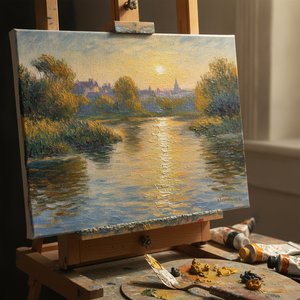
The Soul of Impressionism: Why Oil on Canvas Captures Eternal Light and Timeless Emotion
Discover the enchanting alchemy of Impressionism. Explore how the mastery of oil on canvas, through glazing and impasto, captures eternal light and emotion. Perfect for lovers of Monet and Van Gogh seeking the profound depth of hand-painted fine art.
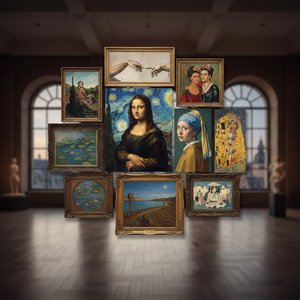
Oil on Canvas Masters: 10 Paintings That Redefined Art History |
Journey through art history with our guide to 10 legendary oil on canvas masterpieces! Explore iconic works by Van Gogh, Monet & Rembrandt. Find museum-quality reproductions and elevate your home decor at . Discover all masterpieces online.