Preview
 Send
Send Share
Share
 Details
 Guide
Guide

 Download
 Similars
 X-Ray
X-Ray Diaporama
 Q&A
Q&A Stats
StatsSensuality

- 138.0 x 100.0 cm


 Read More
Giclée / Art Print
Museum-quality giclée or canvas print with fast production and flexible finish options. ( Buy Hand Made Painting Switch to Digital Image)




P118B $10

P118H $10

P118W $10

P438Z $10

P508JH $12

P508YH $12

P805H $10

P805Z $10

P919BZ $10

P919G $10

P919XJ $10

P959ZH $10

P968JZ $12

W106C $8

W218G $10

W218JH $8

W218Y $10

W307PJ $10

W316G $10

W316PJ $8

W316Y $10

W398PJ $8

W4111J $10

W500HY $15

W500JH $15

W692G $12

W849H $8

W940BG $15

W953PJ $8




Pick from our preset sizes that match the artwork's original proportions.

Type the width and the height you need, to fit your frame or your wall. A print can only be cut, never made bigger than the picture, so a size with a different shape loses a part of the image. We send you a digital mockup to approve before we print anything. The picture shown on this page does not show the real cut — only the mockup does.
Worldwide Delivery () in 2 weeks instead of standard 4/5 weeks. (5 November)

Free Worldwide Express Shipping

High-Quality Linen Canvas

Full Shipping Insurance

Customs Tax Refund Guarantee

True Color Matching Guarantee

100-Day Return Policy (Defects Only)

100% Money-Back Guarantee

Bulk Discount Offer
 Glass option is only available in size under 110 CM

Sensuality
Giclée / Art Print
Reproduction Size
-


Total Price
$ 81
Pompeo Batoni’s *Sensuality*: A Masterclass in Rococo Opulence
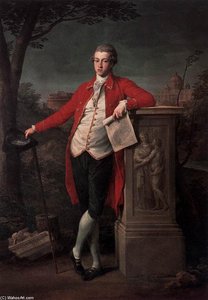
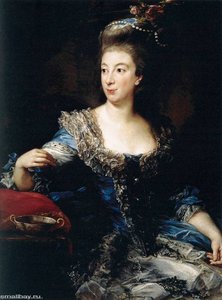
Pompeo Batoni's *Sensuality*, completed in 1747, is more than just a beautiful painting; it’s a meticulously crafted window into the opulent world of 18th-century Italy. This oil on canvas masterpiece, currently residing within the esteemed Hermitage Museum in St. Petersburg, exemplifies Batoni’s unique artistic vision – a harmonious blend of Rococo grace and burgeoning Neoclassical ideals. Measuring 138 x 100 cm, the painting immediately captivates with its rich color palette dominated by earth tones and punctuated by the arresting crimson of the central figure's robe, creating an atmosphere of luxurious warmth that invites prolonged contemplation.
Artistic Style and Technical Brilliance
- Rococo Influence: Batoni’s style is deeply rooted in the Rococo movement, characterized by its emphasis on natural forms, asymmetrical compositions, and a delicate touch. Notice how the figures are not rigidly posed but rather imbued with a sense of relaxed elegance – a hallmark of the era.
- Neoclassical Undertones: Despite its Rococo foundations, *Sensuality* reveals Batoni’s nascent interest in Neoclassicism, particularly evident in the idealized portrayal of the female figure and the careful attention to classical motifs.
- Masterful Technique: Batoni's brushwork is remarkably smooth and controlled, creating a sense of depth and volume that draws the viewer into the scene. The use of sfumato – a subtle blurring of edges – adds to the painting’s ethereal quality, softening the forms and enhancing their beauty.
- Color Palette: The artist skillfully employs a limited yet impactful color palette, utilizing warm earth tones—ochre, sienna, and umber—to create a sense of warmth and intimacy, complemented by the vibrant red of the central figure’s robe and the shimmering gold accents that elevate the composition.
Symbolism and Narrative Depth
The painting's composition is deliberately asymmetrical, guiding the viewer's eye towards the central figure – a woman seated on a golden throne. This posture immediately conveys an aura of power, grace, and perhaps even divine authority. The surrounding figures, though less defined, contribute to the overall narrative, suggesting a scene of courtly intrigue or a mythological allegory. The small object held by the woman—likely a ring or jewel—adds another layer of symbolism, hinting at wealth, status, and possibly romantic entanglement. The inclusion of two other figures, one presenting a garment, adds an element of storytelling, perhaps representing service or the act of dressing.
Historical Context and Artistic Legacy
*Sensuality* was created during a period of significant artistic innovation in Italy, as artists sought to reconcile the grandeur of Baroque art with the emerging ideals of Neoclassicism. Pompeo Batoni himself was a pivotal figure in this transition, considered a precursor to the Neoclassical movement. His work reflects the tastes of the European aristocracy, who were increasingly drawn to classical themes and luxurious aesthetics. Batoni’s influence can be seen in the works of later artists such as Angelica Kauffman, further solidifying his place as a key figure in 18th-century art history.
This painting's journey from its creation to its current home within the Hermitage Museum speaks volumes about its enduring value and artistic significance. A hand-painted reproduction of *Sensuality* offers an unparalleled opportunity to experience this masterpiece firsthand, bringing a touch of timeless elegance and historical grandeur into any setting.
Questions & Answers
How many people view "Sensuality"?
Statistics about "Sensuality" by Pompeo Batoni are on the artwork's Stats page: monthly visits of the artwork, visits of the artist's works, and country and language breakdowns of recent visitors.
Who is "Sensuality" suggested for as a present, and for what use?
The gift recommendation for "Sensuality" by Pompeo Batoni combines anniversary with accent.
What feeling is "Sensuality" associated with?
"Sensuality" is associated with a romantic feeling. The emotional tone describes the impression the work gives.
Artist Biography
Early Life and Training
- Born: Lucca, Italy (1708)
- Died: 1787
- Pompeo Batoni moved to Rome in 1727.
- He apprenticed with Agostino Masucci, Sebastiano Conca, and/or Francesco Imperiali.
- His first independent commission came as a result of rains that struck Rome in April 1732.
- The painting "The Ecstasy of Saint Catherine of Siena" illustrates his academic refinement of the late-Baroque style.
Artistic Style and Influences
- Batoni's style drew inspiration from classical antiquity, French Rococo, Bolognese Classicism, and artists such as Nicolas Poussin, Claude Lorrain, and especially Raphael.
- He is considered a precursor of Neoclassicism.
- His work can be found in various museums, including the Pinacoteca di Brera in Milan, Italy.
Notable Works and Commissions
- Virgin and Child with Saints
- A Knight in Rome: Charles Cecil Roberts – A celebrated portrait of a British traveler set against Roman ruins.
- The Triumph of Venice
- Numerous altarpieces for churches in Italy, such as the Museum Duomo in Siena.
- He was in high demand for portraits, particularly by British travelers on the Grand Tour who commissioned standing portraits within antique settings.
Development and Historical Significance
- Batoni became a highly fashionable painter in Rome after his rival, Anton Raphael Mengs, departed for Spain in 1761.
- He befriended Winckelmann and aimed to restrain classicism in his painting.
- His portraits captured the spirit of the Grand Tour era, reflecting the fascination with classical antiquity among European elites.
- Batoni’s ability to blend Baroque techniques with emerging Neoclassical ideals positioned him as a transitional figure in Italian art history.
Legacy
- Pompeo Batoni passed away on February 4, 1787, in Rome.
- He left behind a legacy as one of the most renowned Italian painters of his time.
- His work continues to be admired for its technical skill, elegant compositions, and insightful portrayals of individuals within their historical context.

Pompeo Batoni
1708 - 1787 , Italy
Quick Facts
- Artistic Movement Or Style: Baroque and Neoclassicism
- Artists Who Influenced This Artist:
- Nicolas Poussin
- Claude Lorrain
- Raphael
- Full Name: Pompeo Girolamo Batoni
- Nationality: Italian
- Notable Artworks:
- Madonna and Child
- Diana and Cupid
- A Knight in Rome: Charles Cecil Roberts
- Portrait of the Duke of Devonshire
- The Fall of Simon Magus
- Place Of Birth: Lucca, Italy
- Date Of Birth: 1708
- Date Of Death: 1787
Related Articles

Rococo's Radiant Legacy: 10 Masterpieces for Your Home |
Indulge in the elegance of Rococo! Explore 10 masterpieces by Fragonard, Boucher & Watteau. Discover the stories behind these iconic paintings and bring timeless art to your home with museum-quality reproductions from .

The Rococo Aesthetic: Opulence, Rebellion & the Pursuit of Pleasure in 18th-Century Art
Explore the opulent world of Rococo art! Discover its origins, key artists like Watteau & Boucher, and lasting influence on design. Expert insights for collectors & enthusiasts.

Echoes of Time: Exploring the Enduring Appeal & Historical Context of Vintage Art Prints
Explore the captivating world of vintage art prints! Discover their history, collecting tips & enduring appeal. Expert insights on chromolithography and building a legacy collection with OriginalUniqueArt.

Giclée Prints: Archival Quality & Aesthetic Nuances for the Discerning Collector
Explore the world of giclée prints with OriginalUniqueArt. Learn about archival quality, aesthetic nuances & investment potential. Expert guidance for discerning art collectors seeking museum-quality reproductions and lasting value.

The Enduring Legacy of Fine Art Prints: Technique, History & Aesthetic Impact
Explore the rich history & techniques of fine art prints. Discover investment potential, assess authenticity, and learn how to preserve your collection with expert guidance. Trusted insights for discerning collectors.