Preview
 Send
Send Share
Share
 Details
 Guide
Guide

 Download
 Similars
 X-Ray
X-Ray Diaporama
 Stats
StatsThe Assumption


 Read More
Giclée / Art Print
Museum-quality giclée or canvas print with fast production and flexible finish options. ( Buy Hand Made Painting Switch to Digital Image)




P118B $10

P118H $10

P118W $10

P438Z $10

P508JH $12

P508YH $12

P805H $10

P805Z $10

P919BZ $10

P919G $10

P919XJ $10

P959ZH $10

P968JZ $12

W106C $8

W218G $10

W218JH $8

W218Y $10

W307PJ $10

W316G $10

W316PJ $8

W316Y $10

W398PJ $8

W4111J $10

W500HY $15

W500JH $15

W692G $12

W849H $8

W940BG $15

W953PJ $8




Pick from our preset sizes that match the artwork's original proportions.

Type the width and the height you need, to fit your frame or your wall. A print can only be cut, never made bigger than the picture, so a size with a different shape loses a part of the image. We send you a digital mockup to approve before we print anything. The picture shown on this page does not show the real cut — only the mockup does.
Worldwide Delivery () in 2 weeks instead of standard 4/5 weeks. (21 October)

Free Worldwide Express Shipping

High-Quality Linen Canvas

Full Shipping Insurance

Customs Tax Refund Guarantee

True Color Matching Guarantee

100-Day Return Policy (Defects Only)

100% Money-Back Guarantee

Bulk Discount Offer
 Glass option is only available in size under 110 CM

The Assumption
Giclée / Art Print
Reproduction Size
-


Total Price
$ 81
The Assumption by Pietro Bernini
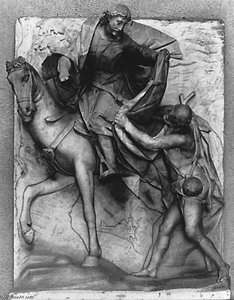
Pietro Bernini’s “The Assumption,” completed between 1607 and 1610, stands as one of the most iconic representations of Marian devotion within the Baroque artistic tradition. Situated in Santa Maria Maggiore Basilica, Rome—a site steeped in papal history and religious significance—the sculpture embodies Bernini's unparalleled mastery of marble carving and his profound understanding of theatrical composition. It’s a monumental work that transcends mere depiction; it strives to convey an experience of transcendent beauty and spiritual awe.- Subject Matter: The sculpture portrays the Virgin Mary ascending into heaven, embodying the Catholic dogma concerning her immaculate conception and glorious resurrection. This event is central to Christian theology, symbolizing divine grace and redemption.
- Style & Technique: Bernini’s approach aligns perfectly with the Baroque aesthetic—characterized by dynamism, dramatic lighting, and emotional intensity. He employs a technique known as “contrapposto,” where Mary’s torso tilts slightly away from the viewer, creating an illusion of movement and conveying her serene dignity. The sculpture utilizes meticulous detail to capture the folds of Mary's robes, the delicate expressions on her face, and the intricate patterns adorning the angelic figures surrounding her.
- Historical Context: Created during Pope Paul V’s reign—a period marked by fervent piety and artistic patronage—the Assumption reflects the broader cultural climate of Rome at the time. Bernini's commission was driven by a desire to elevate the basilica’s spiritual stature and solidify papal authority. The sculpture served as a powerful symbol of papal piety and divine providence.
- Symbolism: The sculpture is laden with symbolic references. Mary’s outstretched hand gestures towards God, signifying prayer and supplication—a gesture that underscores humanity's yearning for divine grace. The radiant halo encircling Mary’s head symbolizes her holiness and divinity, while the angelic figures convey reverence and adoration. The clouds beneath Mary represent heaven itself, emphasizing the ascension into eternal glory.
- Emotional Impact: “The Assumption” aims to inspire contemplation and evoke a profound emotional response in viewers. Bernini's masterful manipulation of marble creates an illusion of palpable movement—drawing the eye upwards towards Mary’s figure and immersing the spectator in a realm of ethereal beauty. The sculpture’s grandeur and meticulous detail serve as testament to Bernini’s artistic genius, leaving visitors breathless with wonder and reverence.
Questions & Answers
Can I see "The Assumption" by Pietro Bernini under different lights?
The X-Ray view of "The Assumption" by Pietro Bernini is on the artwork's X-Ray page: an interactive examination of the image through eleven optical layers.
How do the colors of "The Assumption" relate to each other?
The color harmony of "The Assumption" is recorded as strong color unity.
What kind of colors does "The Assumption" use?
The colors of "The Assumption" form a neutrals palette. This classification describes the dominant color families.
Artist Biography
Pietro Bernini: Life and Legacy
Early Life and Training
- Born: Sesto Fiorentino, Tuscany, Italy in 1562.
- Pietro Bernini emerged during the late Mannerist period, a time of stylistic transition in Italian art. His early training likely involved exposure to the prevailing artistic trends of Florence, characterized by elegance and refinement.
- Details regarding his initial apprenticeship remain somewhat scarce, but it’s understood he developed foundational skills in sculpture before relocating to Naples.
Naples and Family Beginnings
- Bernini moved to Naples to contribute to the artistic embellishment of the Certosa di San Martino, a significant religious complex.
- Significant Event: It was in Naples that he met and married Domenica Pizzuti, and their son, the future Baroque master Gian Lorenzo Bernini, was born in 1598.
- This period marked a crucial turning point, laying the groundwork for a family dynasty of artists.
Rome and Papal Patronage
- Relocation: In 1605, the Bernini family relocated to Rome under the protection of Cardinal Scipione Borghese, a powerful figure in the Roman art world.
- Pietro quickly secured commissions from Pope Paul V (also a Borghese), contributing to projects such as the Pauline Chapel within the Basilica of Santa Maria Maggiore. This marked his entry into the heart of Roman artistic activity.
- Influence: The patronage of the Borghese family proved instrumental in establishing Pietro’s career and providing opportunities for both him and, eventually, his son.
Major Works and Artistic Style
- Fontana della Barcaccia: Perhaps his most celebrated work, the Fontana della Barcaccia (Fountain of the Old Boat) at the foot of the Spanish Steps in Rome. Completed in 1627, it’s a striking example of Baroque ingenuity, resembling a beached ship.
- Other Notable Works: Contributions to the Fountain of Neptune in Naples (completed between 1600-1601), and sculptural work within Santa Maria Maggiore.
- Artistic Style: Pietro’s style blended Mannerist elegance with emerging Baroque dynamism. His sculptures often exhibit a sense of movement, emotional intensity, and dramatic flair.
Collaboration and Legacy
- Early Collaboration with Gian Lorenzo: Pietro initially collaborated with his son on projects like the Boy with a Dragon (1617), showcasing early signs of Gian Lorenzo’s exceptional talent.
- Shift in Roles: As Gian Lorenzo's abilities surpassed his own, Pietro willingly transitioned into a supportive role, often acting as an assistant to his son. This demonstrates a remarkable level of artistic maturity and familial dedication.
- Historical Significance: While overshadowed by his son’s immense fame, Pietro Bernini played a vital role in shaping the Roman Baroque landscape. His work paved the way for Gian Lorenzo's groundbreaking achievements and contributed to the flourishing of art during this period.
- Death: Pietro Bernini died in Rome in 1629 at the age of 67, leaving behind a legacy as both a skilled sculptor and the father of one of history’s greatest artists.

Pietro Bernini
1562 - 1629 , Italy
Quick Facts
- Name: Pietro Bernini
- Movement: Mannerism, Baroque
- Birth Date: 1562
- Death Date: 1629
- Influenced: Gian Lorenzo Bernini
- Birth Place: Sesto Fiorentino, Italy
- Nationality: Italian
- Date Of Birth: 1562
- Date Of Death: 1629
- Notable Works: Fontana della Barcaccia, Saint Martin dividing his cloak
- Place Of Birth: Sesto Fiorentino, Italy
Related Articles
Mastering Dimension: An Art Historian's Guide to the Elegance of Sculptural Relief Art
Explore the profound beauty of sculptural relief art. From classical bas-relief to modern geometric textures, discover how depth and light transform spaces through an expert guide on art history and sophisticated curation for discerning collectors.

Bronze Sculptures That Defined Art History | OriginalUniqueArt
Journey through art history with our Top 10 bronze sculptures! Explore masterpieces by Rodin, Michelangelo & more. Discover stories behind iconic statues and find museum-quality reproductions for your home decor at OriginalUniqueArt.com.

The Enduring Form: Exploring Themes & Techniques in Sculpture Across Historical Periods
Explore the rich history of sculpture from ancient masterpieces to contemporary innovations. Discover key techniques, influential artists & investment potential for discerning art collectors.
Gian Lorenzo Bernini: Sculpting Baroque Emotion & the Roman Imagination
Explore the life & revolutionary art of Gian Lorenzo Bernini, the master sculptor of the Baroque era. Discover his iconic works like David and Ecstasy of Saint Teresa – a journey into Roman artistic genius.

The Enduring Allure of Marble in Art History: From Classical Sculpture to Modern Abstraction
Explore the captivating history of marble sculpture from ancient Greece to modern art. Discover renowned artists like Canova & Michelangelo, carving techniques, and investment insights at OriginalUniqueArt.